
The Strategic Case for Positioning in AI Stocks Ahead of Q1 2026
The case for positioning in AI stocks ahead of Q1 2026 is anchored in a convergence of historical seasonal trends, robust sector momentum, and favorable policy tailwinds. These factors collectively create a compelling argument for investors seeking to capitalize on the next phase of the AI-driven market cycle.
Seasonal Market Trends: A Historical Catalyst
Seasonal patterns in stock markets have long influenced investor behavior, and AI stocks are no exception. Historically, the Q4 to Q1 period has been marked by a "Santa Claus Rally," driven by institutional flows, tax strategies, and year-end bonuses. January, in particular, has shown a tendency to deliver strong returns for small-cap and tech stocks, a trend that aligns with the high-growth profile of AI companies. While the "Sell in May and Go Away" phenomenon has often led to summer underperformance, 2024 defied this pattern as AI-driven growth sustained momentum through the summer months. This suggests that the sector's fundamentals may now override traditional seasonal cycles, making Q1 2026 a prime window for entry.
AI Sector Momentum: Earnings and Infrastructure Growth
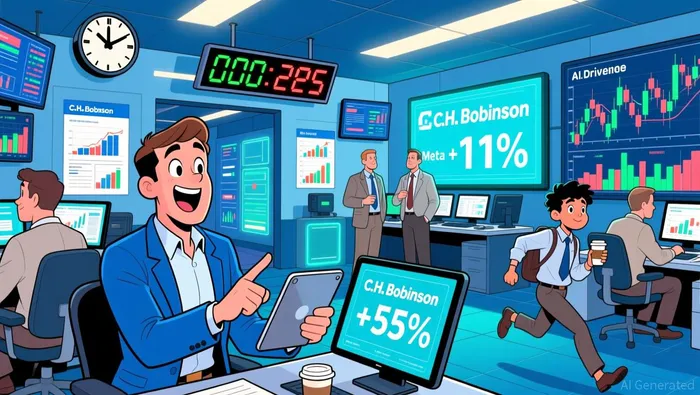
The AI sector's momentum entering 2026 is underpinned by two key drivers: earnings strength and infrastructure expansion. Major tech firms like Meta, Alphabet, and Microsoft have reported robust revenue growth in 2025, with AI integration directly boosting operating profits. For instance, C.H. Robinson's 55% stock price surge in 2025-far outpacing Meta's 11% gain-demonstrates how AI adoption can unlock value across industries.
 Infrastructure demand is equally critical. Companies such as Nvidia, AMD, and Broadcom are central to the data center buildouts required to meet rising compute needs. TSMC, a key chip manufacturer, is also poised to benefit from its leadership in cutting-edge chip design and energy-efficient solutions. Meanwhile, energy and infrastructure firms like Hut 8 are securing long-term contracts (e.g., a $7 billion, 15-year power deal with Google), signaling broader economic tailwinds. BlackRock notes that earnings growth -not valuation expansion-has been the primary driver of tech stock performance in 2025, a trend likely to persist as AI adoption accelerates.
Policy Tailwinds: Regulatory Clarity and Federal Support
Policy developments in 2026 further strengthen the case for AI stocks. President Trump's Executive Order 14179, "Ensuring a National Policy Framework for Artificial Intelligence," aims to harmonize state and federal regulations by challenging restrictive state laws and consolidating authority under the federal government. This reduces regulatory uncertainty for AI firms, particularly in states like California and New York, where divergent frameworks previously created compliance risks. The order also establishes an AI Litigation Task Force to challenge state laws that conflict with national policy, signaling a pro-innovation stance.
In parallel, the FY2026 National Defense Authorization Act allocates significant funding to integrate AI into defense systems, modernize acquisition processes, and reduce reliance on contractors. This underscores the sector's strategic importance to national security. Beyond defense, the federal government is prioritizing R&D funding, with the Department of Defense accounting for 62% of total federal R&D spending in FY2026. A proposed $32 billion investment in non-defense AI research, coupled with tax incentives like Section 174A (which allows immediate deductions for domestic R&D expenditures), further lowers the cost of innovation for AI companies.
Conclusion: A Confluence of Forces
The strategic case for AI stocks ahead of Q1 2026 rests on a rare alignment of factors. Seasonal trends suggest a favorable entry window, sector momentum is driven by earnings and infrastructure demand, and policy tailwinds are removing regulatory barriers while amplifying federal support. Investors who position now stand to benefit from both the cyclical and structural forces reshaping the AI landscape.







Comentarios
Aún no hay comentarios