
The Strategic Case for Investing in Singapore Dollar-Backed Stablecoins
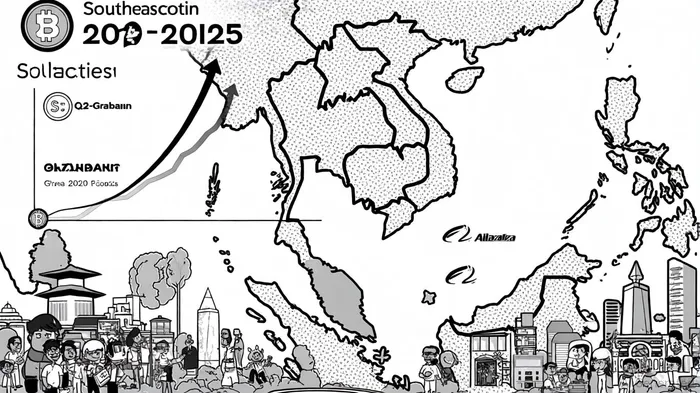
In the rapidly evolving landscape of digital finance, Singapore Dollar (SGD)-backed stablecoins have emerged as a compelling asset class, offering investors a unique intersection of regulatory clarity and regional economic growth. As Southeast Asia's digital economy expands—projected to reach $1 trillion by 2030—SGD-backed stablecoins are positioned to capitalize on cross-border trade efficiency and financial inclusion initiatives, all underpinned by Singapore's pioneering regulatory framework.
Regulatory Clarity: Singapore's Gold Standard
The Monetary Authority of Singapore (MAS) has set a global benchmark for stablecoin regulation, finalizing a framework in August 2023 that mandates 100% reserve backing for single-currency stablecoins (SCS) pegged to SGD or G10 currencies[1]. This framework requires issuers to maintain reserves in cash, cash equivalents, or government bonds, with monthly independent audits and annual checks[2]. For instance, StraitsX's XSGD, the region's dominant SGD-backed stablecoin, holds reserves with DBS Bank and Standard Chartered, ensuring transparency and stability[3].
MAS's approach also enforces prudential requirements, such as a minimum base capital of S$1 million or 50% of annual operating expenses, and restricts high-risk activities like lending or staking[1]. These measures mitigate systemic risks while fostering institutional confidence. Notably, Singapore's framework differentiates between bank and non-bank issuers, with the latter required to obtain a major payment institution license if their stablecoin circulation exceeds S$5 million[4]. This tiered structure balances innovation with oversight, creating a fertile ground for scalable, trustworthy stablecoin projects.
Regional Growth: Powering Southeast Asia's Digital Economy
The Southeast Asian digital economy, driven by a young, tech-savvy population and rising internet penetration, has become a hotspot for SGD-backed stablecoins. In Q2 2025, XSGD accounted for 70.1% of the market share in SGD-pegged stablecoins, facilitating 258,000 transactions and $136 million in decentralized exchange (DEX) volume[5]. This growth is fueled by partnerships with regional giants like Grab and Alibaba, which integrate XSGD into their ecosystems for cross-border payments and settlements[6].
A key driver is the reduction of reliance on the U.S. dollar. Traditional USD-based correspondent banking systems are plagued by high fees and delays, with only 22% of Southeast Asian trade occurring intra-regionally in 2023[7]. SGD-backed stablecoins enable near-instant, low-cost settlements, as seen in XSGD's use for GrabPay merchants and Alipay+ transactions[8]. Furthermore, the ASEAN Business Advisory Council's regional QR payment system, which supports local currency settlements, is expected to amplify adoption[9].
Financial inclusion is another critical pillar. With 260 million unbanked or underbanked individuals in Southeast Asia, SGD-backed stablecoins integrated into mobile wallets like GoPay and MoMo provide access to affordable remittances and microtransactions[10]. For example, XSGD's listing on Bitstamp and its launch on the XRPXRP-- Ledger have expanded its utility for real-time cross-border payments, particularly in markets with underdeveloped banking infrastructure[11].
Strategic Investment Rationale
Investing in SGD-backed stablecoins offers several advantages. First, Singapore's regulatory clarity reduces compliance risks, attracting institutional investors seeking stable, transparent assets. Second, the regional demand for efficient cross-border solutions is accelerating, with SGD-backed stablecoins capturing a growing share of Southeast Asia's $136 million DEX volume[12]. Third, the alignment with financial inclusion goals positions these stablecoins as ESG-compliant investments, appealing to socially conscious capital.
However, challenges remain. Regulatory fragmentation across Southeast Asia—while Singapore's framework is advanced, neighboring countries like Indonesia and Malaysia are still in sandbox phases—could create compliance hurdles[13]. Additionally, local currency volatility and mismanagement pose risks, necessitating strict adherence to reserve transparency.
Conclusion
The strategic case for investing in SGD-backed stablecoins is robust. Singapore's regulatory leadership, combined with Southeast Asia's digital economy boom, creates a virtuous cycle of innovation and adoption. As XSGD and similar projects demonstrate, these stablecoins are not just financial instruments but enablers of regional economic transformation. For investors, the opportunity lies in capitalizing on a market where regulatory rigor and growth potential converge—a rare and powerful alignment in today's volatile crypto landscape.






Comentarios
Aún no hay comentarios