
The Strategic Case for Investing in Layer 2-Enabled Crypto Payment Infrastructure
The global crypto payment landscape is undergoing a seismic shift, driven by the rapid adoption of Layer 2 (L2) solutions. These second-layer protocols are redefining blockchain scalability and cost-efficiency, positioning themselves as the backbone of mass adoption. For investors, the strategic case for allocating capital to L2-enabled infrastructure is compelling, underpinned by real-world use cases, institutional validation, and a growing consensus on their role in bridging traditional finance and decentralized systems.
Scalability: The Foundation of Mass Adoption
Layer 2 networks address the inherent limitations of Layer 1 blockchains like EthereumETH-- and BitcoinBTC-- by processing transactions off-chain and only posting final states to the mainnet. This architecture enables throughput rates that far exceed legacy systems. For instance, ZK-Rollups such as zkSync Era process 71 decentralized exchange (DeFi) swaps per second, compared to Ethereum's 12 general transactions per second. Similarly, the Bitcoin Lightning Network, a state channel-based L2 solution, can theoretically handle up 1 million transactions per second, making it viable for everyday use cases like microtransactions and cross-border remittances.
The scalability of L2 solutions is not theoretical. In emerging markets, platforms like Chipper Cash have leveraged the Lightning Network to power 50% of Bitcoin transactions in Africa, enabling near-instant, low-cost payments for millions of users. Meanwhile, Ethereum-based L2s like Arbitrum and Optimism have become the default infrastructure for DeFi and gaming, handling thousands of transactions per second without overloading the base layer. These networks are not just scaling blockchain-they are redefining its utility.
Cost-Efficiency: A Catalyst for Mainstream Use
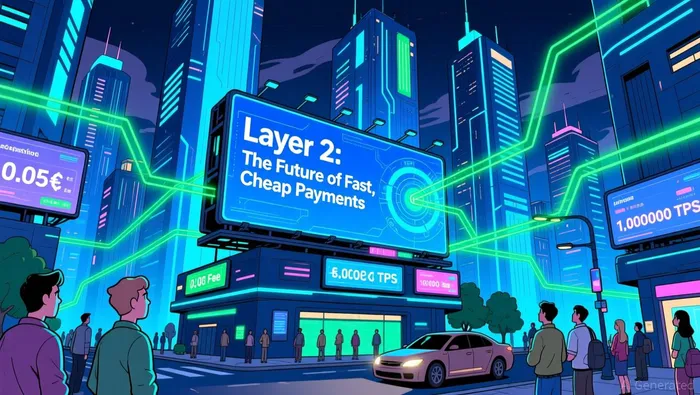 Transaction costs on Layer 1 blockchains remain prohibitively high for mass adoption. In 2025, Bitcoin's average transaction fee surged to $2.40, while Ethereum's costs for complex DeFi interactions ranged from $50 to $500 during peak demand. In contrast, L2 solutions reduce these costs by 90% or more. For example, a transaction on Arbitrum or zkSync costs between $0.05 and $0.20, while Boba Network's aggregation mechanisms achieve 10x to 60x lower settlement costs than Ethereum.
This cost advantage is driving a paradigm shift in how value is transferred. Stablecoins like USDC and USDT, which dominate 60–70% of L2 transactions, are now the primary vehicle for cross-border commerce. In Brazil, for instance, Stripe's Base platform processes ultra-low-cost stablecoin transactions, bypassing traditional banking intermediaries and enabling seamless e-commerce. Such use cases highlight how L2 infrastructure is not just a technical upgrade but a socioeconomic enabler.
Real-World Adoption: From Niche to Mainstream
The integration of L2 solutions into mainstream financial systems is accelerating. By 2025, 25% of businesses globally had adopted cryptocurrency for payroll, with stablecoins processing over $8.9 trillion in the first half of the year alone. Platforms like Base, which handles 33% of U.S. transactions, are centralizing this growth, while emerging markets account for a disproportionate share of L2 user activity.
Institutional interest further validates this trend. North America and parts of Asia have seen clearer regulatory frameworks emerge, attracting capital from venture firms and corporate entities. Meanwhile, projects like Merlin Chain and Rootstock (RSK) are expanding Bitcoin's utility through ZK-Rollups and smart contract capabilities, creating new revenue streams for developers and investors alike.
Investment Implications: A Defensible Thesis
The strategic case for investing in L2-enabled infrastructure rests on three pillars:
1. Network Effects: As L2 networks scale, they attract more users, developers, and enterprises, creating flywheels of growth.
2. Regulatory Tailwinds: Clearer guidelines in key markets are reducing uncertainty and accelerating institutional adoption.
3. Economic Viability: The cost advantages of L2 solutions make them indispensable for applications ranging from DeFi to cross-border payments.
While challenges like reduced Layer 1 fee revenue and token burn rates persist, the broader ecosystem benefits-such as increased transaction volume and user acquisition-outweigh these risks. For investors, this represents a unique opportunity to capitalize on the infrastructure layer that will underpin the next phase of crypto's evolution.
Conclusion
Layer 2 solutions are no longer a niche experiment; they are the linchpin of blockchain's mass adoption. By addressing scalability and cost-efficiency, these networks are enabling real-world use cases that span from stablecoin-driven commerce to institutional-grade payroll systems. For investors, the time to act is now-before the next wave of innovation consolidates around a handful of dominant L2 platforms.







Comentarios
Aún no hay comentarios