
The Strategic Case for Investing in Innovation-Driven Sectors in a Strong IP Environment
The global economy's trajectory over the past five years has been shaped by a singular force: innovation. From biotechnology's breakthroughs in personalized medicine to AI-driven cleantech solutions accelerating decarbonization, innovation-driven sectors have emerged as engines of long-term growth and competitive advantage. As investors navigate an era of rapid technological change, understanding the interplay between intellectual property (IP) frameworks, Nobel-winning economic theories, and sector-specific dynamics is critical. This analysis argues that innovation-driven sectors-biotech, clean energy, and AI-offer unparalleled opportunities in markets with robust IP protections, where the balance between temporary monopolies and open competition fuels sustained growth.
Nobel Insights: Creative Destruction and the IP Paradox
The 2025 Nobel Prize in Economic Sciences, awarded to Joel Mokyr, Philippe Aghion, and Peter Howitt, underscores the centrality of innovation to economic progress. Aghion and Howitt's theory of creative destruction formalizes Joseph Schumpeter's idea that economic growth arises from the replacement of outdated technologies by disruptive innovations. This process, however, requires a delicate balance: strong IP rights incentivize R&D by granting innovators temporary monopolies, but excessive protection risks stifling competition and slowing the pace of innovation.
As Aghion warned in 2025, "Without institutional conditions that tolerate disruption and reward risk-taking, the 200-year cycle of growth could stall". This insight is particularly relevant for sectors like AI and biotech, where high R&D costs and long development timelines necessitate strong IP frameworks to justify investment. Yet, as the Nobel laureates emphasized, markets must remain open to new entrants to prevent incumbents from leveraging IP to entrench dominance.
Biotech: Innovation as a Strategic Asset
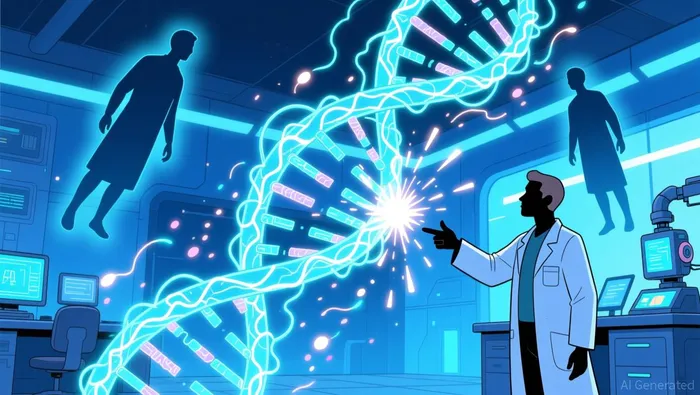
The biotechnology sector exemplifies how IP frameworks drive growth. Between 2020 and 2025, biotech firms leveraged patent protections to advance personalized medicine and gene-editing technologies, attracting over $150 billion in venture capital. A 2025 report by Georgetown University's Global Institute for Advanced Study highlights that biotech's competitive advantage lies in its ability to combine scientific discovery with IP-driven commercialization, creating "strategic assets" that underpin long-term profitability.
However, the sector's success hinges on avoiding regulatory and IP bottlenecks. For instance, the 2023 global R&D investment slump-partly attributed to patent thickets and litigation delays-slowed innovation in therapeutic areas like oncology. This underscores the need for IP systems that protect innovators while fostering collaboration, a balance that forward-thinking investors are increasingly prioritizing.
Clean Energy: Decarbonization and the AI Revolution
The clean energy sector's explosive growth since 2020 is a testament to the power of innovation ecosystems. By 2025, global solar capacity had surged to 655 gigawatts, while AI-driven cleantech solutions secured $28.5 billion in investment from 2018 to 2023, with $138 billion projected by 2030. These advancements are not merely technological but economic: regions like Denmark and China's Jiangsu province have leveraged green technology to attract foreign direct investment (FDI) and create 1.5 million jobs by 2030.
The role of IP in this transformation is pivotal. Strong patent protections for renewable energy technologies-such as next-generation solar panels or carbon capture systems-have enabled firms to secure returns on R&D while spurring competition. Yet, as the International Energy Agency (IEA) notes, the sector's future depends on harmonizing IP policies with open innovation models to accelerate global decarbonization.
AI: Productivity Gains and Energy Demands
Artificial intelligence represents both an opportunity and a challenge for investors. By 2025, AI's potential to add $10 trillion to the U.S. GDP over the next decade had become a consensus view. However, the sector's energy demands- projected to require 75–100 gigawatts of new electricity generation by 2030-highlight the need for cross-sectoral innovation.
Here, the Aghion-Howitt framework offers clarity. AI's growth relies on a dual IP strategy: proprietary algorithms (protected by patents and trade secrets) and open-source frameworks that lower barriers to entry. This duality is evident in the rise of AI-driven cleantech, where firms like Tesla and Siemens have combined IP-protected software with open data-sharing to optimize energy grids. Investors who prioritize companies adept at navigating this balance-such as those with hybrid IP strategies-stand to benefit from both near-term monopolies and long-term market expansion.
Strategic Investment Imperatives
For investors, the lessons are clear. First, sectors with robust IP frameworks-such as biotech and clean energy-offer superior long-term returns, provided they avoid the pitfalls of overprotection. Second, the Nobel laureates' emphasis on "sustained growth through creative destruction" suggests that markets with dynamic competition, rather than static monopolies, are more likely to deliver value. Finally, the integration of AI into innovation-driven sectors (e.g., AI-optimized drug discovery or smart grids) creates compounding growth opportunities, particularly in regions with forward-looking IP policies.
Conclusion
The 2020–2025 period has reaffirmed that innovation-driven sectors are not just economic multipliers but strategic assets in a globalized, decarbonizing world. By aligning investments with Nobel-winning insights on IP, competition, and creative destruction, investors can capitalize on the next wave of growth while mitigating risks. As Aghion and Howitt's work reminds us, the future belongs to markets that reward innovation without stifling it-a principle that will define the next decade of economic leadership.







Comentarios
Aún no hay comentarios