
The Strategic Case for Investing in European Defense and Sanctions-Resistant Sectors Amid Escalating Russia Sanctions
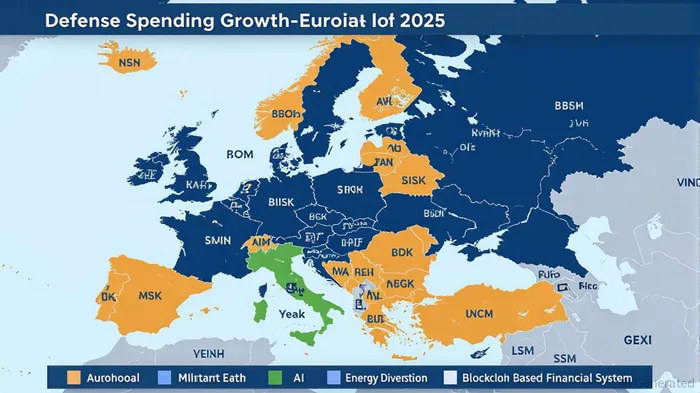
The war in Ukraine has catalyzed a seismic shift in European geopolitics, accelerating defense modernization and the development of sanctions-resistant industries. As Russia's economy faces structural strain from Western sanctions—freezing $58 billion in assets by March 2023 and slashing oil revenues[1]—Europe is recalibrating its industrial and financial strategies to ensure strategic autonomy. This analysis explores the long-term investment case for European defense and sanctions-resistant sectors, focusing on resilient industrial opportunities amid escalating geopolitical risks.
Defense Spending: A Structural Supercycle
European defense budgets are entering a prolonged supercycle, driven by NATO's 2025 summit commitment to raise spending to 5% of GDP by 2035[2]. The EU's Readiness 2030 plan, coupled with Germany's €500 billion infrastructure fund, is reshaping the continent's defense industrial base. By 2030, European defense spending is projected to account for 22% of global defense budgets[2], outpacing U.S. and Chinese growth.
Key beneficiaries include companies like Rheinmetall, which has secured contracts for next-generation armored vehicles and artillery systems[3], and Alea Quantum Technologies, a Copenhagen-based startup developing photonic quantum hardware to secure military communications[4]. These firms exemplify the shift toward dual-use technologies—AI, robotics, and quantum computing—that serve both defense and civilian markets. The EU's European Defence Fund (EDF) is allocating €1.065 billion in 2025 to R&D in domains like cyber warfare and autonomous systems[3], creating a fertile ground for innovation.
Sanctions-Resistant Energy Sectors: Diversification and Resilience
The EU's REPowerEU Plan has accelerated the transition from Russian fossil fuels, with renewables now accounting for 40% of the bloc's energy mix[5]. Energy companies like Eni and TotalEnergies are capitalizing on this shift, investing in green hydrogen and offshore wind projects. Meanwhile, the 18th sanctions package against Russia—targeting shadow fleets and oil buyers—has forced Russia to pivot to non-Western markets, but European firms are leveraging this vacuum to expand into emerging energy corridors[5].
The sector's resilience is further bolstered by strategic stockpiling and LNG infrastructure. For example, Germany's North Stream 2 pipeline has been repurposed for hydrogen transport, aligning with the EU's decarbonization goals[5]. Investors should note that while short-term volatility persists, the long-term structural demand for energy security ensures robust returns.
Fintech and Blockchain: Building Sanctions-Resistant Financial Systems
European fintechs are pioneering blockchain-based solutions to circumvent sanctions and enhance financial sovereignty. The digital euro, proposed by the ECB, aims to create a sovereign digital currency for cross-border transactions, reducing reliance on U.S. payment systems[6]. Complementing this, platforms like Fnality are using utility settlement coins to enable real-time, tokenized payments, bypassing traditional banking intermediaries[6].
Regulatory frameworks like the Markets in Crypto-Assets (MiCA) directive are fostering innovation while ensuring stability. MiCA's prohibition of algorithmic stablecoins and requirement for 1:1 reserve backing[7] position the EU as a global leader in crypto regulation. Fintechs such as Revolut and N26 are integrating these standards into their compliance models, offering secure, sanctions-resistant payment rails[7].
Risks and Strategic Considerations
While the investment case is compelling, risks remain. Policy shifts, such as the U.S.-EU trade deal's 15% tariffs[2], could disrupt supply chains. Additionally, customer concentration in defense sectors—where governments dominate procurement—poses liquidity risks. Investors must also monitor Russia's ability to adapt, as its shadow fleet and yuan-based trade networks may mitigate some sanctions' impact[1].
Conclusion
The convergence of geopolitical tensions, regulatory innovation, and technological advancement is creating a unique window for investors. European defense and sanctions-resistant sectors—spanning AI-driven military tech, renewable energy, and blockchain finance—offer both resilience and growth potential. As the EU's defense budget grows at 6.8% annually[2] and fintechs pioneer decentralized payment systems[7], the strategic case for long-term investment is clear. However, success will require careful navigation of regulatory and geopolitical dynamics, ensuring alignment with Europe's evolving vision of strategic autonomy.







Comentarios
Aún no hay comentarios