
The Strategic Case for Copper Miners in 2026: M&A, AI, and EVs Drive a New Industrial Gold Rush
The global copper market is entering a pivotal inflection point in 2026, driven by a perfect storm of structural supply constraints, surging demand from artificial intelligence (AI) and electric vehicles (EVs), and a wave of strategic mergers and acquisitions (M&A) reshaping the industry. For investors, this convergence of factors presents a compelling opportunity to capitalize on a sector poised for outsized returns.
A Structural Shortage: Supply Fails to Keep Up with Demand
The copper market is locked in a deepening deficit, with supply struggling to meet the relentless pull of electrification and digital transformation. J.P. Morgan Global Research projects a global refined copper deficit of approximately 330,000 metric tons in 2026, exacerbated by mine disruptions such as the Grasberg Block Cave closure in Indonesia and operational challenges at Chile's Quebrada Blanca mine. BloombergNEF warns that without new mines and recycling infrastructure, the deficit could balloon to 19 million metric tons by 2050. Declining ore grades and the long lead times required to bring new projects online-often exceeding a decade-further compound the imbalance.
AI and EVs: Copper's New Growth Engines
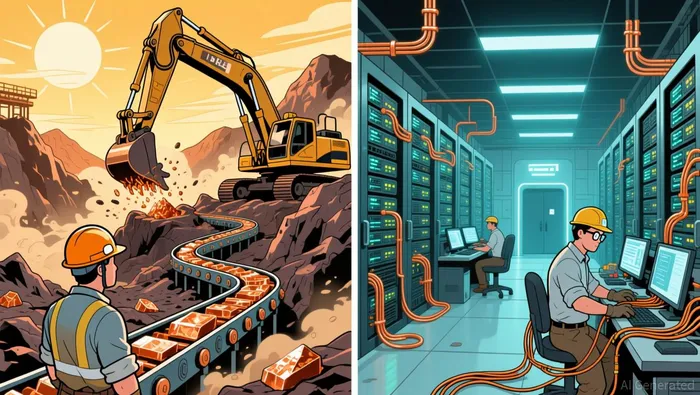
The demand surge is being fueled by two megatrends: AI-driven data centers and the EV revolution. A single hyperscale AI data center can require up to 50,000 tons of copper, compared to 5,000–15,000 tons for conventional facilities, with data centers projected to consume over 500,000 metric tons annually by 2030. Meanwhile, EVs use three to five times more copper than internal combustion vehicles, and global EV adoption is accelerating. S&P Global estimates that AI and electrification will push global copper demand to 42 million metric tons by 2040, a 50% increase from current levels.
Geopolitical Risks and the M&A Arms Race
Copper's strategic importance has elevated it to a critical mineral in the U.S. and other nations, intensifying competition for supply. Production is concentrated in politically volatile regions: Chile and Peru account for nearly 40% of global output, while China dominates processing and refining. Recent events, such as the fatal mudslide at Indonesia's Grasberg mine and seismic disruptions at the Kamoa-Kakula complex in the Democratic Republic of the Congo, have underscored the fragility of the supply chain.
To mitigate these risks, mining companies are accelerating consolidation. The Anglo American-Teck Resources merger, valued at $53 billion, is a prime example, creating one of the world's top five copper producers and integrating Chile's Collahuasi and Quebrada Blanca mines via a conveyor system to boost efficiency. Similarly, Rio Tinto and Glencore are in advanced talks for a $260 billion megadeal, which would form the largest mining entity in history and secure a dominant position in copper and other critical minerals. Smaller but strategic acquisitions, such as American Lithium Minerals' purchase of Chilean copper-silver projects, highlight the sector's focus on securing high-grade assets.
Investment Implications: Capturing the Copper Premium
The tightening supply-demand balance and strategic consolidation are already translating into higher prices. J.P. Morgan forecasts copper prices to reach $12,500 per metric ton in Q2 2026, with an annual average of $12,075/mt. For investors, exposure to copper miners offers a dual benefit: capital appreciation from rising prices and value creation through M&A-driven synergies. ETFs like the Global X Copper Producers Index ETF provide diversified access to the sector, while individual stocks in high-growth junior explorers and majors with robust project pipelines are also attractive.
Conclusion: A Golden Opportunity in the Age of Electrification
The copper market's structural imbalance, amplified by AI and EV demand, is creating a new industrial gold rush. As geopolitical tensions and supply constraints persist, strategic M&A will be critical for companies to scale and secure their place in the energy transition. For investors, the time to act is now-before the next wave of price volatility and consolidation reshapes the sector.







Comentarios
Aún no hay comentarios