
The Strategic Case for Allocating to the New XRP ETF in a Crypto-Integrated Portfolio
Accessibility: Bridging the Gap Between Crypto and Traditional Markets
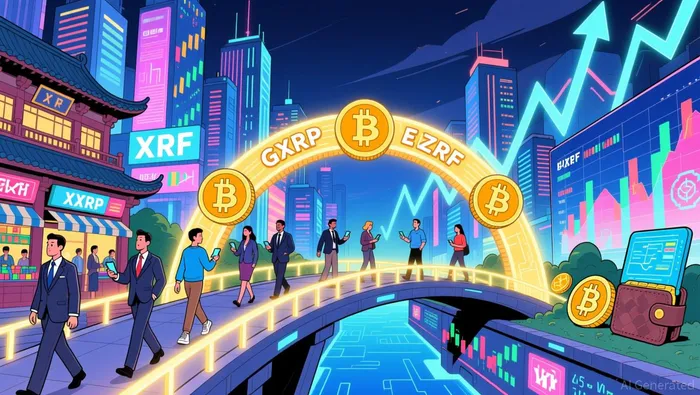 The introduction of XRP ETFs, such as Grayscale's GXRP (launching November 24, 2025) and Canary Capital's XRPF (trading from November 13, 2025), has significantly lowered barriers to entry for investors according to reports. These products eliminate the complexities of direct crypto ownership, offering familiar ETF structures with the liquidity of major exchanges like NYSE Arca and Nasdaq as data shows. For institutional investors, the SEC's recent approval of spot BitcoinBTC-- and EthereumETH-- ETFs in 2025 has set a regulatory precedent, reducing perceived risks associated with digital asset exposure. Meanwhile, retail investors benefit from streamlined access to XRP's price action without the need for crypto wallets or exchange accounts. Franklin Templeton's upcoming EZRP ETF further underscores the growing institutional confidence in XRP's market viability.
Demand Catalysts: Regulatory Momentum and Institutional Inflows
The XRP ETF landscape is already generating substantial demand. Canary's XRPF attracted $58 million in initial trading volume, signaling strong retail and institutional interest according to market analysis. Analysts project that Franklin's ETF could draw $150–$250 million in initial inflows, reflecting broader confidence in XRP's market position as reports indicate. These figures are amplified by the SEC's 2023 legal defeat in its case against Ripple, which reclassified XRP as a non-security, paving the way for its inclusion in regulated investment products as legal records show. Additionally, the broader approval of spot crypto ETFs in 2025 has normalized digital asset allocations, with XRP ETFs benefiting from the same institutional-grade infrastructure now available for Bitcoin and Ethereum as market data reveals.
Long-Term Adoption Potential: Beyond Speculation to Real-World Utility
XRP's value proposition extends beyond market speculation, with tangible use cases driving sustained demand. Ripple's RippleNet infrastructure has expanded cross-border payment partnerships with regional banks and fintechs in Asia, Europe, and the Middle East, enabling faster, lower-cost international transactions. Daily on-chain activity now exceeds 2 million transactions, with new wallet addresses growing rapidly, indicating robust grassroots adoption. The launch of Ripple's RLUSD stablecoin has further enhanced liquidity, creating a bridge between XRP and traditional financial systems. Notably, XRP's role in asset tokenization-such as Ripple's collaboration with Dubai's Land Department to digitize property ownership-demonstrates its potential to disrupt traditional asset classes. These developments position XRP as a foundational asset in the evolving digital economy, with ETFs serving as a gateway for diversified portfolios.
Conclusion: A Strategic Allocation in a Crypto-Integrated Portfolio
The convergence of regulatory clarity, institutional adoption, and real-world utility makes XRP ETFs a compelling addition to crypto-integrated portfolios. By offering simplified access to a digital asset with growing cross-border and tokenization use cases, these ETFs align with the long-term trend of financial system digitization. As XRP's ecosystem matures, investors are well-positioned to capitalize on its dual role as both a speculative and utility-driven asset.






Comentarios
Aún no hay comentarios