
Strategic Capital Recycling in India's Data Centre Sector: CapitaLand's Partial Divestment and CIDCF's Entry as a Catalyst for Growth
The Indian data centre sector is undergoing a transformative phase, driven by surging demand for AI-ready infrastructure and a strategic shift toward capital recycling. CapitaLand India Trust's (CLINT) recent partial divestment of stakes in three pre-leasing data centres to the CapitaLand India Data Centre Fund (CIDCF) exemplifies this trend, offering a blueprint for value creation in a market poised for exponential growth. By unlocking liquidity while retaining long-term upside, CLINT's move underscores how partial divestments can catalyze development in a sector where power availability and technological readiness are critical constraints.
CapitaLand's Strategic Divestment: A Model for Capital Recycling
CLINT has agreed to sell a 20.2% stake in three data centres under development-located in Navi Mumbai, Chennai, and Hyderabad-to CIDCF for S$99.73 million (INR 7.02 billion). These assets, with a combined gross power capacity of 200 MW, are AI-ready and feature sustainable design elements, aligning with India's growing demand for energy-efficient infrastructure. The transaction values the assets at INR 51.97 billion (S$738.2 million), a premium of 13.6% over an independent valuation of INR 45.70 billion. This premium reflects investor confidence in India's data centre market, which is projected to grow at a 14.60% CAGR through 2032, reaching USD 27.2 billion .
The strategic rationale for CLINT's divestment is twofold. First, it strengthens the trust's balance sheet by monetizing a portion of its development pipeline, enhancing financial flexibility for future investments. Second, it establishes a partnership with CIDCF, a dedicated fund focused on India's key digital corridors. CIDCF's first close of S$150 million, anchored by a global institutional investor, signals strong appetite for India's data centre assets. The fund's right of first offer on CLINT's fourth asset in Bangalore further solidifies a long-term collaboration, enabling CLINT to leverage CIDCF's capital for scaling its portfolio while retaining a controlling stake.
AI-Ready Infrastructure and Pre-Leasing: Drivers of Value Creation 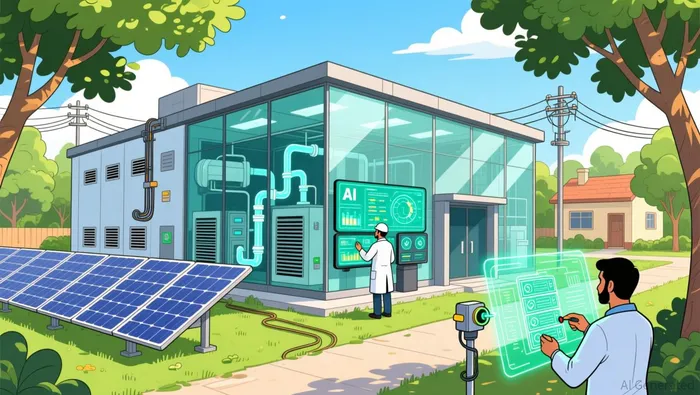
The value proposition of CLINT's assets lies in their alignment with India's AI-driven digital transformation. AI workloads demand high-density computing and real-time efficiency, which CLINT's data centres address through advanced cooling technologies and AI-powered predictive maintenance . This technological readiness is critical in a market where demand for AI-ready infrastructure is expected to triple by 2030.
Pre-leasing has emerged as a key strategy to mitigate risks associated with power availability and grid interconnection delays. By securing long-term power purchase agreements (PPAs), developers like CLINT can guarantee energy supply for high-density AI workloads, a critical factor in attracting hyperscale tenants. For instance, Microsoft's 20-year PPA with Constellation to source 835 MW of carbon-free energy highlights the importance of power assurance in AI data centre development . CLINT's pre-leasing model, combined with CIDCF's capital, positions the assets to capitalize on this trend while minimizing operational risks.
Market Dynamics and Financial Metrics: A High-Growth, High-Stakes Sector
India's data centre market is attracting record investments, with global deals hitting $61 billion in 2025 amid a $389 billion construction frenzy. However, structural bottlenecks-such as power shortages and permitting delays-remain significant challenges. CLINT's partial divestment addresses these headwinds by accelerating capital recycling, allowing the trust to reinvest in higher-growth opportunities. The transaction's premium valuation also reflects the sector's premium pricing for assets with pre-leased, AI-ready attributes, a trend observed in global markets like Northern Virginia and Silicon Valley .
From a financial perspective, the deal enhances CLINT's return on equity by reducing leverage and freeing capital for strategic initiatives. CEO Gauri Shankar Nagabhushanam emphasized that the divestment supports CLINT's portfolio reconstitution strategy, with potential exit avenues including an initial public offering of the assets. This flexibility is crucial in a sector where exit strategies are evolving, with institutional investors increasingly favoring long-term partnerships over traditional IPOs.
Conclusion: A Catalyst for Sector-Wide Growth
CapitaLand's partial divestment and CIDCF's entry into India's data centre sector represent a strategic alignment of capital, technology, and market demand. By monetizing a portion of its development pipeline at a premium, CLINT not only strengthens its balance sheet but also sets a precedent for how developers can navigate the challenges of AI-driven infrastructure. As India's data centre capacity is projected to double by 2027, such capital recycling strategies will become increasingly vital for scaling sustainable, high-performance assets. For investors, the transaction highlights the sector's potential to deliver robust returns while supporting the digital economy's infrastructure needs.







Comentarios
Aún no hay comentarios