
Strategic Capital Allocation in AI Infrastructure: Galaxy Digital and Texas's Competitive Edge
The global race for AI dominance is accelerating, and infrastructure is emerging as the critical battleground. As artificial intelligence workloads grow exponentially, the demand for energy-efficient data centers-capable of handling high-performance computing (HPC) and machine learning tasks-has become a priority for investors and tech leaders alike. Galaxy Digital's recent $460 million funding round, coupled with Texas's regulatory and energy advantages, offers a compelling case study in strategic capital allocation for AI infrastructure.
Galaxy Digital's Pivot to AI: A Capital-Intensive Bet
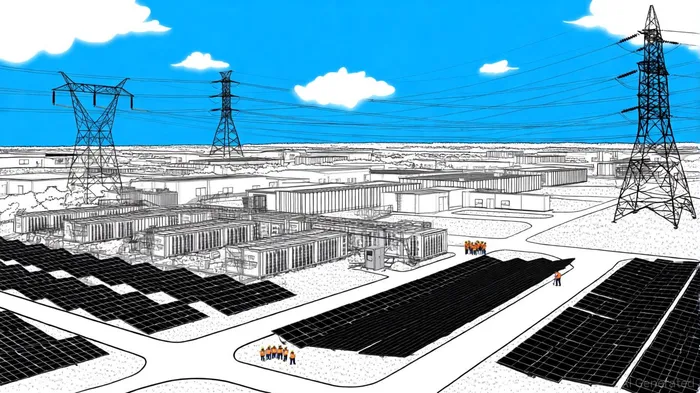
Galaxy Digital, once synonymous with BitcoinBTC-- mining, is repositioning itself as a leader in AI infrastructure. The firm's $460 million investment-secured through a mix of new share issuances and executive stock sales-will fund the expansion of its Helios campus in Texas, a former crypto mining site now repurposed for AI and HPC workloads, according to a CoinCentral report. This funding complements an earlier $1.4 billion project financing facility, underscoring the scale of capital required to retrofit energy-intensive facilities for next-generation computing, according to an NBC DFW report.
The Helios campus, set to deliver 133 megawatts of critical IT load by mid-2026, is already leased to CoreWeaveCRWV--, a major AI cloud provider, under a 15-year agreement for 800 megawatts of capacity, as reported by a Cointelegraph report. This partnership highlights a key trend: repurposing existing infrastructure to avoid the high costs of building new data centers from scratch. Galaxy's CEO, Mike Novogratz, has emphasized that the institutional backing validates the company's pivot, positioning it to compete in a market projected to grow as AI adoption accelerates, a point covered in the Cointelegraph reporting.
Texas: A Regulatory and Energy Powerhouse
Texas's competitive edge in AI infrastructure stems from its unique combination of low energy costs, abundant natural resources, and forward-looking regulation. The state's deregulated energy market, coupled with access to cheap natural gas and renewables, has made it a magnet for data centers. As of 2025, Texas hosts 384 active data centers-surpassing even California-driven by its ability to scale power infrastructure rapidly, according to a Newsweek map.
However, the state's energy landscape is evolving. Senate Bill 6 (SB-6), enacted in June 2025, introduces a framework to manage the grid strain caused by large energy users like data centers. Under the law, facilities consuming 75 megawatts or more must contribute to grid upgrades, register backup generators, and allow ERCOT to remotely disconnect them during emergencies, as noted in the CoinCentral coverage. While critics argue SB-6 could stifle innovation, proponents view it as a necessary step to ensure equitable cost distribution and grid reliability. For Galaxy, this means aligning its Helios campus with regulatory expectations while leveraging Texas's existing power infrastructure, according to a Tecronet article.
Strategic Allocation: Balancing Cost, Efficiency, and Scalability
The Helios campus exemplifies strategic capital allocation in AI infrastructure. By retrofitting a former Bitcoin mining site, Galaxy avoids the high upfront costs of constructing new facilities. The campus's design-featuring distributed redundant electrical systems and rack densities of 130–140 kW-optimizes energy efficiency while supporting high-performance workloads, a detail highlighted in the CoinCentral piece. Additionally, Texas's low-latency connectivity to Dallas (under 15 milliseconds round-trip) ensures proximity to key AI markets, another point covered by CoinCentral.
Yet challenges persist. Rising energy demand from data centers could drive electricity rates upward, as seen in Dallas, where Oncor increased residential delivery rates by 13.7% between 2023 and 2024 to fund grid upgrades, according to a PowerChoice analysis. National projections suggest average monthly bills could rise by over 55% by 2030, with Texas at the forefront of this trend, as the PowerChoice analysis also notes. Galaxy's success will depend on its ability to hedge against these costs through renewable energy procurement and battery storage solutions, such as the Quinlan BESS in Hunt County, a project described in the NBC DFW reporting.
Conclusion: A Blueprint for AI Infrastructure Investment
Galaxy Digital's $460 million investment and Texas's regulatory framework illustrate a broader shift in AI infrastructure strategy. By repurposing existing assets, securing institutional capital, and navigating evolving energy policies, firms can position themselves to meet the surging demand for AI computing. For investors, the key takeaway is clear: strategic capital allocation must prioritize energy efficiency, regulatory alignment, and long-term scalability. As AI reshapes industries, the companies and regions that master these principles will dominate the next decade of technological growth.





Comentarios
Aún no hay comentarios