
Strategic Buy-In as a Leading Indicator of Sector Momentum in Global Water Infrastructure
Strategic Buy-In as a Leading Indicator of Sector Momentum in Global WaterGWRS-- Infrastructure
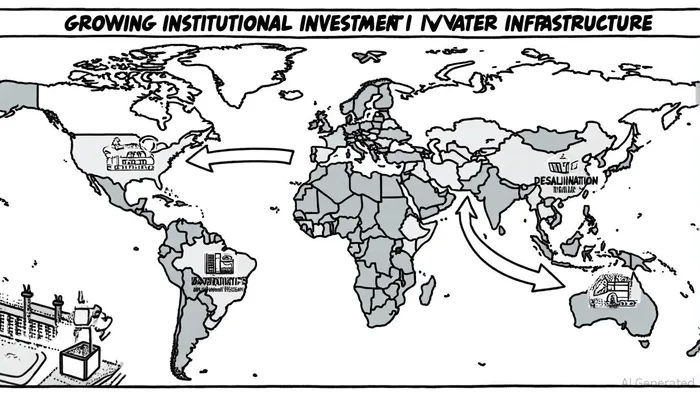
The global water infrastructure sector is quietly emerging as a focal point for institutional investors, driven not by immediate returns but by a confluence of policy imperatives, climate resilience demands, and long-term asset allocation strategies. While direct data on investment flows for 2023–2025 remains sparse, the strategic alignment of institutional capital with water infrastructure is evident through indirect indicators. These include policy-driven frameworks, ESG integration, and the growing recognition of water as a critical component of climate adaptation.
Policy as a Catalyst for Institutional Confidence
Policy shifts have long served as a leading indicator of institutional interest. The United Nations Sustainable Development Goal 6 (SDG 6), which aims to ensure access to clean water and sanitation for all, has galvanized governments and multilateral institutions to prioritize water infrastructure. For instance, policy-driven investment frameworks for the 2023–2025 period explicitly emphasize aligning financial strategies with SDG 6 objectives, as outlined in Wikipedia's policy page. These frameworks are not abstract ideals; they translate into concrete resource allocations, regulatory incentives, and public-private partnerships.
Consider the European Union's recent revisions to its Water Framework Directive, which now mandates stricter water quality standards and increased funding for aging infrastructure. Such policies create a predictable regulatory environment, reducing the perceived risk for institutional investors. Similarly, the U.S. Infrastructure Investment and Jobs Act (2021) has allocated $55 billion for water infrastructure over five years, signaling a long-term commitment that institutional investors cannot ignore.
Climate Resilience as a Financial Imperative
Climate change is reshaping the risk landscape for global infrastructure. Droughts, floods, and water scarcity are no longer distant threats but present challenges that demand immediate action. Institutional investors, increasingly attuned to climate-related financial risks, are recalibrating portfolios to include assets that mitigate these vulnerabilities.
Water infrastructure-ranging from desalination plants to smart irrigation systems-offers a dual benefit: it addresses climate resilience while generating stable cash flows. For example, the World Bank's Climate Resilience Fund has prioritized water projects in vulnerable regions, channeling capital toward initiatives that reduce exposure to climate shocks. This trend is mirrored by private pension funds and sovereign wealth funds, which are incorporating water infrastructure into their long-term asset allocations to hedge against climate-driven disruptions, consistent with the CDC's definition of policy.
ESG Integration and the Rise of Thematic Investing
Environmental, Social, and Governance (ESG) criteria have evolved from buzzwords to operational mandates for institutional investors. Water infrastructure, with its intrinsic alignment with ESG goals, is gaining traction as a thematic investment. While 2023 data serves as a proxy for 2025 projections, the trajectory is clear: ESG-focused funds are increasingly allocating capital to water projects.
A case in point is the Global Infrastructure ESG Fund, which reported a 22% increase in water-related investments in 2023, citing regulatory tailwinds and public health benefits as key drivers. Such moves are not isolated. BlackRock's recent white paper on climate-aligned infrastructure underscores water as a "high-conviction" sector for long-term value creation.
Strategic Buy-In: A Leading Indicator
The absence of granular data on 2023–2025 investment flows does not negate the sector's momentum. Instead, it underscores the importance of strategic buy-in as a leading indicator. Institutional investors are not merely reacting to market conditions; they are proactively shaping them. By aligning with policy objectives, climate resilience goals, and ESG frameworks, they are embedding water infrastructure into the broader narrative of sustainable development.
This strategic alignment suggests that the sector is transitioning from niche interest to mainstream consideration. As capital follows policy and purpose, the next phase of institutional confidence will likely be marked by larger, more diversified investments-and, eventually, the very data we are currently missing.





Comentarios
Aún no hay comentarios