
U.S. Strategic Bitcoin Adoption: A Geopolitical and Monetary Policy Revolution
The U.S. government's 2025 strategic adoption of BitcoinBTC-- marks a paradigm shift in global financial architecture. By institutionalizing Bitcoin as a reserve asset and creating a unified digital asset framework, the U.S. is redefining its role in the post-sovereign monetary era. This move, underpinned by executive orders and legislative clarity, carries profound implications for geopolitical power dynamics, monetary policy innovation, and long-term investment strategies.
Strategic Bitcoin Reserve: A New Reserve Asset
In March 2025, President Donald J. Trump signed an Executive Order establishing the Strategic Bitcoin Reserve (SBR), capitalized with Bitcoin seized through criminal or civil asset forfeiture proceedings. The SBR is explicitly designed to function as a "digital gold" reserve, with no Bitcoin within the reserve to be sold, ensuring its role as a long-term store of value, according to a White House fact sheet. This initiative aligns with the Treasury Department's recognition of Bitcoin's scarcity and security, positioning it as a strategic hedge against inflation and geopolitical instability, as noted in Establishment of the Strategic Bitcoin Reserve.
The SBR's budget-neutral acquisition strategy-allowing the Treasury and Commerce Secretaries to secure additional Bitcoin without taxpayer costs-further underscores its fiscal discipline. By centralizing digital asset management across federal agencies, the U.S. is not only enhancing accountability but also maximizing the strategic value of its holdings. Agencies were mandated to report their digital asset inventories within 30 days, a move that standardizes transparency and operationalizes Bitcoin as a sovereign asset, as detailed in the White House fact sheet.
Federal Reserve's Digital Asset Framework: Clarity and Innovation
The Federal Reserve's 2025 adoption framework, developed by the President's Working Group on Digital Asset Markets, emphasizes regulatory modernization and technological leadership. Key components include:
1. GENIUS Act Implementation: The first federal regulatory structure for stablecoins, with the GENIUS Act requiring 1:1 reserves of U.S. dollars and short-term Treasuries, ensuring stability while promoting global adoption.
2. Market Structure Modernization: Encouraging federal-level trading of digital assets and the use of regulatory sandboxes to testTST-- innovative products like DeFi protocols, as highlighted in the Q3 2025 Crypto Recap.
3. AML and Financial Stability: Updating anti-money laundering rules to address illicit finance in digital markets, while maintaining a technology-neutral approach to preserve U.S. banking competitiveness, as outlined in the White House report.
The framework's emphasis on dollar-backed stablecoins is particularly significant. By legitimizing stablecoins as a bridge between traditional and digital finance, the U.S. is reinforcing the dollar's dominance in a decentralized era. This aligns with the White House's goal of making the U.S. the "crypto capital of the world," attracting institutional investment and fostering technological leadership, as discussed in the Q3 2025 Crypto Recap.
Geopolitical Implications: Reshaping Global Power Dynamics
The U.S. strategic adoption of Bitcoin challenges traditional reserve asset paradigms. Historically, gold and foreign currencies have dominated sovereign reserves, but Bitcoin's decentralized, scarce nature offers a new model. By treating Bitcoin as a strategic reserve, the U.S. is signaling a shift toward digital sovereignty, reducing reliance on centralized systems and potentially diminishing the influence of rival nations' currencies, a point emphasized in the White House fact sheet.
This move also positions the U.S. to counter China's growing influence in digital finance. While China has pursued a state-backed digital yuan, the U.S. is leveraging market-driven innovation to create a decentralized, globally interoperable financial infrastructure. The Strategic Bitcoin Reserve, combined with dollar-backed stablecoins, could enable the U.S. to maintain its financial hegemony even as global monetary systems evolve, according to the presidential action establishing the reserve.
Investment Implications: A New Era for Institutional Adoption
The 2025 policy developments have catalyzed a surge in institutional Bitcoin adoption. The GENIUS Act and CLARITY Act (pending) have provided much-needed regulatory clarity, reducing legal uncertainties for banks and asset managers. As a result, Q3 2025 saw record ETF inflows and increased institutional holdings, with Bitcoin and EthereumETH-- outperforming traditional assets, as reported in the Q3 2025 Crypto Recap.
Investors should consider the following opportunities:
- Bitcoin ETFs: With regulatory hurdles cleared, ETFs are now a primary vehicle for institutional accumulation.
- Stablecoin Ecosystems: Dollar-backed stablecoins, now federally regulated, are poised for global adoption, creating demand for U.S.-based financial infrastructure.
- Regulatory Arbitrage: The U.S. framework's innovation-friendly approach may attract global capital, creating a competitive edge over jurisdictions with restrictive policies.
However, risks remain. Geopolitical tensions could lead to regulatory reversals, and Bitcoin's volatility persists despite institutional adoption. Investors must balance long-term strategic value with short-term market dynamics.
Conclusion
The U.S. strategic adoption of Bitcoin represents a bold reimagining of monetary policy and geopolitical influence. By institutionalizing Bitcoin as a reserve asset and fostering a regulatory environment conducive to innovation, the U.S. is not only securing its financial future but also reshaping global economic systems. For investors, this signals a pivotal moment to align portfolios with the emerging digital asset paradigm, leveraging policy-driven growth while navigating inherent risks.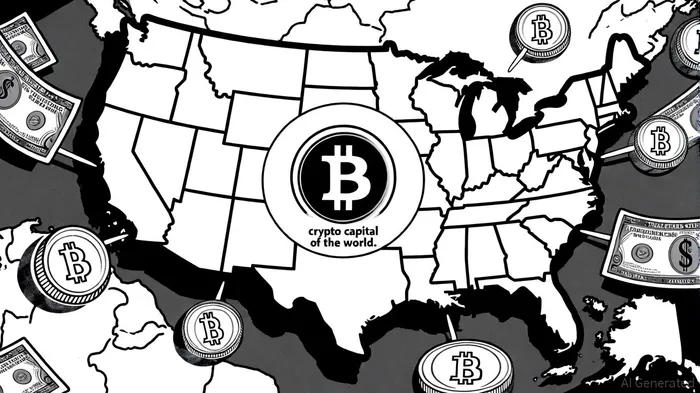






Comentarios
Aún no hay comentarios