
Strategic AVL Token Burns and Long-Term Value Accrual for Avalon Labs Holders
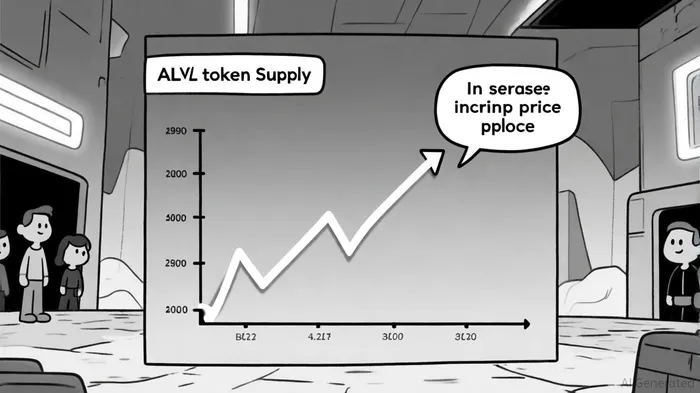
In the rapidly evolving DeFi landscape, tokenomics has emerged as a critical determinant of market confidence and long-term value. Avalon Labs' recent strategic AVL token burns exemplify how deflationary mechanisms can align protocol incentives with tokenholder interests while signaling commitment to scarcity-driven value accrual.
The Mechanics of Avalon's Burn Strategy
According to a report by Crypto News, Avalon Labs executed a significant token burn in Q3 2025, removing 37% of its circulating AVL supply by repurchasing and permanently burning 13,955,164 tokens[1]. This initiative, funded entirely by the platform's monthly protocol revenue, cost $1.88 million and marked a pivotal step in its broader deflationary strategy[1]. Since June 2025, the company has burned a cumulative 93,955,164 AVL tokens, valued at $13.8 million[2], demonstrating a sustained effort to reduce supply and enhance token utility.
The burn mechanism operates on a self-sustaining model: as the platform generates revenue from Bitcoin-based lending and ecosystem activity, a portion is allocated to repurchase and destroy AVL tokens[1]. This approach not only reduces circulating supply but also ties token value directly to the platform's operational performance, creating a flywheel effect where increased usage drives higher burn rates and, consequently, greater scarcity.
Market Reaction and Scarcity Signaling
The immediate market response to Avalon's Q3 2025 burn was a 7.6% price increase, with AVL reaching $0.147 before consolidating in the $0.145–$0.146 range[1]. This reaction underscores how token burns can act as a psychological catalyst for investors, who interpret reduced supply as a positive signal for future value. Historical data from similar deflationary models in crypto suggests that sustained burn programs often correlate with long-term price resilience, particularly when paired with robust ecosystem growth[3].
Ecosystem Expansion and Utility Enhancement
Avalon's deflationary strategy is complemented by its expansion into Bitcoin-based lending and integrations with platforms like Bybit and Rootstock[3]. These developments not only diversify revenue streams but also increase AVL's utility as a governance and staking asset. For instance, the Dash Platform's upcoming Q3 2025 features—such as minting, freezing, and blacklisting for fungible tokens—will further enhance AVL's role in decentralized governance[3]. By aligning token utility with real-world use cases, Avalon reduces the risk of speculative devaluation and strengthens the case for long-term hodling.
Conclusion: A Blueprint for Sustainable Value
Avalon Labs' strategic AVL burns represent a disciplined approach to tokenomics, combining deflationary mechanics with ecosystem-driven utility. The self-sustaining nature of its burn program, funded by protocol revenue, ensures that value accrual remains tied to operational success rather than external financing. For investors, this creates a compelling narrative: as Avalon expands its DeFi footprint, the interplay of reduced supply and increased demand positions AVL as a candidate for sustained appreciation.
However, risks remain. The consolidation phase post-burn highlights the importance of maintaining momentum in ecosystem adoption. If Avalon can continue to innovate while executing its deflationary strategy, it may set a precedent for how token scarcity can be leveraged to drive long-term value in the DeFi space.






Comentarios
Aún no hay comentarios