
Strategic Asset Shifts in Finland's Energy Sector: Ownership Changes and Investor Implications
Ownership Consolidation and Market Realignment
One of the most notable developments is the acquisition of Lumme Energia Oy by Oomi Oy, a move poised to redefine Finland's electricity retail market. , Oomi will absorb Lumme Energia's operations, according to market reports. This merger, approved by the Finnish Competition and Consumer Authority, aims to enhance risk management and scale investments in renewable energy infrastructure according to industry analysis.
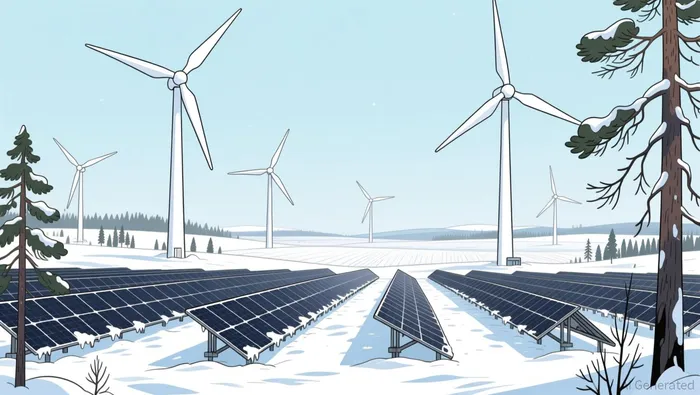
Simultaneously, Locus Energy has expanded its footprint in Finland through strategic acquisitions. The company recently secured the Mäkelänkangas hybrid wind and solar park in southern Finland, . Additionally, Locus acquired three wind farms from SUSI Partners, signaling a broader trend of international players capitalizing on Finland's renewable energy potential. These moves underscore Finland's appeal as a hub for hybrid energy projects and its strategic importance in the Nordic green transition.
Regulatory Momentum and Renewable Energy Growth
Finland's is evolving to support its ambitious climate goals. In 2024, , . Legislative reforms, including streamlined and extended taxation rights for offshore wind projects, are further incentivizing investment. The Electricity Market Act's partial revision has also diversified contractual structures for grid connections, facilitating like Mäkelänkangas.
However, recent declines in electricity prices have tempered new investment momentum. Despite this, major projects continue to materialize. , according to market data. These developments highlight the sector's resilience, even amid market volatility.
Investor Implications and Strategic Considerations
For investors, Finland's energy sector offers a dual opportunity: participation in a mature renewable energy market and exposure to regulatory-driven growth. The Oomi-Lumme Energia merger, for instance, creates a dominant player with enhanced capacity to scale green initiatives, potentially stabilizing returns in a fragmented market. Meanwhile, Locus Energy's acquisitions demonstrate the viability of hybrid projects, which optimize land use and grid efficiency-a critical factor in Finland's space-constrained environment.
Regulatory clarity remains a key risk factor. While streamlined permitting and tax incentives are encouraging, investors must monitor legislative shifts, such as the impending consolidation of environmental authorities in 2026. Additionally, the construction industry's projected growth-driven by green development and smart technologies-presents ancillary opportunities in infrastructure and project management.
Conclusion
Finland's energy sector is at a pivotal juncture, with ownership consolidation and regulatory innovation converging to accelerate decarbonization. For investors, the path forward requires a nuanced understanding of market dynamics, from the strategic advantages of mergers like Oomi's to the technical complexities of hybrid energy systems. As the country positions itself as a leader in sustainable energy, those who align with its vision stand to benefit from a sector poised for long-term growth.







Comentarios
Aún no hay comentarios