
Strategic Asset Repositioning and De-Risking: CanAlaska's Regained Control of Cree East Project
In the volatile landscape of the junior resource sector, strategic asset repositioning and de-risking are critical for long-term resilience. CanAlaska Uranium Ltd.'s recent termination of its option agreement with Nexus Uranium Corp. on September 19, 2025, exemplifies this approach. By regaining full control of the Cree East Project, CanAlaska has eliminated third-party encumbrances, streamlined decision-making, and positioned itself to capitalize on a high-potential uranium asset in a geopolitically significant region[1].
Strategic Repositioning: Focusing on Core Assets
The Cree East Project, located in the southeastern Athabasca Basin—a region historically rich in uranium deposits—has been a focal point of exploration since 2006, with over $20 million invested in geophysical surveys and drilling[1]. CanAlaska's decision to terminate the option agreement, which would have allowed Nexus to earn up to 75% ownership via $19 million in staged commitments, reflects a strategic pivot. By retaining 100% ownership, CanAlaska can now allocate capital and technical resources directly to advancing the project, bypassing the dilution and coordination challenges inherent in joint ventures[2].
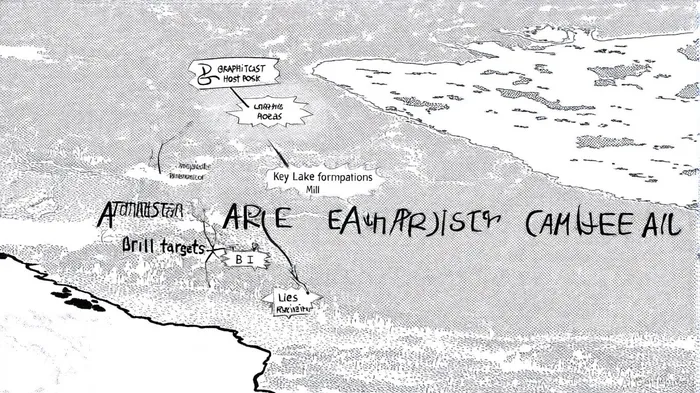
This repositioning is further strengthened by the project's proximity to the Key Lake Mine and Mill complex, just 35 kilometers away. As the McArthur River mine—the world's largest high-grade uranium deposit—approaches the end of its operational life in approximately 15 years, the need for nearby, high-grade uranium sources becomes increasingly urgent[1]. CanAlaska's control over Cree East positions it to potentially supply ore to Key Lake's existing infrastructure, reducing capital expenditures and accelerating time-to-market.
De-Risking Through Financial and Operational Clarity
The termination of the agreement also marks a significant de-risking milestone. Under the original terms, Nexus's $3.4 million investment had already funded critical exploration activities, including the 2025 winter drill program, which identified multiple high-priority targets in graphitic host rocks and banded iron formations[1]. By ending the agreement, CanAlaska avoids future financial obligations tied to Nexus's earn-in stages, which included additional cash, share, and exploration commitments[2]. This reduces balance-sheet strain and allows the company to prioritize shareholder value over third-party obligations.
Moreover, the project's geological potential has been de-risked through recent drilling. In February 2025, CanAlaska intersected graphitic host rocks with evidence of uranium mineralization, validating the project's exploration model[1]. The identification of additional targets—Areas A, I, and an untested conductor—provides a clear roadmap for follow-up drilling, mitigating the uncertainty often associated with early-stage projects.
Market Implications and Future Outlook
The global uranium market, driven by nuclear energy's role in decarbonization, remains underpinned by long-term demand. With geopolitical tensions and supply chain disruptions persisting, assets like Cree East—located in politically stable Canada—offer a compelling value proposition. CanAlaska's full ownership and proximity to existing infrastructure enhance its ability to respond swiftly to market signals, a critical advantage in a sector where timing and flexibility are paramount[1].
Conclusion
CanAlaska's reacquisition of the Cree East Project underscores the importance of strategic asset management in the junior resource sector. By eliminating third-party dependencies, reducing financial exposure, and leveraging a prime geographical location, the company has transformed a complex joint venture into a streamlined, high-potential asset. For investors, this move represents a calculated step toward de-risking and positioning for a future where uranium demand is poised to outstrip supply.







Comentarios
Aún no hay comentarios