
Strategic Asset Reallocation in the Gold Sector: Fulcrum Metals' Tully Divestiture and the Rise of Loyalist Exploration
Strategic Asset Reallocation in the Gold Sector: Fulcrum Metals' Tully Divestiture and the Rise of Loyalist Exploration
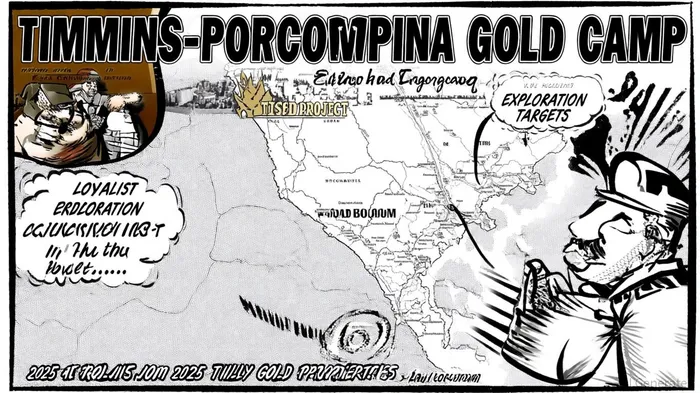
The gold sector in 2025 is undergoing a seismic shift as macroeconomic pressures, geopolitical tensions, and institutional demand converge to reshape investment priorities. Central banks, private investors, and mining firms are reallocating assets toward gold, driven by its dual role as a safe-haven asset and a hedge against inflation. In this evolving landscape, Fulcrum Metals' recent divestiture of the Tully Gold Project to Loyalist Exploration Limited stands out as a case study in strategic reallocation. By shedding exploration assets and pivoting to technology-driven operations, Fulcrum is aligning itself with broader industry trends while securing a stake in a junior explorer poised to capitalize on the Timmins gold rush.
The Tully Divestiture: A Calculated Move
Fulcrum's sale of the Tully Gold Project in October 2025 for 78.7 million Loyalist shares, $500,000 in cash, and a 2.0% net smelter return royalty reflects a disciplined approach to asset management. The transaction, finalized after an extended fundraising period for Loyalist, positions Fulcrum as a 19.99% shareholder in the junior explorer, with potential to increase its stake to 26.1% through milestone-based share issuances, according to a GlobeNewswire release. This structure ensures Fulcrum retains upside exposure to Tully's development while reducing operational risks tied to high-cost exploration.
The Tully project itself, located in the prolific Timmins-Porcupine Gold Camp, holds historical resources of 101,000 ounces of indicated gold and 43,000 ounces of inferred gold, according to Junior Mining Network. For Loyalist, the acquisition aligns with its "Buy Timmins" strategy to consolidate high-potential assets in one of the world's most productive gold districts. Meanwhile, Fulcrum's exit from exploration underscores its pivot to tailings reprocessing and cyanide-free extraction technologies, a move that reduces capital intensity while leveraging rising gold prices.
Broader Market Dynamics Driving Reallocation
Fulcrum's strategy mirrors a sector-wide reallocation of capital toward gold. Central banks, particularly in emerging markets, have purchased over 244 tonnes of gold in Q1 2025 alone, according to Equiti, with countries like China and Turkey accelerating diversification away from U.S. dollar reserves. This trend is compounded by record inflows into gold ETFs-397 metric tons of physical gold were added in the first half of 2024–2025, valued at nearly $38 billion-according to Discovery Alert. Investors are increasingly viewing gold as a counterbalance to volatile equities and debt markets, a trend noted in a Fidelity Institutional market update, especially as the Federal Reserve's accommodative policy and geopolitical uncertainties amplify demand for non-yielding safe-haven assets.
Gold prices have surged to over $3,400 per ounce in 2025, driven by these factors and supported by a 1% projected increase in global gold supply from new projects in Canada, Mexico, and Ghana, according to a Discovery Alert analysis. For junior explorers like Loyalist, this environment creates favorable conditions to advance projects like Tully, which benefits from historical drilling results including 5.7 meters of 322.02 g/t Au, as reported in an FT Markets announcement. Fulcrum's royalty and equity stake in Loyalist thus positions it to benefit from both rising gold prices and the junior's exploration success.
Technological Innovation and ESG Alignment
Fulcrum's strategic shift extends beyond asset sales. The company has adopted Extrakt Process Solution's TNS (Tailings Neutralization System) technology, which achieves gold recovery rates of up to 59.4% in three to six hours-far outperforming traditional cyanide-based methods, as reported by Mining Technology Insights. This innovation not only enhances operational efficiency but also strengthens Fulcrum's ESG credentials, a critical factor as institutional investors prioritize sustainability. Deloitte's 2025 industry analysis highlights such technological adoption as a key driver of profitability in a sector facing rising regulatory and environmental scrutiny.
The timing of Fulcrum's pivot is also noteworthy. As major gold producers like Barrick Gold and NewmontNEM-- restructure under new leadership to focus on growth, the sector is witnessing a broader shift toward scalable, low-cost solutions, a trend noted by Discovery Alert. Fulcrum's focus on tailings reprocessing taps into this trend, unlocking value from previously uneconomical resources while aligning with the industry's push for circular economy practices.
Investment Implications and Risks
For investors, Fulcrum's strategy offers a hybrid model: exposure to gold's macro-driven rally through its equity stake in Loyalist, coupled with operational leverage from its technology-led operations. However, risks remain. Junior explorers like Loyalist face financing challenges, and Tully's development hinges on successful drilling and resource upgrades. Additionally, gold's volatility-projected to see short-term pullbacks of 5–10% due to overbought conditions-requires careful risk management, according to GoldSilver Reports.
That said, the long-term outlook for gold remains robust. Analysts at J.P. Morgan and Goldman Sachs forecast prices reaching $3,675–$4,000 per ounce by late 2025, driven by sustained central bank demand and geopolitical tensions. For companies like Fulcrum, which combine strategic asset reallocation with technological innovation, the path to value creation is clear.
Conclusion
Fulcrum Metals' divestiture of the Tully Gold Project exemplifies the strategic asset reallocation reshaping the gold sector in 2025. By exiting high-risk exploration and embracing technology-driven operations, the company is positioning itself to thrive in a market where gold's role as a strategic asset is more critical than ever. For investors, the key takeaway is to seek companies that align with both macroeconomic tailwinds and operational innovation-a combination that Fulcrum and Loyalist are uniquely positioned to deliver.





Comentarios
Aún no hay comentarios