
Strategic M&A in Asset Management: Optimizing Fees and Embedding Sustainability for 2025 Growth
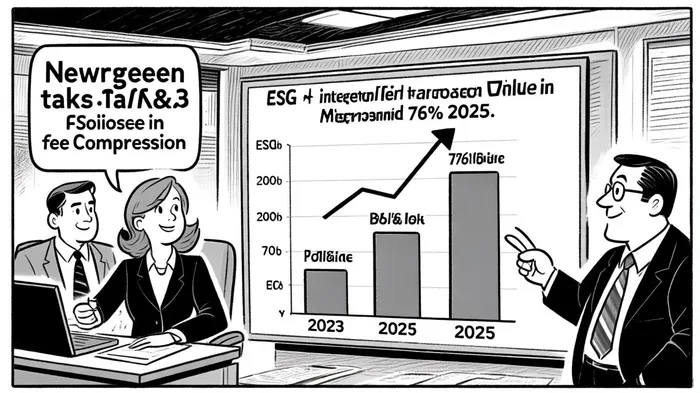
In 2025, the asset management sector has become a battleground for strategic mergers and acquisitions (M&A), driven by twin imperatives: optimizing fee structures to counter margin erosion and embedding sustainability metrics to align with investor expectations. According to a report by Debevoise[1], global M&A activity in the sector surged by 76% year-to-date, with total deal value reaching $50.8 billion by July 2025. This acceleration reflects a broader industry recalibration, as firms seek to balance cost pressures with the demand for differentiated, ESG-aligned offerings.
Fee Structure Optimization: The Cost-Synergy Imperative
Fee compression remains a critical challenge for asset managers, with rising interest rates and competitive pressures squeezing margins. To counter this, firms are leveraging M&A to achieve economies of scale and reduce operational costs. For instance, mergers-of-equals and bolt-on acquisitions have enabled managers to distribute fixed costs across larger asset bases while expanding product portfolios[6]. A case in point is Jupiter Asset Management's acquisition of CCLA Investment Management, which not only bolstered its ESG capabilities but also reduced overhead by consolidating back-office operations[2].
Private equity-backed consolidators are also playing a pivotal role. These firms inject capital to acquire smaller managers or integrate proprietary technology, thereby cutting long-term expenses. As noted by Norton Rose Fulbright[5], such deals often prioritize automation and AI-driven analytics to streamline processes, further enhancing fee competitiveness. For example, MetLife's acquisition of Raven Capital Management[1] allowed the firm to leverage Raven's digital infrastructure, reducing manual workflows and improving client reporting efficiency.
Sustainability as a Strategic Differentiator
Environmental, social, and governance (ESG) criteria have transitioned from buzzwords to dealmaking essentials. Institutional and retail investors now demand transparency and alignment with sustainability goals, pushing asset managers to acquire firms with ESG expertise. McKinsey's 2025 report[3] highlights that 36% of M&A deals in the sector now explicitly target ESG capabilities, up from 18% in 2023. This shift is evident in cross-border deals like M&G's partnership with Dai-ichi Life[2], which expanded the firm's European footprint while integrating Japanese ESG frameworks into its investment strategies.
Regulatory tailwinds are amplifying this trend. In Europe, potential retrocession bans and stricter ESG disclosure rules are incentivizing vertical integration and cross-border consolidation[1]. Firms that fail to adapt risk losing market share to competitors offering sustainable, high-conviction strategies. For instance, UK managers have increasingly pursued ESG-focused bolt-ons to meet the demand for impact investing, a segment projected to grow by 12% annually through 2030[5].
Future Outlook: Tech-Driven Deals and Regulatory Evolution
Looking ahead, the integration of advanced technologies will further reshape M&A dynamics. AI and automation are expected to unlock new efficiencies, enabling firms to process larger datasets and refine risk models[3]. PwC's 2025 mid-year outlook[6] predicts that tech-driven acquisitions will account for 40% of total deal value by year-end, as managers seek to digitize workflows and enhance client engagement.
However, macroeconomic headwinds and regulatory uncertainty remain risks. Rising interest rates and geopolitical tensions could dampen deal activity in the short term, while evolving ESG standards may complicate due diligence processes[5]. Firms that prioritize scalable, tech-enabled solutions—such as cloud-based portfolio management tools—will likely outperform peers in navigating these challenges[4].
Conclusion
The 2025 M&A boom in asset management underscores a sector in transformation. By optimizing fee structures through consolidation and embedding sustainability into core strategies, firms are positioning themselves to thrive in a low-margin, high-competition environment. For investors, this trend signals opportunities in managers with strong ESG track records, digital agility, and cross-border expansion potential. As the industry continues to converge traditional and alternative asset models[3], strategic M&A will remain a cornerstone of resilience and growth.







Comentarios
Aún no hay comentarios