
Strategic Asset Divestitures in the Mining Sector: Navigating Legal and Operational Risks to Sustain Shareholder Value
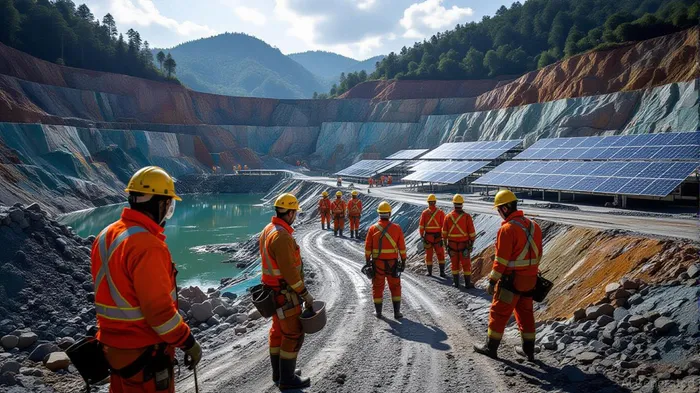
The mining sector stands at a crossroads, where strategic asset divestitures are increasingly leveraged to optimize portfolios and align with evolving market demands. However, the success of these divestitures hinges on a delicate balance between mitigating legal and operational risks and maximizing shareholder value. As global demand for critical minerals surges—driven by the energy transition—mining companies face heightened scrutiny over environmental, social, and governance (ESG) practices, operational efficiency, and geopolitical exposure.
Legal Risks: ESG Scrutiny and Regulatory Shifts
Legal risks in the mining sector have expanded beyond traditional compliance to encompass ESG factors that directly influence investor confidence. According to a report by EY, stakeholders now demand "net-positive impact" from mining operations, particularly in areas like tailings management and community engagement [3]. For instance, failures to address environmental liabilities—such as unregulated waste disposal or water contamination—can trigger lawsuits, regulatory penalties, and reputational damage, all of which erode shareholder value [3].
The energy transition further complicates this landscape. As companies pivot to extract critical minerals like lithium and nickel, they must navigate evolving regulations tied to carbon emissions and land use. A PwC analysis highlights that firms failing to adapt to these standards risk losing access to capital, as ESG-aligned investors increasingly prioritize sustainability over short-term gains [2]. This shift underscores the need for transparent governance frameworks to de-escalate legal risks during divestitures.
Operational Risks: Depletion, Costs, and Innovation Gaps
Operational risks remain a persistent challenge, with declining ore grades and rising exploration costs threatening profitability. EY's 2025 risk assessment notes that resource depletion forces companies to invest heavily in advanced extraction technologies, often straining capital budgets [1]. For example, the rising cost of labor and energy—compounded by global skills shortages—has disrupted operational timelines and safety protocols, directly impacting productivity [1].
Geopolitical factors further amplify these risks. Resource nationalism, such as sudden tax rule changes or ownership restrictions in key mineral-producing nations, can derail capital allocation strategies. This volatility necessitates agile operational planning, particularly for companies divesting assets in politically unstable regions.
Shareholder Value and Investment Implications
The interplay between legal and operational risks shapes investor perceptions of mining companies. Shareholder value is increasingly tied to capital discipline and the ability to secure funding for high-potential projects. PwC's Mine 2025 report emphasizes that firms balancing short-term returns with long-term sustainability—such as through joint ventures or ESG-focused divestitures—are better positioned to attract investment [2]. Conversely, companies that neglect risk management face higher discount rates, as investors factor in elevated uncertainties [1].
The concentration of mineral reserves in a few countries, notably China, also skews investment potential. Supply chain vulnerabilities have prompted a reevaluation of sourcing strategies, with digital transformation and cybersecurity now critical components of risk mitigation [3].
Strategic Recommendations for Mining Firms
To navigate these challenges, mining companies must adopt a dual strategy:
1. Integrate ESG into Divestiture Frameworks: Proactively address environmental liabilities and community concerns during asset sales to avoid post-transaction disputes.
2. Invest in Operational Resilience: Allocate capital to automation, AI-driven exploration, and energy-efficient extraction technologies to counteract resource depletion.
3. Diversify Geographically: Reduce exposure to resource nationalism by spreading operations across politically stable regions.
As the sector evolves, the ability to align divestitures with both regulatory expectations and operational realities will determine which firms thrive in the energy transition era.







Comentarios
Aún no hay comentarios