
Strategic Asset Consolidation: Badlands' Goliath Property Acquisition and Its Implications for Shareholder Value and Sector Positioning
Badlands Resources Inc. (TSXV: BLDS) has made a strategic move to acquire the Goliath Property in northwestern Ontario, a 2,050-hectare early-stage exploration project, for $200,000 in cash [1]. This acquisition, situated within the Kakagi-Rowan Lakes greenstone belt, aligns with the company's broader strategy to consolidate high-potential assets in a geologically prospective region. The transaction not only underscores Badlands' commitment to expanding its footprint in Ontario but also positions the company to capitalize on the region's historical production of copper, gold, and nickel.
Strategic Rationale: Proximity to Proven Deposits
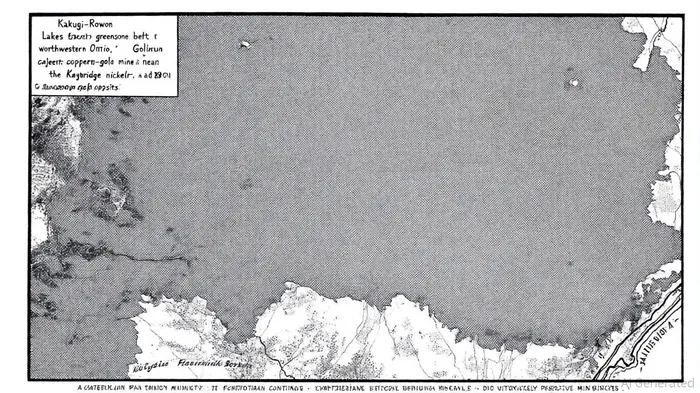
The Goliath Property's location adjacent to the past-producing Maybrun copper-gold mine and near the Kenbridge nickel and Cameron gold deposits is a critical factor in its strategic value [2]. These neighboring properties host NI 43-101 compliant resources, indicating a geological continuity that enhances the likelihood of similar mineralization styles in the Goliath area. For junior explorers like Badlands, proximity to established deposits reduces exploration risk and provides a framework for targeted drilling programs.
The Kakagi-Rowan Lakes greenstone belt, part of the Wabigoon Subprovince, is historically known for its copper-gold and nickel-copper sulfide mineralization [3]. By acquiring Goliath, Badlands gains access to a district with a legacy of production, which could attract joint-venture partners or streaming companies seeking exposure to underexplored but high-potential ground. This aligns with industry trends where junior miners prioritize asset consolidation in established mining camps to de-risk capital allocation .
Financial Implications and Shareholder Value
The $200,000 cash consideration for Goliath is a relatively low-cost entry for a property with significant upside potential. For a company with a market capitalization of approximately $15 million (as of September 2025), this acquisition represents a strategic use of capital without overleveraging the balance sheet. The transaction also includes an assumption of a 2% net smelter return (NSR) royalty to Blackwidow Geological Services Inc., with Badlands retaining the right to repurchase half of the royalty (1%) for $1 million .
This royalty buyback option introduces a unique value driver. If future drilling confirms economic mineralization, the company could recoup a portion of its investment by exercising the buyback at a fixed cost, effectively reducing future cash flow obligations. For shareholders, this creates a dual opportunity: either retain the royalty as a passive revenue stream or monetize it for a predetermined profit. Such flexibility is rare in junior mining acquisitions and could enhance shareholder returns if the property progresses to a development phase.
Sector Positioning and Market Reactions
Badlands' acquisition of Goliath strengthens its sector positioning in a region that has seen renewed interest due to global demand for critical minerals. Ontario's mining jurisdiction is well-regarded for its regulatory clarity and infrastructure, making it an attractive base for exploration. By consolidating assets in the Kakagi-Rowan Lakes belt, Badlands differentiates itself from peers focused on more speculative, greenfield projects in remote regions.
Market reactions to the announcement have been cautiously optimistic. While the TSX Venture Exchange has yet to approve the transaction, the company's insider involvement—Nav Dhaliwal, an executive chairman of Badlands, is an insider of Laxmi Resources Inc.—has raised questions about potential conflicts of interest . However, the non-arm's-length nature of the deal is balanced by the low acquisition cost and the absence of additional fees, mitigating concerns about overpayment.
Risks and Considerations
Despite the strategic merits, investors should remain cognizant of exploration risk. The Goliath Property is in an early stage, with no historical drilling or resource estimates to date. Success hinges on Badlands' ability to execute a cost-effective exploration program and generate positive results. Additionally, the company's decision to terminate its option to acquire the Rett Property in Thunder Bay—without incurring fees—suggests a strategic refocusing on higher-priority assets . While this reduces operational complexity, it also limits diversification in the short term.
Conclusion
Badlands' acquisition of the Goliath Property exemplifies strategic asset consolidation in the junior mining sector. By acquiring a low-cost, high-potential asset in a historically productive region, the company enhances its exploration portfolio and creates multiple pathways for value creation. The royalty buyback option adds a financial lever that could amplify returns if the property proves economically viable. While exploration risk remains inherent, the transaction's alignment with industry trends and Ontario's mining-friendly environment positions Badlands to capitalize on a favorable market narrative. For investors, this move represents a calculated bet on geological potential and strategic positioning—a hallmark of disciplined junior mining operators.







Comentarios
Aún no hay comentarios