
Strategic Antimony Supply Chain Positioning: A Critical Mineral Investment in the U.S. National Security Era
The U.S. critical minerals strategy has entered a pivotal phase as antimony—a mineral indispensable to defense, energy, and industrial applications—emerges as a focal point of national security. With China's 2024 export ban on antimony[1] and its dominance in global production (63% of U.S. imports in 2023)[2], the urgency to secure domestic supply chains has never been higher. For investors, this crisis has created a unique opportunity to capitalize on a sector where geopolitical risk and strategic investment align.
The Antimony Conundrum: From Vulnerability to Resilience
Antimony's strategic value lies in its role in military-grade materials, including armor-piercing ammunition, night-vision optics, and flame-retardant textiles[3]. The U.S. consumes approximately 50 million pounds annually but imports 90% of its supply, with China accounting for 63% of those imports[4]. This dependency has been weaponized: China's 2024 export restrictions sent antimony prices soaring to $39,500–$40,000 per metric ton, a 200% surge from pre-2024 levels[5].
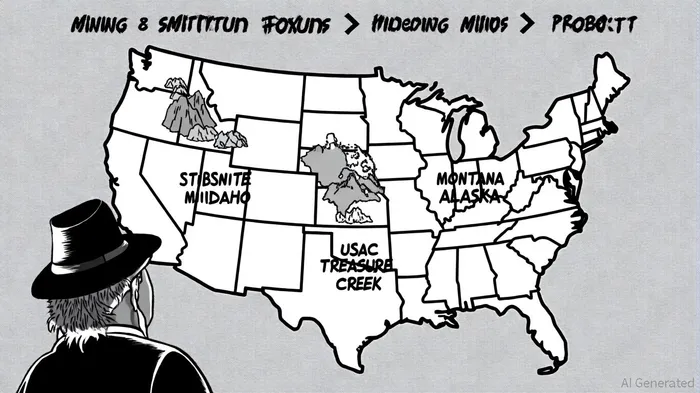
The Trump administration's response has been twofold: accelerating domestic production and diversifying supply chains. The Stibnite Gold-Antimony Project in Idaho, led by Perpetua ResourcesPPTA--, is a flagship initiative. With $22.4 million in Department of Defense funding and a $1.8 billion Letter of Interest from the U.S. Export-Import Bank[6], the mine is projected to meet 35% of U.S. antimony demand over six years[7]. This project is part of the Pentagon's “Ground-to-Round” strategy, aiming to create a fully domestic supply chain from ore to finished military components[8].
USAC: The Smelting Solution
While mining projects like Stibnite address raw material sourcing, processing remains a bottleneck. United States AntimonyUAMY-- Corporation (USAC) is the sole operator of North America's two antimony smelters, a critical asset in a market where China controls 90% of global refining capacity[9]. In 2025, USAC secured a $245 million sole-source contract with the Defense Logistics Agency (DLA) to supply antimony ingots for the National Defense Stockpile[10]. This vertically integrated model—combining mining in Alaska, smelting in Montana, and refining to meet military specifications—positions USAC as a linchpin in the U.S. antimony supply chain[11].
The company's expansion in Alaska, including new mining claims and reclamation of historical sites, further underscores its strategic importance. USAC's collaboration with Perpetua Resources to process Stibnite ore[12] highlights the growing synergy between mining and processing firms, a trend likely to accelerate as the U.S. seeks to replace Chinese imports.
Broader Industry Dynamics and Investment Risks
Beyond Perpetua and USAC, other players are emerging. Military Metals Corp. is advancing antimony projects in Nevada and Slovakia[13], while Australian firms Felix Gold and Nova Minerals are exploring Alaska's Treasure Creek and Anchorage deposits[14]. However, these projects face challenges: high operational costs, environmental scrutiny, and the need for government subsidies to remain viable[15].
For investors, the key differentiator is proximity to U.S. defense contracts and regulatory support. The Stibnite project's $6.9 million in Army funding[16] and USAC's DLA contract[17] illustrate how government intervention is reshaping the sector. Yet, risks persist. China's antimony reserves (40,000 metric tons in 2023)[18] and its ability to manipulate global prices could prolong market volatility. Additionally, the lack of U.S. antimony-producing mines beyond Stibnite means domestic output remains limited in the short term[19].
A Call to Action for Investors
The antimony market is a microcosm of the broader critical minerals race. For investors, the path forward lies in companies with direct ties to U.S. defense contracts, access to high-grade reserves, and partnerships with federal agencies. Perpetua Resources and USAC exemplify this model, but niche players like Military Metals and UAMY (United States Antimony) also warrant attention.
However, due diligence is critical. The sector's success hinges on sustained government support and the ability to navigate environmental and operational hurdles. As the U.S. pivots from vulnerability to resilience, antimony will remain a cornerstone of its critical minerals strategy—and a compelling investment thesis for those who act decisively.





Comentarios
Aún no hay comentarios