
Strategic Allocation to High-Yield Telecom, Media & Technology Bonds in a Downturn-Resilient Portfolio
The Resilience of TMT Sector ETFs During Downturns
The TMT sector, particularly telecommunications, has historically demonstrated defensive characteristics. During the 2024–2025 economic turbulence, telecom giants like VerizonVZ-- and AT&TT-- maintained stable revenue streams, driven by recurring subscription models and essential service demand. Verizon, for instance, reported a 1.6% year-over-year revenue increase in Q4 2024, bolstered by wireless service growth and subscriber additions, according to The Globe and Mail. AT&T similarly exceeded earnings expectations, underscoring the sector's ability to weather macroeconomic headwinds. These dynamics suggest that TMT equity ETFs, such as the Communication Services Select Sector SPDR Fund (XLC), can serve as a buffer during downturns.
However, the focus here is not on equities but on high-yield TMT bonds-a distinct asset class with different risk profiles. Unlike equity-linked ETFs, high-yield bond ETFs are exposed to credit risk, as they invest in leveraged debt from companies with weaker balance sheets. This duality-high yields versus heightened vulnerability-demands careful strategic allocation.
Strategic Allocation: Balancing Yield and Resilience
The VantagePoint article VantagePoint emphasizes that 2025 market conditions necessitate a disciplined approach to risk management. For high-yield TMT bonds, this means diversifying across sub-sectors (telecom, media, tech) and geographies to avoid overexposure to cyclical downturns. Deloitte's TMT Predictions 2025 further highlight the sector's potential to modernize through AI-driven infrastructure, such as silicon photonics for data centers. While such innovations could enhance long-term value, they also introduce execution risks if ROI falls short of expectations.
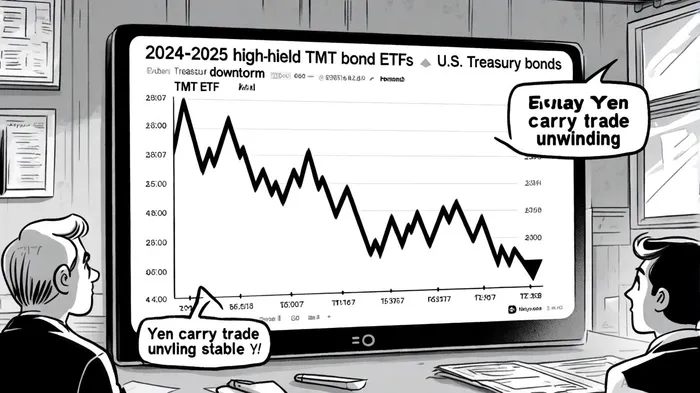
A key metric for evaluating these ETFs is the yield-to-volatility (YTV) ratio, which quantifies returns relative to price swings. During downturns, YTV ratios for high-yield TMT bonds often deteriorate as credit spreads widen and defaults rise. For example, the iShares Broad USD High Yield Corporate Bond ETF (USHY) faced capital losses in 2025 as investors fled to safer assets like Treasurys, according to an ETF.com analysis. This underscores the need to pair high-yield allocations with liquidity buffers and hedging instruments, such as inflation-linked bonds (ILBs) or trend-following strategies, as the VantagePoint article notes.
Risks and Mitigation: Navigating the High-Yield Landscape
Despite their appeal, high-yield TMT bond ETFs are not without pitfalls. The absence of concrete examples of TMT-specific high-yield bond ETFs with monthly distributions in 2025-unlike equity-based counterparts like XLC-suggests a nascent or niche market, per a Nasdaq article. This scarcity raises concerns about liquidity and transparency. Investors must also contend with the sector's sensitivity to interest rate hikes and regulatory shifts, particularly in media and telecom, where spectrum auctions or content regulations can disrupt cash flows.
To mitigate these risks, a dynamic liquidity management framework is essential. This includes stress-testing portfolios against worst-case scenarios and maintaining a core-periphery structure: a core of high-quality sovereign bonds and a periphery of high-yield TMT bonds with strict concentration limits, as the VantagePoint article recommends. For instance, allocating no more than 10–15% of a portfolio to high-yield TMT bonds, while reserving 30–40% for investment-grade fixed income, can balance yield capture with downside protection.
Conclusion: A Prudent Path Forward
The allure of high-yield monthly distributions in TMT bond ETFs is undeniable, but their integration into a downturn-resilient portfolio requires a nuanced approach. Investors must weigh the sector's defensive underpinnings against its cyclical vulnerabilities, leveraging diversification, liquidity, and hedging to navigate 2025's uncertain terrain. While telecom equities like Verizon and AT&T offer proven resilience, high-yield TMT bonds demand rigorous due diligence and strategic discipline. In this environment, the goal is not to chase yield but to engineer a portfolio that thrives in both calm and storm.





Comentarios
Aún no hay comentarios