
Strategic Alliances in Offshore Wind: Why Equinor and Orsted's Potential Merger Presents a High-Conviction Long-Term Opportunity
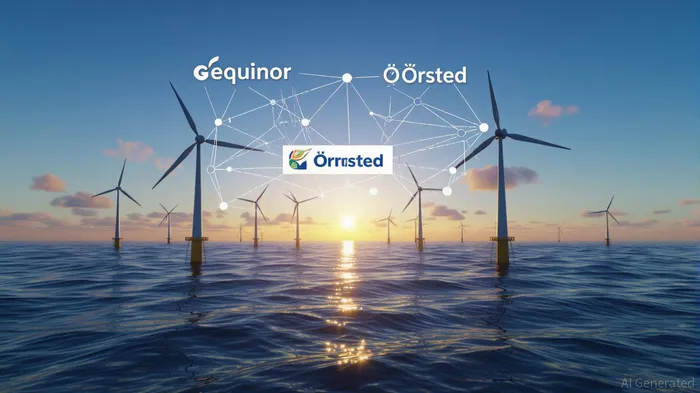
The offshore wind sector is undergoing a seismic shift, driven by global decarbonization mandates, technological innovation, and surging demand for clean energy. As companies race to scale operations and optimize costs, strategic alliances and consolidation have emerged as critical levers for value creation. Among the most intriguing developments is the potential collaboration between EquinorEQNR-- and Ørsted, two industry titans with complementary strengths in offshore wind. While no formal merger has been announced, the evolving dynamics of the sector—and the strategic rationale for such a partnership—position this as a high-conviction long-term opportunity for investors.
Sector Consolidation: A Catalyst for Value Creation
The offshore wind industry is witnessing unprecedented consolidation, fueled by the need to achieve economies of scale and navigate capital-intensive projects. According to a report by Bloomberg, renewable energy deal volumes in H1 2025 surged by 10.5% year-over-year, with deal values spiking 384.6% due to AI-driven electricity demand and decarbonization policies[2]. This trend is not isolated: the broader energy sector saw 70% of M&A activity dominated by strategic buyers seeking to consolidate assets and enhance operational efficiencies[3].
For Equinor and Ørsted, a merger or deeper alliance could unlock significant synergies. Equinor's recent acquisition of a 10% stake in Ørsted—bolstered by a $6 billion rights offering—signals a strategic bet on offshore wind's long-term potential[5]. Meanwhile, Ørsted's expertise in large-scale project execution, coupled with Equinor's global infrastructure and financial strength, creates a compelling case for collaboration. As noted by Reuters, Equinor's chairman, Jon Erik Reinhardsen, has emphasized keeping “options open” to prioritize shareholder value[1].
Strategic Rationale: Complementing Assets, Expanding Markets
The offshore wind sector's growth trajectory is underpinned by technological advancements and policy tailwinds. Floating wind platforms, AI-driven risk assessment tools, and integrated grid solutions are reshaping the industry, with the global market projected to grow at a 14.6% CAGR through 2034, reaching $298.8 billion[1]. A partnership between Equinor and Ørsted could accelerate innovation in these areas while reducing capital expenditures.
For instance, joint ventures in key markets like the U.S. and Europe could mitigate risks associated with regulatory shifts. Ørsted's recent struggles in the U.S. market—exacerbated by policy uncertainty under the Trump administration—highlight the need for financial and operational resilience[4]. Equinor's deep pockets and experience in navigating complex regulatory environments could stabilize Ørsted's balance sheet while expanding its footprint in high-growth regions.
Case Studies: Proven Synergies in Strategic Alliances
The offshore wind sector offers precedents for successful collaborations. In Europe, a four-company alliance halved port infrastructure costs and improved operational efficiency through shared investments and standardized practices[6]. Similarly, Hexicon's partnership with Vestas in South Korea—supplying 84 units of 15.0 MW turbines for the MunmuBaram project—demonstrates how alliances can drive market expansion and technological leadership[7].
These examples underscore the value of pooling resources to address shared challenges. For Equinor and Ørsted, a merger or joint venture could replicate such success by combining Ørsted's project pipeline with Equinor's capital and global reach. As highlighted by the Global Offshore Wind Report 2025, such collaborations are pivotal for achieving the UN SDGs and meeting rising energy demands[1].
Challenges and Opportunities
While the strategic case is compelling, risks remain. Ørsted's U.S. projects face political headwinds, and Equinor's focus on maintaining its existing stake suggests caution[4]. However, these challenges also present opportunities. A structured partnership—whether through asset swaps, joint ventures, or strategic alliances—could allow both companies to hedge against regional risks while leveraging their core competencies.
Moreover, the sector's projected growth and the surge in green hydrogen initiatives (e.g., Saudi Arabia's Yanbu project with Sinopec and ACWA Power) illustrate how offshore wind can diversify into new revenue streams[8]. A merger between Equinor and Ørsted could position them at the forefront of this transition, capturing value from both energy production and decarbonization-linked markets.
Conclusion: A High-Conviction Bet on the Energy Transition
The offshore wind sector is at a pivotal inflection pointIPCX--, where consolidation and strategic alliances are no longer optional but imperative for long-term competitiveness. While Equinor and Ørsted have not yet formalized a merger, their ongoing dialogue and complementary strengths make this a high-conviction opportunity for investors. By aligning with the sector's growth trends and leveraging synergies in technology, capital, and markets, such a partnership could redefine the future of renewable energy—and deliver outsized returns for shareholders.





Comentarios
Aún no hay comentarios