
Strategic Alliances in the Industrial Gas Sector: How CHARBONE's Partnership with a Leading U.S. Producer Unlocks Growth and Market Access
The industrial gas sector is undergoing a profound transformation as global demand for clean energy solutions accelerates. At the heart of this shift lies a critical question: How can companies scale their offerings while navigating supply chain constraints and decarbonization mandates? CHARBONE Corporation's recent strategic alliance with a major U.S. industrial gas producer-announced on October 20, 2025-offers a compelling case study. This partnership, with a subsidiary of one of the world's largest chemical and industrial conglomerates, not only diversifies CHARBONE's product portfolio but also positions it to capitalize on surging demand for helium and ultra-high-purity (UHP) gases in North America, as reported in an Investing News announcement. For investors, the move underscores the company's disciplined approach to growth and its alignment with macroeconomic tailwinds in the clean energy transition.
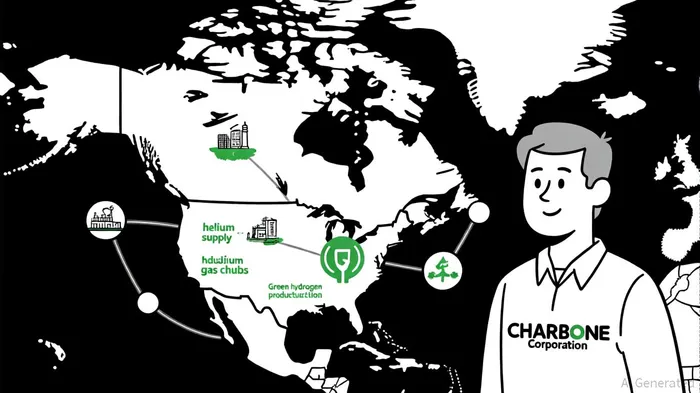
Strategic Alliances: A Catalyst for Market Expansion
CHARBONE's collaboration with its U.S. partner is more than a transactional agreement-it is a strategic repositioning. By integrating high-value gases such as helium into its offerings, CHARBONE strengthens its foothold in markets where supply chain resilience is paramount. Helium, a critical input for semiconductors, medical imaging, and fiber optics, is projected to grow at a compound annual rate of 5-6% through 2035, driven by Asia's expanding manufacturing base, according to a helium market report. CHARBONE's access to this resource, facilitated by its U.S. partner's production capabilities, aligns with global trends and mitigates risks associated with volatile helium markets.
The alliance also optimizes operational efficiencies. By leveraging the U.S. partner's logistics and transport infrastructure, CHARBONE reduces costs and enhances delivery reliability-a critical advantage in an industry where just-in-time supply chains are the norm, as noted in a Newsramp article. CEO Dave Gagnon emphasized that this collaboration reflects the company's "disciplined approach to growth," prioritizing partnerships that minimize risk while accelerating market entry, according to a Straits Research report.
Industry Trends and the Clean Energy Transition
The industrial gas sector is at an inflection point. According to the Straits Research report, the global industrial gases market is expected to grow from USD 125.7 billion in 2025 to USD 222.7 billion by 2033, fueled by decarbonization efforts and the rise of green hydrogen. CHARBONE's dual focus on low-carbon gases and helium positions it to benefit from both trends.
Helium demand, for instance, is increasingly tied to clean energy applications. In data centers and renewable energy systems, helium's role in cooling high-performance computing hardware is indispensable. Meanwhile, green hydrogen-CHARBONE's core offering-is gaining traction as a decarbonization tool for industries ranging from steelmaking to transportation. The company's recent five-year UHP hydrogen supply agreement in Ontario, Canada, further illustrates its ability to secure long-term contracts in a market poised for growth, as outlined in a Business Triumphs article.
Operational Synergies and Long-Term Value Creation
CHARBONE's partnership exemplifies the power of strategic alliances in unlocking operational synergies. By combining its expertise in hydrogen production with the U.S. partner's helium distribution network, the company creates a diversified revenue stream that buffers against sector-specific volatility. This is particularly relevant in a market where helium prices are historically prone to spikes due to geopolitical and geological factors, as noted in the helium market report.
Moreover, the alliance enhances CHARBONE's ability to meet stringent environmental regulations. As governments impose carbon taxes and emissions caps, industries are incentivized to adopt low-carbon gases. CHARBONE's UHP hydrogen and helium offerings, produced with minimal environmental impact, align with these mandates, enabling clients to reduce their carbon footprints while maintaining operational efficiency, a point earlier covered in the Newsramp article.
A High-Conviction Investment Case
For investors, CHARBONE's strategic alliance represents a high-conviction opportunity. The company's disciplined capital allocation, focus on clean energy, and ability to secure long-term supply agreements position it as a leader in a sector with robust growth prospects. With the global industrial gases market expanding at a 6.7% CAGR and helium demand surging, CHARBONE's diversified portfolio and strategic partnerships provide a durable competitive edge, consistent with findings from the Straits Research report.
Critically, the company's approach minimizes downside risk. By leveraging established partners rather than pursuing capital-intensive vertical integration, CHARBONE avoids overexposure to market cycles. This is a stark contrast to peers who have struggled with high fixed costs and regulatory hurdles. As the clean energy transition accelerates, CHARBONE's agility and strategic foresight will likely translate into outsized returns for shareholders.
Conclusion
CHARBONE's partnership with a leading U.S. industrial gas producer is a masterclass in strategic alignment. By addressing helium shortages, optimizing logistics, and expanding into clean energy markets, the company is not only future-proofing its operations but also capturing value in a sector poised for decades of growth. For investors seeking exposure to the clean energy transition, CHARBONE offers a compelling, well-sourced opportunity.







Comentarios
Aún no hay comentarios