
Strategic Alliances Fuel Data Centre Infrastructure Boom in the Middle East
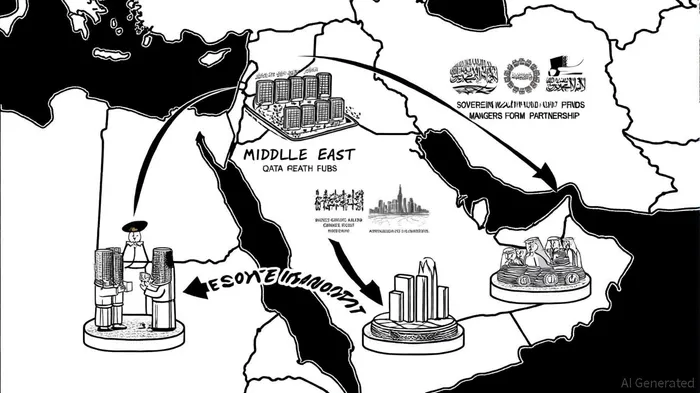
The Middle East is undergoing a transformative shift in its economic and technological landscape, driven by strategic alliances between sovereign wealth funds (SWFs) and private credit managers. These partnerships are accelerating the development of data centre infrastructure, positioning the region as a global hub for digital innovation. With SWFs leveraging their vast capital and long-term horizons, and private credit managers offering specialized expertise, the synergy between these entities is unlocking high-conviction investment opportunities in a sector poised for exponential growth.
A Strategic Pivot to Digital Infrastructure
The Middle East's push into data centres is not merely a response to global trends but a calculated move to diversify economies historically reliant on hydrocarbons. Sovereign wealth funds such as Qatar Investment Authority (QIA) and Saudi Arabia's Public Investment Fund (PIF) are leading the charge. For instance, QIA's $3 billion partnership with Blue Owl CapitalOBDC-- to establish a global digital infrastructure platform underscores its strategic pivot into AI and data centres, sectors expected to dominate the next decade of global economic value[1]. Similarly, PIF's collaboration with DigitalBridgeDBRG-- to expand data centre operations across the Gulf Cooperation Council (GCC) aligns with Saudi Arabia's Vision 2030, which aims to transform the Kingdom into a digital innovation leader[2].
These initiatives are supported by robust regional demand. According to PwC's 2025 TransAct report, the Middle East's data centre capacity is projected to grow from 1 gigawatt (GW) in 2024 to over 4.5 GW by 2025, with $12 billion in investments anticipated by 2027[3]. This growth is fueled by surging demand for cloud computing, AI, and edge computing, driven by both public and private sector digitalization efforts.
Competitive Advantages and Cost Efficiency
The Middle East's unique advantages make it an attractive destination for hyperscalers and infrastructure investors. Low land and power costs, coupled with strategic geographic positioning between Europe, Asia, and Africa, create a compelling value proposition. For example, Saudi Arabia's $6 billion data centre initiative, part of its Transcendence AI Initiative, aims to establish the region as a global AI hub[4]. Additionally, supportive government policies, such as streamlined regulatory frameworks and tax incentives, further reduce barriers to entry for foreign and domestic investors[3].
Private Credit as a Catalyst for Growth
While data centres dominate the headlines, the parallel rise of private credit in the Middle East is equally significant. Sovereign wealth funds like Mubadala and Abu Dhabi Investment Authority (ADIA) are forming partnerships with global private credit managers, including Apollo, Ares, and Blackstone, to deploy capital into high-yield, alternative assets[5]. These collaborations are part of a broader regional trend: the Middle East's private credit market has seen assets under management (AUM) surge, supported by regulatory reforms such as the 2023 Private Credit Fund Rules and bankruptcy code updates[5].
The integration of private credit into infrastructure projects is particularly impactful. By providing tailored financing solutions for SMEs and unbanked businesses, private credit managers are enabling the development of ancillary services—such as cybersecurity, energy solutions, and AI software—that underpin the data centre ecosystem. This creates a virtuous cycle where infrastructure growth attracts further investment, enhancing returns for SWFs and their partners.
Synergy Between Sectors
The interplay between data centre expansion and private credit innovation is a key driver of high-conviction opportunities. For example, QIA's Blue OwlOWL-- partnership not only funds physical infrastructure but also secures access to cutting-edge AI technologies, while PIF's DigitalBridge alliance ensures scalable, future-proof operations. Meanwhile, private credit managers are capitalizing on the region's regulatory tailwinds to offer risk-adjusted returns, as highlighted by Deloitte's analysis of the Middle East's private credit surge[5].
Conclusion: A High-Yield Future
The Middle East's data centre infrastructure boom, powered by sovereign wealth funds and private credit managers, represents a rare confluence of strategic vision, economic necessity, and technological momentum. As SWFs continue to prioritize long-term, high-yield assets and private credit managers refine their risk management frameworks, the region is set to become a cornerstone of global digital infrastructure. Investors who align with these trends—whether through direct infrastructure investments or private credit allocations—stand to benefit from a sector that is not only resilient but also central to the future of global commerce and innovation.





Comentarios
Aún no hay comentarios