
Strategic Alliances in Fintech: How PayPay's Stake in Binance Japan Could Reshape Digital Payments in Asia
Strategic Alliances in Fintech: How PayPay's Stake in Binance Japan Could Reshape Digital Payments in Asia
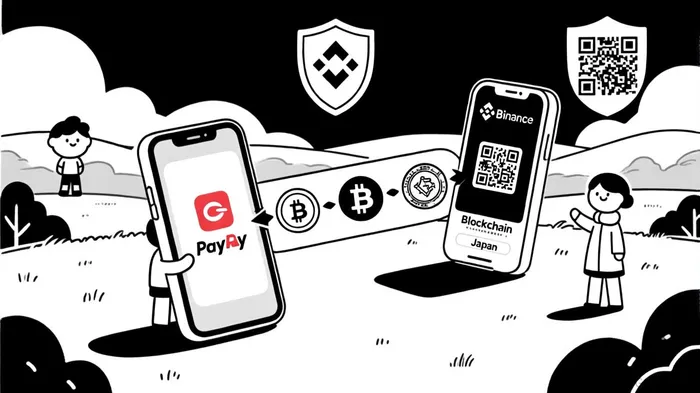
The fintech and cryptocurrency landscapes in Asia are undergoing a seismic shift, driven by strategic alliances that bridge traditional finance with decentralized innovation. PayPay's acquisition of a 40% equity stake in Binance Japan in October 2025 represents one such pivotal development. This partnership, combining PayPay's dominance in Japan's cashless payment market with Binance Japan's blockchain expertise, could redefine how 70 million users interact with digital assets and reshape the region's crypto-finance ecosystem.
Market Positions Before the Alliance
PayPay, backed by SoftBank and Yahoo Japan, had already cemented its position as a leader in Japan's digital payments sector. By 2024, it accounted for 20% of all cashless transactions in the country, with over 7.46 billion transactions processed out of 38.8 billion total, according to Fintech Observer. Its QR code payment system held approximately two-thirds of the market share since 2020, making it a critical player in Japan's push to increase its cashless payment ratio beyond 42%.
Binance Japan, meanwhile, re-entered the market in August 2023 after acquiring Sakura Exchange BitCoinBTC-- (SEBC) and has since operated under Japan's stringent Financial Services Agency (FSA) regulations, according to PR Newswire. While exact market share figures for crypto trading are not publicly disclosed, Binance Japan's global parent company, Binance, held a 12.58% share of the crypto exchange market in 2023, per a Yahoo Finance report. Its localized services, including competitive 0.1% trading fees and partnerships with stablecoin providers like Circle, were noted in an Iolite update, positioning it as a key contender in Japan's regulated crypto space.
Strategic Synergies and User-Centric Innovation
The alliance leverages PayPay's user base and merchant network with Binance Japan's blockchain infrastructure to create a seamless financial ecosystem. Users can now purchase cryptocurrencies using PayPay Money, a digital wallet linked to bank accounts and credit cards, and withdraw proceeds from crypto sales directly into their PayPay accounts, as reported in a FinanceFeeds article. This integration eliminates friction between fiat and digital assets, a critical barrier to mass adoption.
For PayPay, the partnership diversifies its offerings beyond payments into asset management and trading, aligning with Japan's growing demand for regulated crypto exposure, according to a CoinDesk report. For Binance Japan, access to PayPay's merchant network opens new avenues for crypto-linked rewards and settlements, potentially accelerating mainstream adoption, as covered by CryptoTimes. Analysts note that this model could serve as a blueprint for other fintech-crypto collaborations in Asia, where mobile-first payments and blockchain technology are converging, per Mordor Intelligence.
Growth Potential and Ecosystem Impact
Japan's crypto market, valued at $12.5 billion in 2024, is projected to grow at a 25% CAGR through 2030, according to the FSA strategy. The PayPay-Binance alliance is well-positioned to capitalize on this expansion. By integrating crypto services into PayPay's app-potentially including staking, savings, or even crypto-backed loans-the partnership could attract a retail audience uninterested in traditional exchanges, as noted in PayPay's Tracxn profile.
The alliance also strengthens Japan's position as a global crypto hub. With the government's "Digital Finance Strategy" prioritizing innovation under regulatory guardrails, a recent FSA update outlines how compliance will remain central to expansion. Competitors like bitFlyer and CoincheckCNCK-- may respond by accelerating their own partnerships or expanding service offerings, but the scale of PayPay's user base and Binance's global infrastructure gives the alliance a first-mover advantage, according to a CoinDesk analysis.
Risks and Regulatory Considerations
While the partnership is strategically sound, challenges remain. Japan's FSA has signaled increased scrutiny of crypto-linked payment services, particularly around anti-money laundering (AML) compliance, according to Bloomberg professional. Additionally, consumer adoption hinges on education-only 18% of Japanese adults actively use crypto as of 2024. PayPay and Binance Japan will need to invest in user onboarding and security measures to mitigate risks.
Conclusion: A Catalyst for Asia's Crypto-Finance Future
The PayPay-Binance Japan alliance exemplifies how strategic partnerships can drive fintech evolution. By merging cashless payments with blockchain, the collaboration addresses a critical gap in digital finance, offering a scalable model for other Asian markets. As the global crypto market is forecasted to grow from $2.96 trillion in 2025 to $7.98 trillion by 2030, alliances like this will likely determine which players dominate the next era of financial innovation.





Comentarios
Aún no hay comentarios