
Strategic Alliances in European Banking: The BBVA-Sabadell Merger as a Catalyst for Consolidation
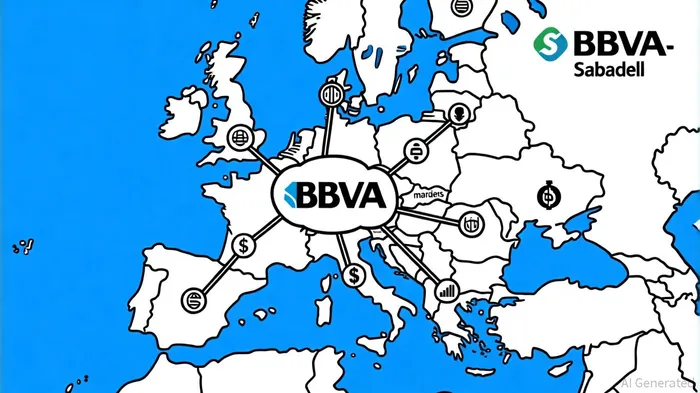
The BBVA-Sabadell merger represents a pivotal moment in the evolution of European banking, reflecting broader industry pressures to consolidate for scale, resilience, and competitive advantage. As regulatory demands intensify and digital transformation reshapes customer expectations, regional banks face a stark choice: adapt through strategic alliances or risk obsolescence. For investors, the deal offers a lens to evaluate the investment potential of European regional financials in a post-merger landscape.
Strategic Rationale: Scale, Proximity, and Digital Resilience
The merger's strategic logic hinges on combining BBVA's global reach with Banco Sabadell's entrenched local presence in Spain and Latin America. BBVABBAR-- CEO Onur Genç has emphasized that the transaction will “unlock substantial value creation potential” by enhancing cross-border capabilities while maintaining “proximity to clients”[1]. This duality—global scale with local roots—is increasingly critical in an era where multinational corporations and SMEs alike demand seamless financial services across geographies.
The deal also underscores the importance of digital infrastructure. BBVA's recent 23% year-over-year earnings growth[4] highlights its success in leveraging technology to streamline operations and reduce costs—a capability that, when combined with Sabadell's regional expertise, could amplify efficiency gains. For investors, this synergy suggests a model where digital maturity and localized service delivery coexist, potentially outpacing peers reliant on legacy systems.
Regulatory Context: Balancing Consolidation and Inclusion
The National Markets and Competition Commission (CNMC) approved the merger subject to remedies ensuring financial inclusion, SME lending, and territorial cohesion[1]. These conditions reflect a broader European regulatory ethos: enabling consolidation while safeguarding access to credit for smaller businesses and rural communities. BBVA's commitment to maintaining service quality post-merger[1] aligns with this mandate, but execution risks remain. For instance, the Spanish government retains the authority to block the deal within six months[3], introducing political uncertainty.
This regulatory balancing act is emblematic of the sector's challenges. While consolidation is necessary to achieve economies of scale, regulators must prevent market concentration that could stifle competition. For investors, the BBVA-Sabadell case illustrates the delicate interplay between strategic ambition and regulatory pragmatism—a dynamic that will shape the European banking landscape for years.
Investment Case: Value Creation and Long-Term Growth
The merger's investment appeal lies in its potential to drive operational efficiencies and revenue diversification. BBVA projects enhanced business growth and revenues between 2025 and 2028, driven by a broader customer base and cost synergies[2]. These metrics align with broader trends in European banking, where post-crisis consolidation has historically delivered shareholder value. For example, the 2019 merger of Banco Popular and Banco Santander created a more resilient entity capable of navigating low-interest-rate environments[4].
However, the BBVA-Sabadell deal introduces unique risks. Integration complexities, particularly in harmonizing digital platforms and cultural differences, could delay expected synergies. Additionally, the merged entity's exposure to Spain's property market—a sector still recovering from cyclical downturns—requires careful monitoring.
Broader Implications for European Regional Banks
The BBVA-Sabadell merger is not an isolated event but part of a larger narrative of European banking consolidation. As smaller institutions struggle with profitability in a low-growth environment, strategic alliances will become increasingly attractive. For investors, this trend suggests that regional banks with strong digital foundations and clear integration strategies—like BBVA—may outperform peers clinging to traditional models.
Yet, the path forward is not without hurdles. Regulatory scrutiny, integration costs, and macroeconomic volatility (e.g., potential interest rate hikes) could temper returns. Investors must weigh these risks against the long-term benefits of scale and innovation.
Conclusion: A Calculated Bet on the Future
The BBVA-Sabadell merger exemplifies the strategic imperatives driving European banking consolidation. While regulatory and integration risks persist, the deal's emphasis on digital resilience, SME support, and global-local balance positions it as a compelling case study for investors. For regional European financials, the post-merger landscape will likely favor those that embrace collaboration as a tool for innovation rather than mere survival.
As the transaction moves toward final approval, stakeholders must remain vigilant to both the opportunities and challenges of this new era. In a sector where adaptability is paramount, the BBVA-Sabadell alliance offers a blueprint—and a cautionary tale—for what lies ahead.





Comentarios
Aún no hay comentarios