
Strategic Alliances as Catalysts for Energy Security and Profitability in Emerging Markets
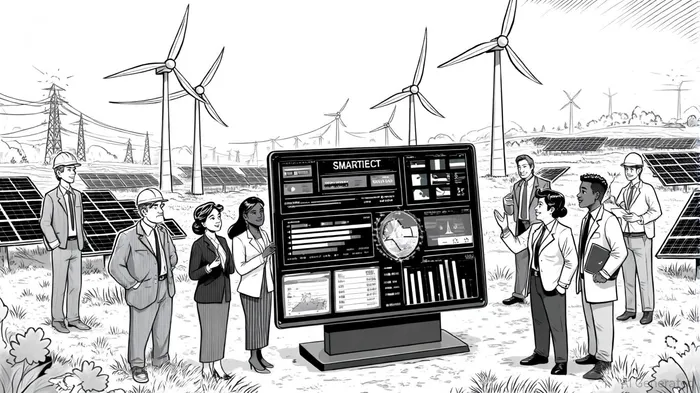
The global energy transition is accelerating, but its success hinges on the ability of emerging markets to modernize infrastructure while balancing profitability and security. Recent developments underscore the critical role of strategic alliances in bridging this gap. By pooling resources, expertise, and capital, cross-sector partnerships are not only fortifying energy systems but also unlocking new revenue streams in regions historically plagued by underinvestment.
According to a World Economic Forum report, modernizing electricity infrastructure-including grids and battery storage-is essential for achieving both energy reliability and decarbonization goals. This is particularly urgent in emerging markets, where aging systems and rapid urbanization create a dual challenge of expanding access and reducing emissions. For instance, China's intelligent power dispatch systems integrate renewable and conventional energy sources, while simultaneously expanding electric vehicle charging infrastructure to remote areas. Such initiatives demonstrate how technological innovation, when paired with strategic collaboration, can transform energy landscapes.
Public-private partnerships are also reshaping energy security in regions like Sub-Saharan Africa. The U.S. Export-Import Bank's $5 billion investment in TotalEnergies' LNG project in Mozambique exemplifies a shift toward infrastructure-led diplomacy, where energy security aligns with geopolitical strategy, according to a Delphos analysis. Similarly, Nigeria's Train 7 project, led by Nigeria LNG Limited (NLNG), aims to boost production capacity by 35%, leveraging foreign capital to meet domestic demand and export potential. These projects highlight how strategic alliances mitigate risks for investors while addressing energy deficits.
A key driver of profitability in these ventures is the creation of stable regulatory environments. As noted in a 2025 analysis by Delphos, credible investment pipelines and transparent governance frameworks are prerequisites for attracting private capital. For example, Mozambique's LNG project benefits from long-term take-or-pay contracts with international buyers, reducing exposure to market volatility. Such structures incentivize participation from multinational corporations, which bring technical expertise and global market access to local partners.
However, challenges persist. Regulatory uncertainty, political instability, and environmental concerns can derail even the most promising partnerships. To mitigate these risks, stakeholders must prioritize adaptive governance models that incorporate community feedback and environmental safeguards. The World Economic Forum emphasizes that scalable solutions require not just capital but also "credible policy frameworks" to ensure long-term viability.
In conclusion, energy infrastructure partnerships in emerging markets are proving to be a linchpin for both energy security and investor returns. By aligning strategic interests-whether through public diplomacy, technological innovation, or regulatory reform-these alliances are redefining the economics of the energy transition. For investors, the lesson is clear: the future of energy lies not in isolated projects but in interconnected systems built through collaboration.





Comentarios
Aún no hay comentarios