
Strategic Alliances as Catalysts for AI-Driven Biotech Innovation
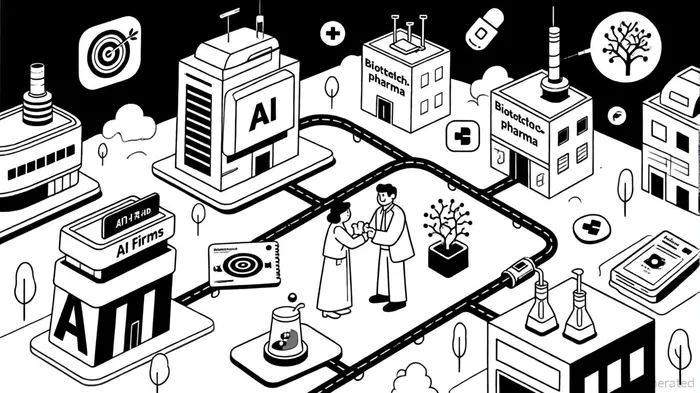
The convergence of artificial intelligence (AI) and biotechnology has ignited a paradigm shift in drug discovery, with strategic alliances emerging as the linchpin for translating computational prowess into therapeutic breakthroughs. For investors, the intersection of AI-driven innovation and pharmaceutical R&D offers a compelling opportunity: partnerships that reduce risk, accelerate timelines, and unlock previously intractable biological targets. Recent case studies and quantitative metrics underscore how these alliances are not merely incremental but transformative, redefining the economics of drug development.
Strategic Alliances: From Niche to Norm
The past two years have witnessed a surge in high-stakes collaborations between AI startups and industry giants. Generate:Biomedicines' 2024 partnership with NovartisNVS--, for instance, leverages generative AI to design de novo small-molecule drugs, with a $65 million upfront payment and over $1 billion in potential milestones, according to a Nature analysis. Similarly, Gilgamesh Pharmaceuticals' alliance with AbbVieABBV-- targets CNS disorders using AI-optimized neuroplastogens, backed by a $1.95 billion milestone structure. These deals reflect a broader trend: pharma companies are no longer merely funding AI initiatives-they are embedding AI firms into their core R&D pipelines to access cutting-edge modalities like RNA therapeutics (Creyon Bio and Eli Lilly) and AI-curated datasets (Ochre Bio and GSK).
Such partnerships thrive on complementary strengths. AI firms bring proprietary algorithms and computational scalability, while pharma partners contribute clinical validation expertise and regulatory infrastructure. As noted in a 2024 ScienceDirect review, these alliances are increasingly focused on "relationship-specific assets," such as AI models trained on proprietary datasets, which require robust governance frameworks to manage IP rights and deliverables.
Efficiency Gains: Time, Cost, and Success Rates
The financial and operational impact of AI in drug discovery is staggering. Data from AllAboutAI reveals that AI adoption reduces preclinical R&D costs by 25–50% and accelerates timelines by up to 60%. For context, traditional hit-to-lead conversion rates hover between 0.01–0.14%, whereas AI-powered systems achieve 1–40%-a 100- to 400-fold improvement. This efficiency extends to clinical phases: AI-discovered molecules have demonstrated 80–90% success rates in Phase I trials, compared to the industry average of 40–65%, according to an analysis by DrugDiscoveryTrends. While Phase II success rates align with historical benchmarks (~40%), the cumulative effect is a projected doubling of overall R&D productivity, lifting the probability of a molecule reaching market from 5–10% to 9–18%.
Real-world examples amplify these trends. A PMC review describes how Insilico Medicine identified a novel target and advanced a candidate to preclinical trials in 18 months-a process typically taking 4–6 years. Exscientia's collaboration with Sumitomo Dainippon Pharma produced the first AI-designed molecule to enter human trials in under 12 months. These milestones validate AI's ability to compress timelines without compromising scientific rigor.
Challenges and Considerations
Despite the optimism, risks persist. Governance structures must evolve to address data privacy, IP ownership, and alignment of incentives between agile startups and bureaucratic pharma firms - points underscored in the ScienceDirect review. Additionally, while AI excels in early-phase optimization, long-term success hinges on late-stage clinical performance and regulatory acceptance. Proprietary datasets (e.g., Ochre Bio's liver data for GSK) remain a critical differentiator, as AI models trained on low-quality or biased data may yield unreliable predictions (as detailed in the AllAboutAI data).
Investment Implications
For capital allocators, the AI-biotech landscape presents a dual opportunity:
1. AI-native firms with proprietary platforms (e.g., generative protein design, multi-omics integration) that secure high-margin partnerships.
2. Pharma companies strategically acquiring AI capabilities to de-risk pipelines and reduce R&D burn rates.
The market is already pricing in this potential. By 2025, 30% of new drug discoveries are expected to incorporate AI-a 400% increase from 2020 levels, per the AllAboutAI data. Investors who identify early-stage AI firms with validated therapeutic pipelines (e.g., those in CNS, oncology, or rare diseases) and strong pharma partnerships are poised to capture outsized returns.
Conclusion
Strategic alliances are not just accelerating drug discovery-they are redefining its economics. As AI firms and pharma companies co-create value through data-driven innovation, the sector is entering a new era where computational power and biological insight converge. For investors, the lesson is clear: the future of therapeutics is being written in code, and those who partner with the right algorithms will lead the next wave of medical breakthroughs.
AI deals show no sign of slowing - NatureStrategic partnerships for AI-driven drug discovery: The role of ... - ScienceDirectAI in Drug Development Statistics 2025: The $60 Billion Reality vs... - AllAboutAIAI in pharma: Clinical trial success rates improve - DrugDiscoveryTrendsFrom Lab to Clinic: How Artificial Intelligence (AI) Is Reshaping... - PMC







Comentarios
Aún no hay comentarios