
Strategic AI Partnerships: Catalysts for Retail Sector Recovery and Growth
Walmart: Scaling Efficiency Through AI-Driven Automation
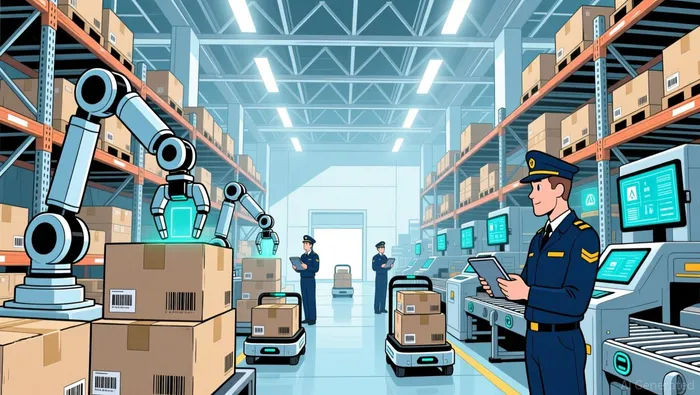
Walmart's strategic AI partnerships have positioned it as a leader in post-pandemic retail innovation. The company's collaboration with SymboticSYM-- for warehouse automation has streamlined inventory management, reducing labor costs and improving order fulfillment speed according to reports. Additionally, Walmart's partnership with Pactum AI for supplier negotiations has optimized procurement processes, cutting costs by automating price comparisons and contract terms. Internally, Walmart's Element Machine Learning platform has created a data flywheel effect, continuously refining customer insights and operational decisions. These initiatives have not only reduced waste but also improved on-shelf availability, a critical metric for retail success.
Target: AI as a Profitability Engine
Target's AI strategy focuses on demand forecasting, pricing optimization, and customer retention. By deploying AI tools to analyze consumer shopping behavior, the retailer has refined local inventory policies and product recommendations according to reports. In fiscal 2025, Target reported its best on-shelf availability in years, directly attributed to AI-driven inventory planning. The company also leveraged AI to strengthen high-margin digital initiatives, such as its Roundel and Target Plus programs, which saw double-digit growth in Q2 2025. These outcomes underscore AI's role in enhancing profitability while addressing the challenges of omnichannel retail.
IKEA: Balancing Affordability and Sustainability
IKEA's AI initiatives have prioritized both operational efficiency and sustainability. The company's AI-powered demand sensing system has optimized inventory levels, reducing overstocking and understocking while minimizing waste. In its warehouses, AI-driven stock-counting drones have improved accuracy and reduced manual labor costs. Additionally, IKEA's generative AI shopping assistant, launched in 2024, generated 20% of website interactions in its first month, with 5% of those visits converting to transactions. Beyond cost savings, IKEA's AI-driven sustainability efforts - such as zero-emission delivery vehicles and optimized packaging - have contributed to a 30.1% reduction in carbon emissions since 2016. These advancements align with the company's mission to balance affordability with environmental responsibility.
Market Trends and Investment Implications
The retail AI market is expanding rapidly, with the Explainable AI (XAI) segment projected to grow from $6.82 billion in 2023 to $33.2 billion by 2032, driven by demand for transparency in decision-making. This growth is fueled by retailers adopting AI for predictive analytics, personalized marketing, and supply chain resilience. For investors, the key lies in identifying companies that integrate AI not as a standalone tool but as a core component of their strategic vision. Walmart, Target, and IKEA exemplify this approach, demonstrating how AI partnerships can yield tangible financial and operational benefits.
However, challenges persist. C3.ai, a major player in enterprise AI, faced a 20% year-over-year revenue decline in Q1 2026 due to a shift toward smaller deployments and margin erosion. This highlights the importance of evaluating AI strategies for scalability and long-term viability. Retailers that prioritize ethical AI deployment, employee reskilling, and customer-centric innovation - like IKEA's AI literacy programs - are better positioned to sustain growth.
Conclusion
Strategic AI partnerships are reshaping the retail sector, offering a blueprint for post-pandemic recovery and long-term resilience. Walmart, Target, and IKEA have demonstrated that AI is not merely a cost-cutting tool but a catalyst for innovation, profitability, and sustainability. As the market evolves, investors should focus on companies that embed AI into their operational DNA, leveraging data-driven insights to adapt to dynamic consumer demands. The future of retail belongs to those who harness AI not just for efficiency, but for redefining the customer experience.







Comentarios
Aún no hay comentarios