
Strategic AI Infrastructure and Talent Retention: The New Frontier of Tech Industry Dominance
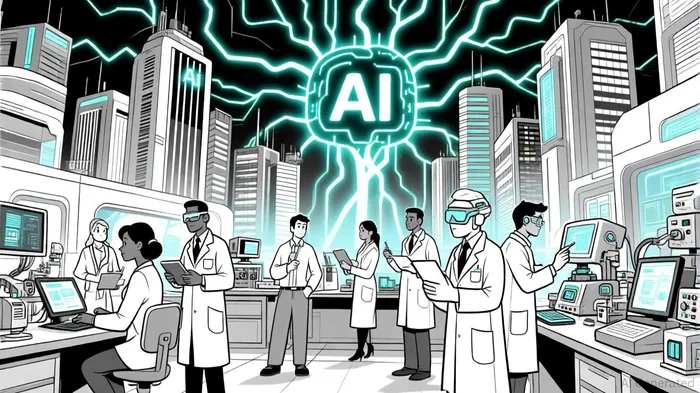
The AI industry in 2025 is no longer defined by incremental advancements but by bold strategic bets on infrastructure and talent. As generative AI, synthetic data, and photonic processors redefine technical capabilities, leading firms are leveraging these tools not just to innovate but to secure a competitive edge in talent acquisition and retention. This dual focus on infrastructure and human capital is reshaping market positioning, with companies like NvidiaNVDA--, IntelINTC--, and OracleORCL-- setting benchmarks for how to align cutting-edge technology with workforce strategy.
The Infrastructure Revolution: From Algorithms to Hardware
Recent investments in AI infrastructure highlight a shift toward solving complex, real-world problems. Generative AI models are now accelerating scientific discovery, such as designing novel antibiotics to combat drug-resistant pathogens like MRSA[2]. Meanwhile, synthetic data is emerging as a critical tool for training AI in data-scarce domains, from fraud detection to rare-event prediction[3]. These advancements are underpinned by hardware breakthroughs, such as photonic processors capable of performing deep learning computations in less than half a nanosecond[4]. Such infrastructure not only enhances model performance but also reduces energy consumption, addressing sustainability concerns that are increasingly important to tech professionals.
The unifying "periodic table of machine learning" framework[5] further illustrates how infrastructure investments are fostering innovation. By systematically organizing classical algorithms, this approach enables researchers to combine methodologies and discover new techniques, creating a dynamic environment that appeals to top talent.
Talent Retention: The Human Side of AI Strategy
Attracting and retaining AI talent requires more than competitive salaries; it demands an ecosystem where innovation thrives. Synthetic data tools, for instance, allow practitioners to experiment with privacy-preserving datasets, reducing ethical constraints and accelerating model development[3]. Similarly, photonic processors empower teams to work with ultrafast, energy-efficient systems, aligning with the industry's push for scalable solutions[4]. These tools not only enhance productivity but also create intellectually stimulating roles that attract experts in machine learning, chemistry, and photonics.
Interdisciplinary collaboration is another key driver. The integration of generative AI in drug discovery[2] and chemical reaction prediction[6] exemplifies how cross-disciplinary projects can retain talent by offering diverse, high-impact challenges. As the World Economic Forum's Future of Jobs Report 2025 notes, AI and big data skills are among the fastest-growing competencies[1], making firms with robust infrastructure more attractive to professionals seeking growth opportunities.
Case Study: Nvidia and Intel's Synergistic Partnership
A prime example of infrastructure-driven talent retention is the $5 billion collaboration between Nvidia and Intel[6]. By co-developing custom x86 CPUs and integrating RTX GPU chiplets into system-on-chips, the partnership creates a seamless ecosystem for AI infrastructure and personal computing. This collaboration not only advances hardware capabilities but also positions both firms as hubs for cutting-edge research, attracting engineers and data scientists eager to work on next-generation technologies. Nvidia's investment in OpenAI further underscores this strategy, with its $100 billion commitment signaling a long-term vision to dominate AI infrastructure while securing top-tier talent[2].
Strategic Market Positioning: A Holistic Approach
The synergy between infrastructure and talent retention is redefining market leadership. Companies that invest in photonic processors[4] or synthetic data tools[3] are not only solving technical challenges but also creating environments where skilled professionals can thrive. This alignment with the Future of Jobs Report's emphasis on AI skills[1] ensures that firms remain competitive in both innovation and workforce stability.
Conclusion
As AI infrastructure evolves, the firms that will dominate the next decade are those that recognize talent as a strategic asset. By investing in tools that enable breakthroughs—from drug discovery to ultrafast computing—companies create ecosystems where innovation and expertise flourish. For investors, the lesson is clear: the future belongs to organizations that can harmonize technical ambition with human capital strategy.





Comentarios
Aún no hay comentarios