
Strategic Acquisitions in the Water Infrastructure Sector: A Driver of Long-Term Utility Equity Growth
The municipal water infrastructure sector is undergoing a transformative phase, driven by aging systems, regulatory pressures, and the urgent need for climate resilience. Strategic acquisitions and consolidations have emerged as critical tools for utilities to enhance operational efficiency, secure funding, and address systemic underinvestment. For investors, these developments present a compelling opportunity to capitalize on long-term equity growth, provided they navigate the sector's unique challenges with precision.
Trends in Consolidation: Bridging the Equity Gap
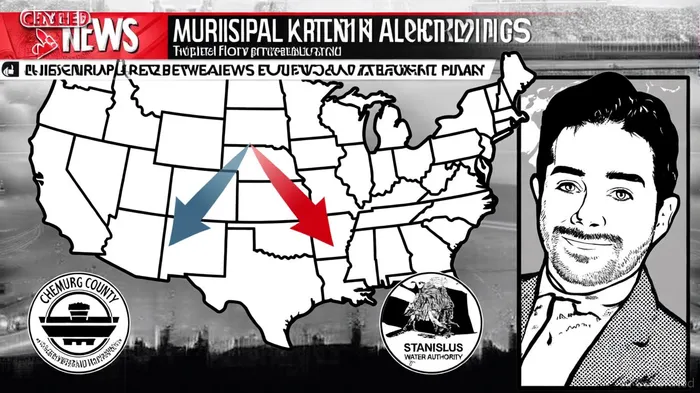
Recent data underscores a stark disparity in consolidation efforts: high-resource communities are twice as likely to pursue utility mergers as low-resource counterparts, according to a recent AWWA study. This divide reflects broader inequities in infrastructure funding, yet it also highlights the potential for strategic interventions. For instance, the Chemung County Wastewater Treatment Plant Consolidation in New York leveraged innovative financing and public-private partnerships to modernize aging systems, earning recognition from the EPA. Similarly, California's Stanislaus Regional Water Authority demonstrated how regional collaboration can optimize resource allocation, securing federal grants to expand surface water supply projects; the EPA highlighted this kind of regional approach in its coverage of exemplary projects. These cases illustrate that consolidation is not merely a cost-saving measure but a catalyst for systemic upgrades.
However, the financial viability of such projects hinges on regulatory and economic factors. According to Bluefield Research, distribution and collection networks accounted for 45% of U.S. and Canadian municipal water capital budgets in Q3 2025. While this prioritization addresses immediate infrastructure needs, it leaves treatment and innovation segments underfunded. Investors must weigh these trade-offs, as utilities that balance short-term maintenance with long-term innovation-such as PFAS compliance and biosolids management-are better positioned for sustained growth.
Valuation Dynamics: Equity Growth and Risk Mitigation
The financial performance of utilities post-merger reveals a nuanced picture. American Water WorksAWK-- Co, the largest investor-owned water utility in the U.S., exemplifies this complexity. Its 2025 acquisition of Nexus Water Group's systems for $315 million added 47,000 customer connections across eight states, aligning with its 7–9% long-term earnings growth target, as shown in American Water's report. As of October 2025, the company traded at an EV/EBITDA multiple of 15.8x and a P/E ratio of 24.5x, reflecting investor confidence in its regulated growth strategy, according to prevailing valuation multiples. However, the deal also exposed liquidity risks, with short-term debt nearly doubling to $1.59 billion amid a 13% decline in operating cash flow, according to a Panabee report.
These metrics underscore a key challenge: while acquisitions can drive scale, they also amplify exposure to regulatory delays and capital-intensive obligations. For example, the EPA's 2024 PFAS standards have forced utilities to allocate significant resources to compliance, squeezing margins for smaller operators, according to Appraisal Economics. Utilities with diversified revenue streams-such as those integrating renewable energy or digital asset management-tend to outperform peers in volatile environments, as noted in an IBISWorld report.
Case Studies: Quantifying the Investment Thesis
- American Water Works Co (AWK):
- Post-Nexus Acquisition Performance: AWK's 2025 EPS guidance narrowed to $5.70–$5.75, up from $5.40 in 2024, despite a $151 million Corporate Alternative Minimum Tax payment, according to Panabee. The company's capital investment plan of $3.3 billion for 2025 is on track, with $1.3 billion already invested by mid-year (see American Water's report).
Valuation Metrics: With an EV/Revenue of 9.0x and a market cap of $27.8 billion, AWK's valuation aligns with industry averages but reflects cautious optimism amid regulatory uncertainty (valuation multiples).
Stanislaus Regional Water Authority:
Regional Collaboration: By pooling resources with neighboring jurisdictions, the authority secured $120 million in federal grants for its Surface Water Supply Project, reducing per-customer costs by 18%. This model highlights the value of cross-border partnerships in mitigating funding gaps and was among the projects the EPA singled out for excellence.
Unitil Corporation's Aquarion Acquisition:
- Market Entry Strategy: Unitil's $100 million purchase of Aquarion Water Company's assets in New Hampshire and Massachusetts enabled rapid scale expansion, adding 12,000 connections and boosting EBITDA margins by 4% in Q2 2025, according to Bluefield Research's ownership and strategies analysis.
Challenges and Opportunities
Despite these successes, the sector faces headwinds. The ASCE report card gave U.S. drinking water (C-), wastewater (D+), and stormwater (D) systems stagnant grades since 2021, emphasizing the need for systemic reinvestment. Additionally, regulatory approval times for water utility mergers averaged 275 days in H1 2025, up from 235 days in 2020, and deal volume declined 46% year-over-year in Q2 2025, according to Bluefield Research's market reporting. These delays, coupled with rising interest rates, have dampened M&A activity.
Yet, these challenges also create opportunities. Utilities that prioritize One Water Valuation-a holistic approach integrating environmental, social, and financial costs-are gaining traction. HDR's analysis shows that such utilities see 20–30% higher asset retention rates and 15% lower compliance costs over a decade. For investors, this means favoring utilities with transparent governance and adaptive asset management frameworks.
Conclusion: A Path Forward for Investors
The water infrastructure sector's consolidation wave is not without risks, but its potential for equity growth is undeniable. Utilities that balance regulatory compliance, technological innovation, and equitable access-like American Water Works and Stanislaus Regional Water Authority-are setting benchmarks for the industry. For investors, the key lies in identifying utilities with strong balance sheets, diversified revenue streams, and a clear vision for sustainable growth.
As the sector navigates the dual pressures of climate change and aging infrastructure, strategic acquisitions will remain a cornerstone of value creation. Those who act with foresight and rigor will find themselves well-positioned to capitalize on a sector poised for transformation.





Comentarios
Aún no hay comentarios