
Three Storms Brewing: Trump’s Tariffs, a Shrinking Economy, and Tech’s Struggles
The U.S. economy has entered a new era of volatility, with three major forces colliding: a GDP contraction, the disruptive policies of President Trump’s first 100 days, and the struggles of tech giants MetaMETA-- and Microsoft. Together, these factors are reshaping investment landscapes and testing investor resilience. Let’s break down each element.
1. The GDP Contraction: A Tariff-Driven Shock
The U.S. economy shrank by an annualized -0.3% in Q1 2025, marking the worst quarterly performance since early 2022. This contraction was not caused by weak demand but by businesses front-loading imports to avoid Trump’s new tariffs. Imports surged by a staggering 41.3%, artificially inflating demand early in the year. The result? A “cliff” in spending as businesses exhausted inventory, leaving the economy in reverse.

The tariff impact is clear:
- Consumer spending grew just 1.8%, the slowest since mid-2023.
- Inflation worsened, with the core PCE price index hitting 3.5%, driven by tariff-induced cost pressures.
Markets reacted violently. The S&P 500 fell sharply, with tech stocks like Apple and Amazon plummeting as investors priced in trade-war risks.
2. Trump’s 100 Days: Chaos Over Caution
President Trump’s first 100 days were defined by aggressive tariff policies and institutional upheaval, leaving markets in turmoil. Key moves included:
- Tariffs on Mexico, Canada, and China, with rates as high as 145% on some goods.
- Creation of the Department of Government Efficiency (DOGE), which slashed federal spending by $160 billion, including dismantling USAID.
The result?
- The S&P 500 lost $3.66 trillion in market value by April 30.
- Consumer sentiment plummeted to a 50.8, the second-lowest since 1952.
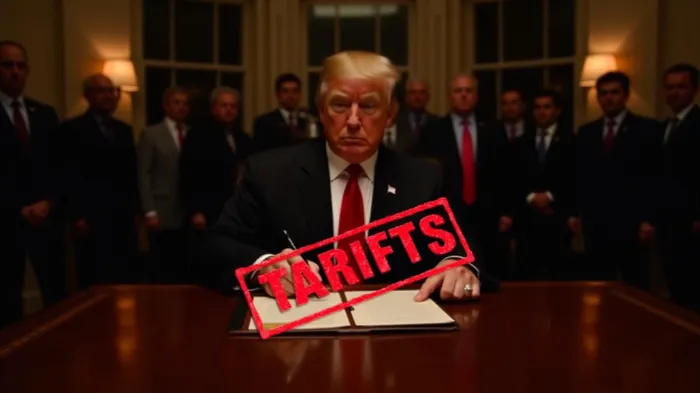
The administration’s unpredictability amplified risks. For instance:
- A 90-day tariff pause in April 2025 caused the S&P 500 to jump 4.6%—its best day since 2008—only for markets to slump again as exemptions were clarified.
- Threats to Fed Chair Powell sparked a 2.7% plunge in stock futures.
3. Meta and Microsoft: Winners and Losers in the Tariff Era
The tech sector is split. Meta faces headwinds, while Microsoft has shown surprising resilience—so far.
Meta: Stumbling in the Tariff Crossfire
Meta’s Q1 2025 revenue rose 13.6% to $41.3 billion, but margins collapsed to 32.5% from 43.1% a year earlier. The culprit?
- Chinese advertisers like Temu and Shein cut spending amid tariffs and the end of the “de minimis” exemption (which previously let goods under $800 enter duty-free).
- Reality Labs, its AR/VR division, lost $4.5 billion, worsening cash burn.
Investors are skeptical. Meta’s shares have fallen 35% from February highs, with analysts citing valuation concerns and fears that AI investments won’t offset ad declines.
Microsoft: The Cloud Anchor in a Chaotic Market
Microsoft’s enterprise focus shielded it from the worst of the tariff panic. Its stock fell just 5.8% in the tariff announcement week, outperforming rivals like Amazon (-12%) and Alphabet (-7%).
Why?
- Azure’s cloud dominance grew 27% YoY, with recurring revenue smoothing volatility.
- A $100 billion cash pile gives it flexibility to weather supply chain disruptions or invest in U.S. data centers.
Yet risks linger. If tariffs escalate, Microsoft could face rare earth shortages or EU digital taxes—trimming margins.
Conclusion: Navigating the Perfect Storm
The interplay of these three forces—economic contraction, policy chaos, and tech divergence—creates both risks and opportunities.
- Avoid sectors exposed to tariffs, like consumer discretionary or semiconductors.
- Favor cloud and enterprise software stocks like Microsoft, which have recurring revenue and geopolitical insulation.
- Meta’s struggles highlight the vulnerability of ad-driven models to macro headwinds.
The data underscores the stakes:
- The U.S. economy is teetering on recession, with inflation at 3.5% and consumer sentiment near multi-decade lows.
- Tariffs have cost the S&P 500 $3.66 trillion in market value since Trump’s 2024 re-election.
Investors must brace for more volatility. The next six months will test whether the economy can stabilize—or if these three storms will merge into a perfect economic and market storm.






Comentarios
Aún no hay comentarios