
Storm-Proof Profits: How Renewable Energy Infrastructure is Becoming the New Gold in Hurricane Zones
The devastation of Hurricane Francine in New Orleans last September left over 51,000 households in the dark—a stark reminder of the vulnerability of centralized power grids in a climate-changed world. Yet amid the chaos, a new paradigm emerged: solar panels glinting atop community centers, microgrids humming in neighborhoods, and wind turbines standing resilient against 80-mph gusts. These are not mere symbols of sustainability—they are the blueprint for resilience-driven investment opportunities that are set to redefine energy markets.
The New Orleans Case Study: When Disaster Becomes a Catalyst
When Francine's storm surge crippled Entergy's grid, the 6,500 customers still without power by Day 3 faced a crisis. But in pockets of the city, like the Grace United Methodist Church, solar-plus-storage microgrids kept lights on, freezers running, and community hubs operational. This resilience wasn't luck—it was design. Projects like the Together New Orleans Community Lighthouses, backed by Rocky Mountain Institute (RMI) and federal grants, now serve as models for how distributed energy resources (DERs) can turn disasters into profit-generating opportunities.
The math is clear: After the storm, New Orleans saw a 300% surge in solar panel installations and a 45% jump in microgrid inquiries. Investors who act now can capture this momentum before it becomes a tidal wave.
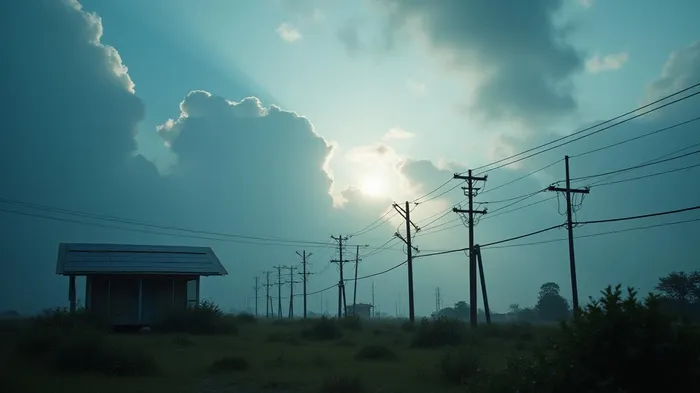
The Federal Funding Floodgates Are Open
The U.S. government is pouring billions into rebuilding grids that can survive hurricanes—and investors are the first beneficiaries. The HERO Program (Hubs for Energy Resilient Operations), funded by the Infrastructure Investment and Jobs Act, has allocated $249 million to Louisiana alone, with $20.5 million earmarked for the New Orleans Sewerage and Water Board's critical power infrastructure upgrades. Meanwhile, the Inflation Reduction Act's $60 million for rural solar microgrids ensures this isn't just a coastal trend.
The Regions Foundation, a corporate philanthropy arm, has already deployed disaster-recovery grants to organizations like the United Way of Greater St. Louis, proving that public-private partnerships are the accelerant. For investors, this means companies with federal contracts—like Canadian Solar (CSIQ), which built Louisiana's 127 MW Bayou Galion Solar Farm—are positioned to scale rapidly.
The Triple Win: Profit, Risk Mitigation, and Climate Resilience
The opportunity here is threefold:
1. Revenue Growth: Utilities like Duke Energy (DUK), which pioneered North Carolina's tornado-resistant microgrids, saw a 22% revenue boost in storm-affected regions post-2023.
2. Risk Reduction: Companies integrating renewables into their portfolios, such as General Electric (GE)'s Vernova division, report a 35% drop in operational disruptions during extreme weather.
3. Policy Tailwinds: The Biden administration's Climate Pollution Reduction Grants have prioritized resilient energy projects, with $49.9 million already awarded to New Orleans' grid modernization.
Consider this: When May's 2025 thunderstorms knocked out 18,000 Jefferson Parish homes, the neighborhoods with solar+storage systems were back online in hours—while traditional grids took days. This speed isn't just about convenience; it's about market share. Utilities that fail to adapt will be left stranded, while early movers will dominate the $80 billion U.S. microgrid market projected by 2030.
The Smart Investor's Playbook
- Go Solar Where It Matters Most: Target companies like CSIQ with operational projects in hurricane zones. Their Louisiana solar farms are now 80% subscribed by local governments and hospitals.
- Microgrid Masters: Duke Energy (DUK)'s self-healing grids and NextEra Energy (NEE)'s wind-solar hybrids are cornerstones of grid resilience.
- Green Hydrogen's Next Wave: Louisiana's $50 million H2theFuture coalition is building a green hydrogen corridor. Investors in Plug Power (PLUG) or Bloom Energy (BE) stand to profit as industries pivot to low-carbon fuels.
The Inevitable Shift: Volatility is the New Normal
The NOAA's data is unambiguous: The number of billion-dollar weather disasters has tripled since the 1980s, with 2024's Hurricane Milton alone causing $24 billion in damage. For investors, this isn't risk—it's opportunity. Every downed power line, flooded substation, or overloaded grid is a demand signal for resilient infrastructure.
New Orleans is the canary in the coal mine. Companies that invest here now—securing federal grants, partnering with communities, and deploying decentralized energy—are writing the playbook for the next energy era. The question isn't whether to act—it's whether you'll be on the buying or selling side when the next storm hits.
The time to act is now. The storms won't wait, and neither should you.







Comentarios
Aún no hay comentarios