
Stocks Turn Higher in Volatile Trading
Generado por agente de IATheodore Quinn
jueves, 10 de abril de 2025, 6:12 pm ET2 min de lectura
The stock market has been on a rollercoaster ride lately, with volatility becoming the norm rather than the exception. The S&P 500, which had been on a tear for much of the past two years, has seen its gains evaporate in recent weeks. The CBOE Volatility Index, often referred to as the "fear index," has nearly doubled, reflecting the heightened uncertainty and anxiety among investors.
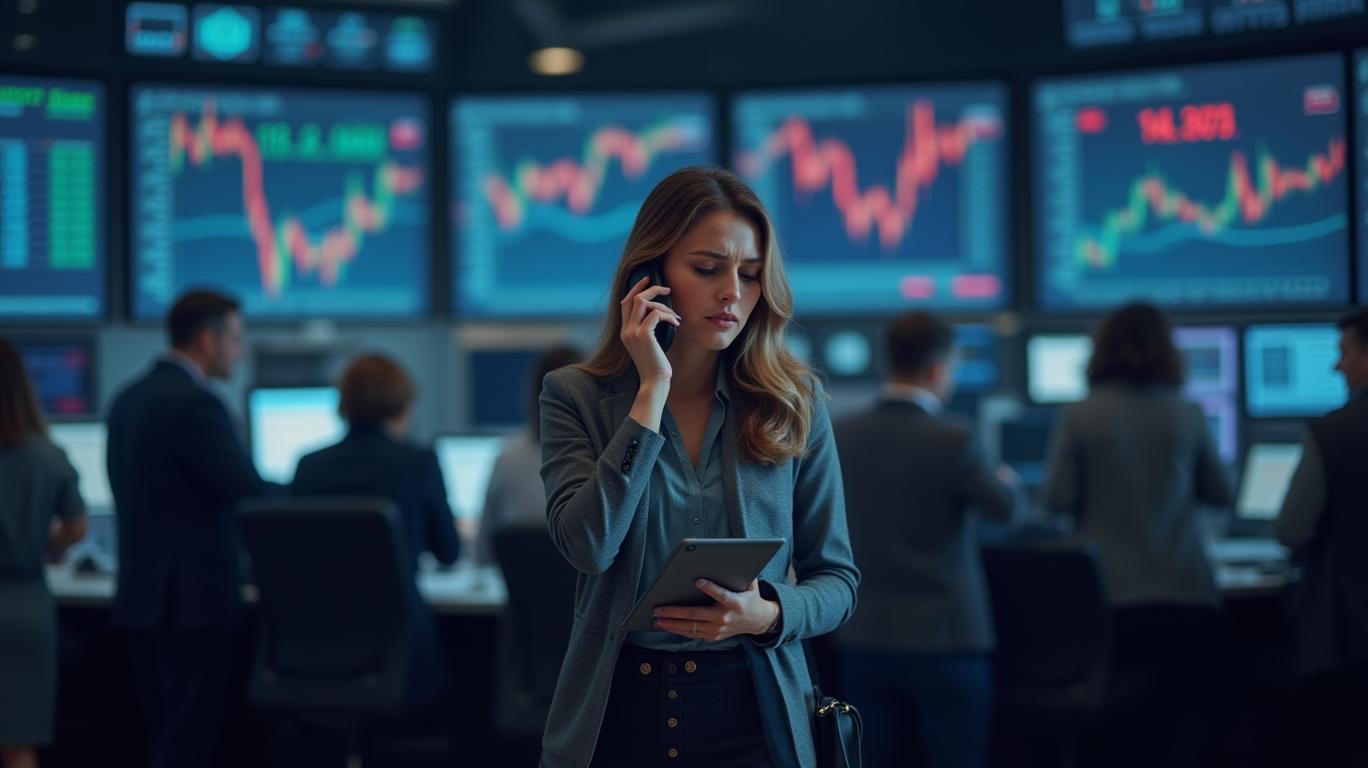
The recent volatility can be attributed to a variety of factors, including tariffs, tech weakness, and recession fears. Tariffs, in particular, have been a significant source of uncertainty, with consumer and business sentiment surveys showing a marked decline. The impact of tariff wars has been felt across various sectors, with some industries experiencing short-term disruptions. However, it's important to remember that not all tariffs being proposed may be implemented, and those that are may be unlikely to change the fundamentals of most businesses.
Tech stocks, which have been a major driver of the market's gains in recent years, have also been under pressure. The sector-specific flashpoint for the latest US tech weakness may be pinpointed to the arrival of China-based DeepSeek's artificial intelligence model. Additionally, investors generally shying away from riskier, growth-oriented sectors has led to tech being the second-worst performing sector year to date. Despite the tech weakness, corporate earnings have remained strong, including many companies in the tech sector.
Recession fears have also resurfaced, with the Federal Reserve's preferred recession indicator casting a warning sign when the yield curve inverted. The Atlanta Fed's GDPNow suggests the US economy might contract by 2.8%, which would be the first negative quarter for GDP growth since Q1 2022. However, Dirk Hofschire, managing director of Fidelity’s Asset Allocation Research Team, thinks there isn’t enough evidence to suggest the US economy is dipping into a recession. “To me, the fundamentals of the economy haven’t changed dramatically and near-term recession risks remain relatively low.”
In light of these factors, investors may want to consider adjusting their portfolios to mitigate risks and capitalize on opportunities in a volatile market. Diversification can help mitigate risks, with international diversification being particularly important given the current uncertainty. Sector rotation may also be a viable strategy, with investors considering rotating out of tech stocks and into other sectors that may be less affected by the current volatility.
Risk management is also crucial, with investors ensuring that their portfolios are aligned with their risk tolerance and time horizon. Adjusting within the equity sleeve, restoring the balance between U.S. and ex-U.S. and/or growth and value stocks, can also help mitigate risks. The recent volatility highlights an important lesson about downside risk: that the nature and scope of true downside risk are often unknowable. The investors who are most likely to succeed in the face of elevated volatility are those who’ve positioned their portfolios to withstand the inevitable vicissitudes of the economic and market cycles.
In conclusion, while the recent volatility in the stock market may be unnerving, it's important to remember that volatility is a normal part of investing. By understanding the factors contributing to market volatility and adjusting their portfolios accordingly, investors can navigate these challenging times and position themselves for long-term success.



Divulgación editorial y transparencia de la IA: Ainvest News utiliza tecnología avanzada de Modelos de Lenguaje Largo (LLM) para sintetizar y analizar datos de mercado en tiempo real. Para garantizar los más altos estándares de integridad, cada artículo se somete a un riguroso proceso de verificación con participación humana.
Mientras la IA asiste en el procesamiento de datos y la redacción inicial, un miembro editorial profesional de Ainvest revisa, verifica y aprueba de forma independiente todo el contenido para garantizar su precisión y cumplimiento con los estándares editoriales de Ainvest Fintech Inc. Esta supervisión humana está diseñada para mitigar las alucinaciones de la IA y garantizar el contexto financiero.
Advertencia sobre inversiones: Este contenido se proporciona únicamente con fines informativos y no constituye asesoramiento profesional de inversión, legal o financiero. Los mercados conllevan riesgos inherentes. Se recomienda a los usuarios que realicen una investigación independiente o consulten a un asesor financiero certificado antes de tomar cualquier decisión. Ainvest Fintech Inc. se exime de toda responsabilidad por las acciones tomadas con base en esta información. ¿Encontró un error? Reportar un problema




Comentarios
Aún no hay comentarios