
"Stocks Stumble, Bond Selloff Abates as Investors Take Stock of US Trade Policy"
Generado por agente de IATheodore Quinn
jueves, 6 de marzo de 2025, 10:21 pm ET2 min de lectura
FORD--
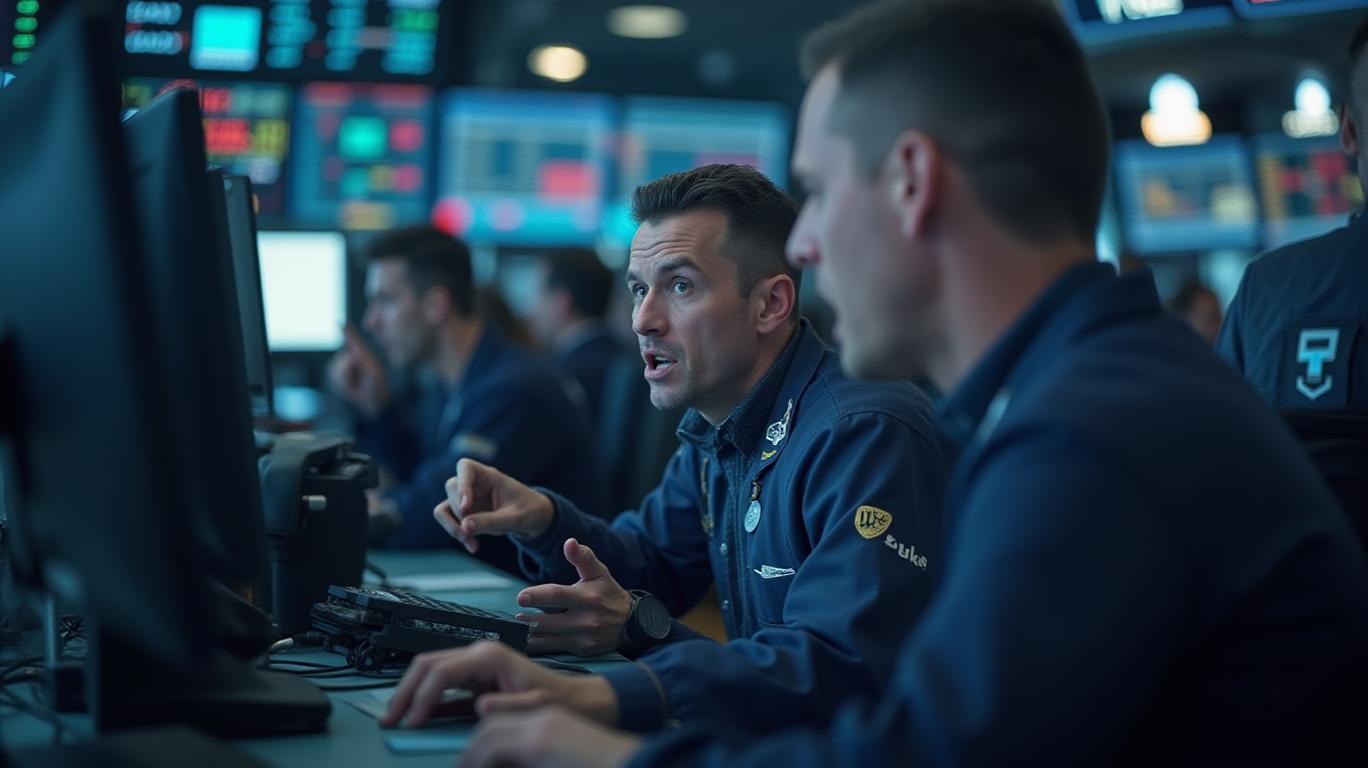
The global financial markets have been in a state of flux as investors grapple with the implications of President Trump's recent tariff impositions on Canada, Mexico, and China. The Dow Jones Industrial Average (DJIA) plummeted by 1.55%, or about 670 points, on Tuesday, March 7, 2025, following a nearly 1.5% drop on Monday. The S&P 500 and Nasdaq Composite also took significant hits, falling by 1.2% and 0.35% respectively. The VIX, Wall Street’s fear gauge, surged to its highest level this year, reflecting the heightened market volatility and investor anxiety.
The tariffs, which include a 25% levy on most imports from Canada and Mexico and a 10% tariff on Canadian energy exports, have sparked retaliatory measures from these countries. China, too, has announced tariffs on various U.S. products, including agricultural imports. The escalating trade war has raised concerns about a potential global economic slowdown, reminiscent of the Great Depression of the 1930s. Andrew Wilson, deputy secretary-general of the International Chamber of Commerce, warned that this could be the start of a downward spiral similar to the 1930s trade-war territory.
The automotive and retail sectors have been particularly hard hit. Major U.S. automakers like FordFORD-- and GMGM-- saw their shares plummet, with Ford losing 2.34% and GM down 4.9%. Retail giants Best Buy and Target also faced significant declines, with Best Buy's shares sliding 13.1% and Target's down 5.32%. Both companies warned of increased prices for consumers due to the tariffs.
The U.S. dollar slid to its lowest level since December, reflecting investor concerns about short-term uncertainty and the potential for a slowdown in the U.S. economy. The Mexican peso and Canadian dollar showed relatively modest changes, suggesting that traders might still be hopeful that the tariffs won't remain in place for long. However, the broader implications for the U.S. dollar's trajectory are significant. A weaker dollar could further weigh on the earnings of S&P 500 companies, which derive 28% of revenues outside the U.S. According to Goldman SachsGBXC-- Research, a 10% increase in the value of the trade-weighted dollar would reduce S&P 500 EPS by roughly 2%.
The bond market, which had been experiencing a selloff, showed signs of abating as investors sought safe-haven assets. The 10-year Treasury yield slid to 4.129%, indicating a flight to safety. Oil prices also dropped for a third straight session on concerns that the escalating trade war will dampen energy demand.
Investors are now faced with a complex landscape. The escalating trade war and the resulting market volatility are likely to influence the U.S. dollar's trajectory negatively, with potential implications for both U.S. and foreign investors. The increased uncertainty and potential slowdown in the U.S. economy could lead to a weaker dollar, affecting the earnings of U.S. companies and prompting investors to seek opportunities in other markets.
In light of these developments, investors should consider several strategies to mitigate the financial impact of the tariffs. Diversification across different asset classes and geographies can help reduce risk. Risk management strategies, such as hedging portfolios against potential downturns, are also crucial. Maintaining a long-term perspective and closely monitoring policy developments can help investors navigate the challenges posed by the current trade environment.
The current situation bears some similarities to past events such as the Great Depression, which was characterized by protectionist measures that led to a downward spiral in global trade and economic activity. By learning from historical precedents and adopting strategies such as diversification, risk management, maintaining a long-term perspective, and monitoring policy developments, investors can better navigate the challenges posed by the current trade environment.
GBXC--
GM--
The global financial markets have been in a state of flux as investors grapple with the implications of President Trump's recent tariff impositions on Canada, Mexico, and China. The Dow Jones Industrial Average (DJIA) plummeted by 1.55%, or about 670 points, on Tuesday, March 7, 2025, following a nearly 1.5% drop on Monday. The S&P 500 and Nasdaq Composite also took significant hits, falling by 1.2% and 0.35% respectively. The VIX, Wall Street’s fear gauge, surged to its highest level this year, reflecting the heightened market volatility and investor anxiety.
The tariffs, which include a 25% levy on most imports from Canada and Mexico and a 10% tariff on Canadian energy exports, have sparked retaliatory measures from these countries. China, too, has announced tariffs on various U.S. products, including agricultural imports. The escalating trade war has raised concerns about a potential global economic slowdown, reminiscent of the Great Depression of the 1930s. Andrew Wilson, deputy secretary-general of the International Chamber of Commerce, warned that this could be the start of a downward spiral similar to the 1930s trade-war territory.
The automotive and retail sectors have been particularly hard hit. Major U.S. automakers like FordFORD-- and GMGM-- saw their shares plummet, with Ford losing 2.34% and GM down 4.9%. Retail giants Best Buy and Target also faced significant declines, with Best Buy's shares sliding 13.1% and Target's down 5.32%. Both companies warned of increased prices for consumers due to the tariffs.
The U.S. dollar slid to its lowest level since December, reflecting investor concerns about short-term uncertainty and the potential for a slowdown in the U.S. economy. The Mexican peso and Canadian dollar showed relatively modest changes, suggesting that traders might still be hopeful that the tariffs won't remain in place for long. However, the broader implications for the U.S. dollar's trajectory are significant. A weaker dollar could further weigh on the earnings of S&P 500 companies, which derive 28% of revenues outside the U.S. According to Goldman SachsGBXC-- Research, a 10% increase in the value of the trade-weighted dollar would reduce S&P 500 EPS by roughly 2%.
The bond market, which had been experiencing a selloff, showed signs of abating as investors sought safe-haven assets. The 10-year Treasury yield slid to 4.129%, indicating a flight to safety. Oil prices also dropped for a third straight session on concerns that the escalating trade war will dampen energy demand.
Investors are now faced with a complex landscape. The escalating trade war and the resulting market volatility are likely to influence the U.S. dollar's trajectory negatively, with potential implications for both U.S. and foreign investors. The increased uncertainty and potential slowdown in the U.S. economy could lead to a weaker dollar, affecting the earnings of U.S. companies and prompting investors to seek opportunities in other markets.
In light of these developments, investors should consider several strategies to mitigate the financial impact of the tariffs. Diversification across different asset classes and geographies can help reduce risk. Risk management strategies, such as hedging portfolios against potential downturns, are also crucial. Maintaining a long-term perspective and closely monitoring policy developments can help investors navigate the challenges posed by the current trade environment.
The current situation bears some similarities to past events such as the Great Depression, which was characterized by protectionist measures that led to a downward spiral in global trade and economic activity. By learning from historical precedents and adopting strategies such as diversification, risk management, maintaining a long-term perspective, and monitoring policy developments, investors can better navigate the challenges posed by the current trade environment.

Divulgación editorial y transparencia de la IA: Ainvest News utiliza tecnología avanzada de Modelos de Lenguaje Largo (LLM) para sintetizar y analizar datos de mercado en tiempo real. Para garantizar los más altos estándares de integridad, cada artículo se somete a un riguroso proceso de verificación con participación humana.
Mientras la IA asiste en el procesamiento de datos y la redacción inicial, un miembro editorial profesional de Ainvest revisa, verifica y aprueba de forma independiente todo el contenido para garantizar su precisión y cumplimiento con los estándares editoriales de Ainvest Fintech Inc. Esta supervisión humana está diseñada para mitigar las alucinaciones de la IA y garantizar el contexto financiero.
Advertencia sobre inversiones: Este contenido se proporciona únicamente con fines informativos y no constituye asesoramiento profesional de inversión, legal o financiero. Los mercados conllevan riesgos inherentes. Se recomienda a los usuarios que realicen una investigación independiente o consulten a un asesor financiero certificado antes de tomar cualquier decisión. Ainvest Fintech Inc. se exime de toda responsabilidad por las acciones tomadas con base en esta información. ¿Encontró un error? Reportar un problema


SOBRE NOSOTROS
Nuestra historiaAutores de noticiasBase de conocimientosPolítica de privacidadTérmino de usoDescargo de responsabilidad de corretaje de tercerosTérminos de uso de AIMEDivulgaciones de riesgos de AInvest AICarrerasCONTÁCTENOS
Email: support@ainvest.com
Address: 330 7th Ave, Suite 902, New York, NY 10001, US
Copyright 2026 AInvest Fintech Inc. All rights reserved.


Comentarios
Aún no hay comentarios