
Stocks Rise as Traders Watch Trump's Early Tariff Moves
Generado por agente de IAWesley Park
martes, 21 de enero de 2025, 6:17 pm ET2 min de lectura
F--
As President Trump's second term begins, investors are closely watching his early tariff moves, with stocks rallying higher despite the potential risks. On Tuesday, the Dow rose by around 1.13%, or almost 500 points, while the S&P 500 gained 0.87% and the tech-heavy Nasdaq Composite moved higher by 0.76%. This positive market reaction comes despite Trump's announcement that his administration would levy a 25% tariff on Mexico and Canada starting February 1.
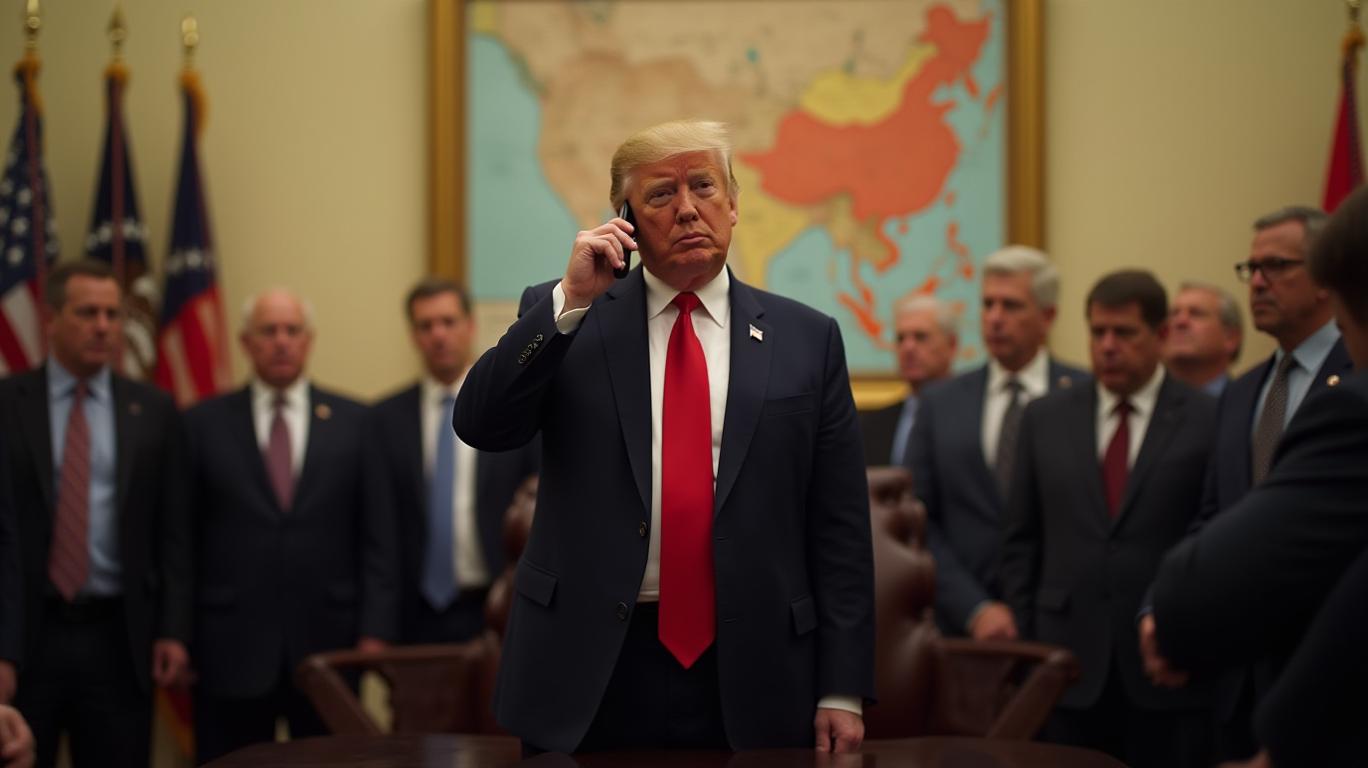
Analysts and investors have mixed views on the potential impact of Trump's tariff policies on the overall economy and broader market trends. While some, like Jamie Cox of Harris Financial Group, believe that the market has "overcome its tariff tantrum" and is focusing more on other factors, such as earnings growth and economic fundamentals, others, like Morgan Stanley analysts, caution that "vigilance is warranted" as markets try to keep track of Trump's policy decisions.
The proposed tariffs could have significant short-term and long-term impacts on various sectors and companies. For instance, the automotive sector, with companies like General Motors (GM) and Ford Motor (F), is vulnerable due to their exposure to Mexico and China through the automotive supply chain. On Tuesday, GM and Ford stocks fell about 4% and 2%, respectively, due to these tariff threats. In the long term, higher tariffs could lead to increased production costs, reduced profitability, and potential job losses in the industry.

The proposed tariffs on Mexico and Canada could also have implications for the energy sector, particularly for companies involved in oil and gas production and exploration. On Tuesday, WTI crude oil, the US benchmark, was down 1.8% after Trump announced executive orders focused on reversing regulations and enabling the drilling of oil in the US. In the long term, higher tariffs on energy imports could lead to increased energy prices, which could impact the profitability of energy companies and potentially lead to job losses in the industry.
Despite the potential negative impacts of tariffs, the overall market trends remain positive. Solita Marcelli, chief investment officer for the Americas at UBS Global Wealth Management, expects the S&P 500 to reach 6,600 by December 2025, driven by resilient US economic activity, solid earnings growth, and lower borrowing costs. However, the potential for retaliation and a global trade war remains a concern.

In conclusion, while analysts and investors are aware of the potential negative impacts of Trump's tariff policies on the overall economy, they also recognize that the market has thus far been resilient and that other factors, such as earnings growth and economic fundamentals, are driving broader market trends. However, the potential for retaliation and a global trade war remains a concern, and investors will be keen to watch how Trump's tariff policies unfold in the coming months.
GM--
MS--
OAKM--
As President Trump's second term begins, investors are closely watching his early tariff moves, with stocks rallying higher despite the potential risks. On Tuesday, the Dow rose by around 1.13%, or almost 500 points, while the S&P 500 gained 0.87% and the tech-heavy Nasdaq Composite moved higher by 0.76%. This positive market reaction comes despite Trump's announcement that his administration would levy a 25% tariff on Mexico and Canada starting February 1.
Analysts and investors have mixed views on the potential impact of Trump's tariff policies on the overall economy and broader market trends. While some, like Jamie Cox of Harris Financial Group, believe that the market has "overcome its tariff tantrum" and is focusing more on other factors, such as earnings growth and economic fundamentals, others, like Morgan Stanley analysts, caution that "vigilance is warranted" as markets try to keep track of Trump's policy decisions.
The proposed tariffs could have significant short-term and long-term impacts on various sectors and companies. For instance, the automotive sector, with companies like General Motors (GM) and Ford Motor (F), is vulnerable due to their exposure to Mexico and China through the automotive supply chain. On Tuesday, GM and Ford stocks fell about 4% and 2%, respectively, due to these tariff threats. In the long term, higher tariffs could lead to increased production costs, reduced profitability, and potential job losses in the industry.
The proposed tariffs on Mexico and Canada could also have implications for the energy sector, particularly for companies involved in oil and gas production and exploration. On Tuesday, WTI crude oil, the US benchmark, was down 1.8% after Trump announced executive orders focused on reversing regulations and enabling the drilling of oil in the US. In the long term, higher tariffs on energy imports could lead to increased energy prices, which could impact the profitability of energy companies and potentially lead to job losses in the industry.
Despite the potential negative impacts of tariffs, the overall market trends remain positive. Solita Marcelli, chief investment officer for the Americas at UBS Global Wealth Management, expects the S&P 500 to reach 6,600 by December 2025, driven by resilient US economic activity, solid earnings growth, and lower borrowing costs. However, the potential for retaliation and a global trade war remains a concern.
In conclusion, while analysts and investors are aware of the potential negative impacts of Trump's tariff policies on the overall economy, they also recognize that the market has thus far been resilient and that other factors, such as earnings growth and economic fundamentals, are driving broader market trends. However, the potential for retaliation and a global trade war remains a concern, and investors will be keen to watch how Trump's tariff policies unfold in the coming months.

Divulgación editorial y transparencia de la IA: Ainvest News utiliza tecnología avanzada de Modelos de Lenguaje Largo (LLM) para sintetizar y analizar datos de mercado en tiempo real. Para garantizar los más altos estándares de integridad, cada artículo se somete a un riguroso proceso de verificación con participación humana.
Mientras la IA asiste en el procesamiento de datos y la redacción inicial, un miembro editorial profesional de Ainvest revisa, verifica y aprueba de forma independiente todo el contenido para garantizar su precisión y cumplimiento con los estándares editoriales de Ainvest Fintech Inc. Esta supervisión humana está diseñada para mitigar las alucinaciones de la IA y garantizar el contexto financiero.
Advertencia sobre inversiones: Este contenido se proporciona únicamente con fines informativos y no constituye asesoramiento profesional de inversión, legal o financiero. Los mercados conllevan riesgos inherentes. Se recomienda a los usuarios que realicen una investigación independiente o consulten a un asesor financiero certificado antes de tomar cualquier decisión. Ainvest Fintech Inc. se exime de toda responsabilidad por las acciones tomadas con base en esta información. ¿Encontró un error? Reportar un problema


SOBRE NOSOTROS
Nuestra historiaAutores de noticiasBase de conocimientosPolítica de privacidadTérmino de usoDescargo de responsabilidad de corretaje de tercerosTérminos de uso de AIMEDivulgaciones de riesgos de AInvest AICarrerasCONTÁCTENOS
Email: support@ainvest.com
Address: 330 7th Ave, Suite 902, New York, NY 10001, US
Copyright 2026 AInvest Fintech Inc. All rights reserved.


Comentarios
Aún no hay comentarios