
US Stocks Braced for Impact as Trump's Tariffs Loom
Generado por agente de IATheodore Quinn
martes, 4 de marzo de 2025, 3:38 am ET2 min de lectura
AAPL--
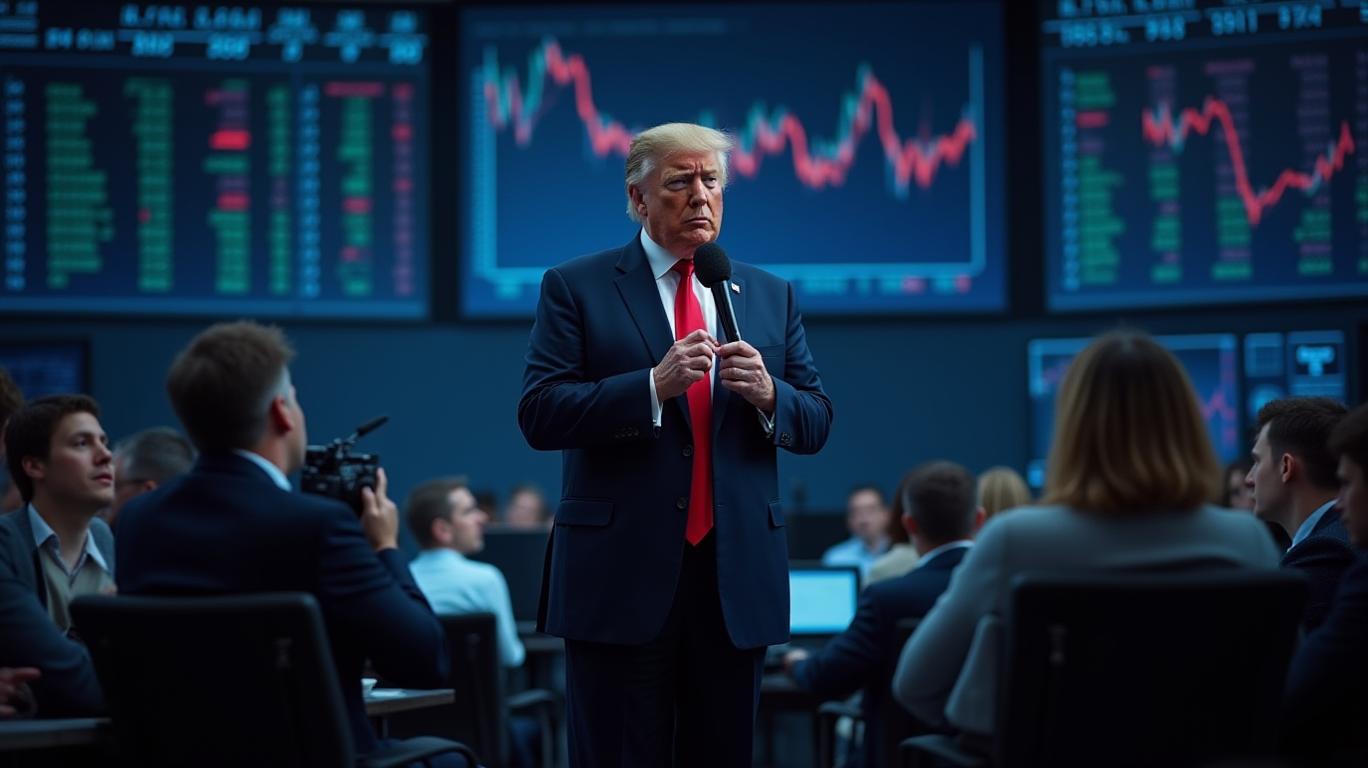
As the clock ticks down to President Trump's threatened tariffs on Mexico and Canada, U.S. stocks find themselves in a precarious position. The proposed 25% tariffs on most goods imported from these countries, along with a 10% increase on Chinese imports, have investors on edge, wondering how the markets will weather the storm. Let's dive into the potential impacts and explore strategies to navigate this challenging moment.
Economic Growth and Inflation: A Double Whammy
The proposed tariffs could have significant implications for U.S. economic growth and inflation. J.P. Morgan strategists expect the tariffs to lower their expectations for U.S. economic growth by 0.5% to 1% and increase their inflation outlook by the same amount. This double whammy could limit the Federal Reserve's flexibility in setting interest rates, as they grapple with balancing growth and inflation concerns.
Industries and Companies Most at Risk
U.S. industries and companies with complex global supply chains, manufacturing abroad, and major exposure to U.S. revenue generation are most vulnerable to the proposed tariffs. Firms like AppleAAPL--, NikeNKE--, and Coca-ColaKO-- could face higher costs and reduced profitability due to increased tariffs on imported goods. The automotive industry, which relies heavily on imported components, is also at risk.
Retaliatory Actions: Escalating the Trade War
Retaliatory actions by Mexico, Canada, and other countries could escalate the trade war, leading to a "spiraling trade war" of tit-for-tat tariffs. This could disrupt global supply chains, increase costs for consumers, and weigh on consumer confidence. Investors should be aware of these potential market impacts and consider hedging their portfolios to protect against the risks associated with a trade war.
Navigating the Volatile Market
To mitigate risks in their portfolios, investors can consider the following strategies:
1. Increase diversification: Adding gold to a portfolio can help hedge against higher prices and geopolitical volatility. Additionally, investors can prioritize income generation within the bond allocation by considering funds like the iShares Gold Trust Micro (IAUM) and the iShares Flexible Income Active ETF (BINC).
2. Mitigate geopolitical risk: Investors can target tech firms with a larger domestic footprint, which may be better positioned to weather geopolitical headwinds. The iShares U.S. Tech Independence Focused ETF (IETC) leverages real-time data and machine learning to help investors identify such companies.
3. Manage volatility: Investors can use options or other derivatives to hedge against market volatility. Additionally, they can consider investing in companies with strong balance sheets and robust cash flows, which may be better equipped to navigate challenging economic conditions.
As investors brace for the potential impacts of Trump's tariffs, it's essential to remain vigilant and adapt portfolios as needed. While the markets may face headwinds in the short term, history has shown that stocks tend to rebound after periods of volatility. By staying informed and maintaining a balanced perspective, investors can position themselves to capitalize on opportunities that may arise from the current uncertainty.
In conclusion, the proposed tariffs on Mexico and Canada present a challenging moment for U.S. stocks. However, by understanding the potential impacts and employing strategic portfolio management techniques, investors can navigate this volatile market and prepare for the road ahead.
KO--
NKE--
WTRG--
As the clock ticks down to President Trump's threatened tariffs on Mexico and Canada, U.S. stocks find themselves in a precarious position. The proposed 25% tariffs on most goods imported from these countries, along with a 10% increase on Chinese imports, have investors on edge, wondering how the markets will weather the storm. Let's dive into the potential impacts and explore strategies to navigate this challenging moment.
Economic Growth and Inflation: A Double Whammy
The proposed tariffs could have significant implications for U.S. economic growth and inflation. J.P. Morgan strategists expect the tariffs to lower their expectations for U.S. economic growth by 0.5% to 1% and increase their inflation outlook by the same amount. This double whammy could limit the Federal Reserve's flexibility in setting interest rates, as they grapple with balancing growth and inflation concerns.
Industries and Companies Most at Risk
U.S. industries and companies with complex global supply chains, manufacturing abroad, and major exposure to U.S. revenue generation are most vulnerable to the proposed tariffs. Firms like AppleAAPL--, NikeNKE--, and Coca-ColaKO-- could face higher costs and reduced profitability due to increased tariffs on imported goods. The automotive industry, which relies heavily on imported components, is also at risk.
Retaliatory Actions: Escalating the Trade War
Retaliatory actions by Mexico, Canada, and other countries could escalate the trade war, leading to a "spiraling trade war" of tit-for-tat tariffs. This could disrupt global supply chains, increase costs for consumers, and weigh on consumer confidence. Investors should be aware of these potential market impacts and consider hedging their portfolios to protect against the risks associated with a trade war.
Navigating the Volatile Market
To mitigate risks in their portfolios, investors can consider the following strategies:
1. Increase diversification: Adding gold to a portfolio can help hedge against higher prices and geopolitical volatility. Additionally, investors can prioritize income generation within the bond allocation by considering funds like the iShares Gold Trust Micro (IAUM) and the iShares Flexible Income Active ETF (BINC).
2. Mitigate geopolitical risk: Investors can target tech firms with a larger domestic footprint, which may be better positioned to weather geopolitical headwinds. The iShares U.S. Tech Independence Focused ETF (IETC) leverages real-time data and machine learning to help investors identify such companies.
3. Manage volatility: Investors can use options or other derivatives to hedge against market volatility. Additionally, they can consider investing in companies with strong balance sheets and robust cash flows, which may be better equipped to navigate challenging economic conditions.
As investors brace for the potential impacts of Trump's tariffs, it's essential to remain vigilant and adapt portfolios as needed. While the markets may face headwinds in the short term, history has shown that stocks tend to rebound after periods of volatility. By staying informed and maintaining a balanced perspective, investors can position themselves to capitalize on opportunities that may arise from the current uncertainty.
In conclusion, the proposed tariffs on Mexico and Canada present a challenging moment for U.S. stocks. However, by understanding the potential impacts and employing strategic portfolio management techniques, investors can navigate this volatile market and prepare for the road ahead.

Divulgación editorial y transparencia de la IA: Ainvest News utiliza tecnología avanzada de Modelos de Lenguaje Largo (LLM) para sintetizar y analizar datos de mercado en tiempo real. Para garantizar los más altos estándares de integridad, cada artículo se somete a un riguroso proceso de verificación con participación humana.
Mientras la IA asiste en el procesamiento de datos y la redacción inicial, un miembro editorial profesional de Ainvest revisa, verifica y aprueba de forma independiente todo el contenido para garantizar su precisión y cumplimiento con los estándares editoriales de Ainvest Fintech Inc. Esta supervisión humana está diseñada para mitigar las alucinaciones de la IA y garantizar el contexto financiero.
Advertencia sobre inversiones: Este contenido se proporciona únicamente con fines informativos y no constituye asesoramiento profesional de inversión, legal o financiero. Los mercados conllevan riesgos inherentes. Se recomienda a los usuarios que realicen una investigación independiente o consulten a un asesor financiero certificado antes de tomar cualquier decisión. Ainvest Fintech Inc. se exime de toda responsabilidad por las acciones tomadas con base en esta información. ¿Encontró un error? Reportar un problema




Comentarios
Aún no hay comentarios