
U.S. Stock Market Plummets 5% as Tariffs, Geopolitical Tensions Fuel Global Sell-Off
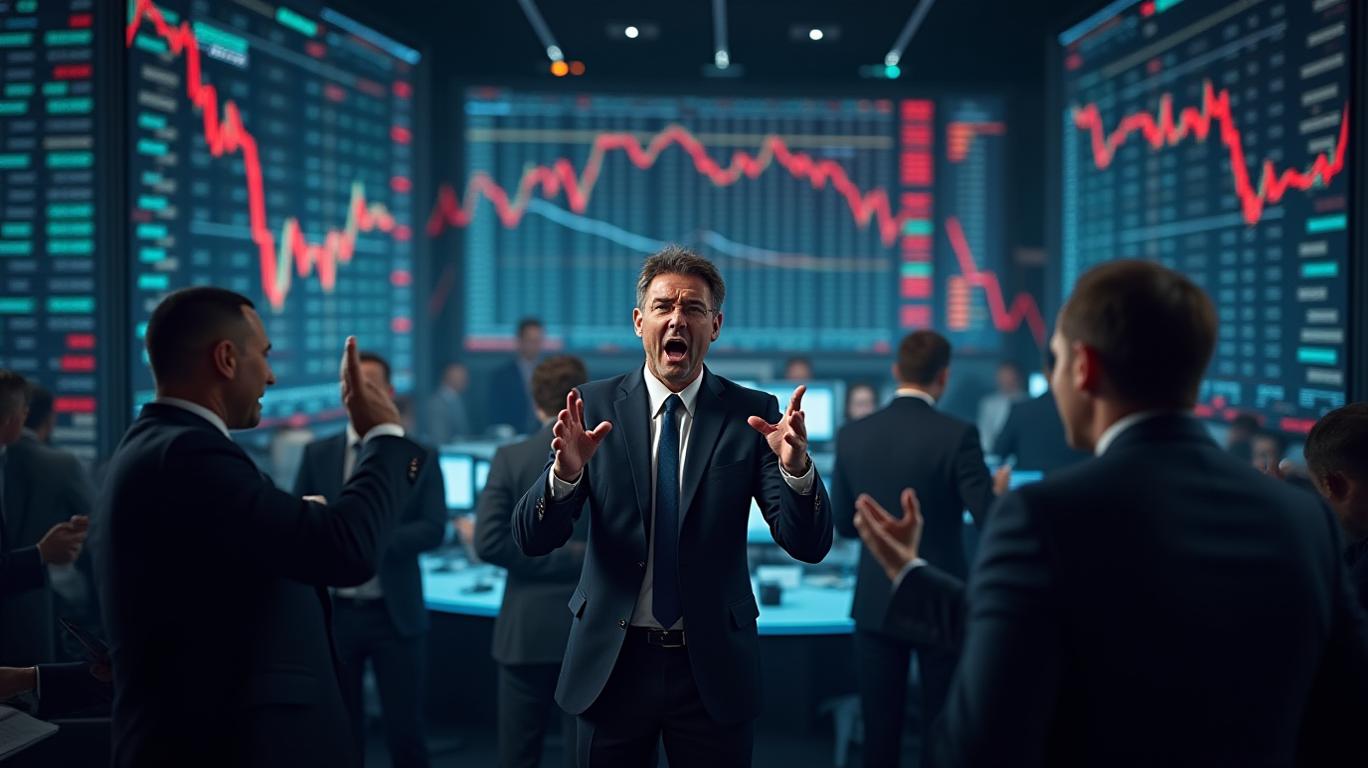
The U.S. stock market has recently experienced a significant downturn, joining a global sell-off that has affected markets from Japan to Europe. The S&P 500 index has re-entered correction territory, with market capitalization evaporating by nearly $2 trillion, marking the largest single-day decline since September 2022. This downturn has raised concerns among analysts about the potential onset of a new bear market.
Analysts have attributed the recent sell-off to a combination of internal and external factors. Internally, the impact of tariffs has been a significant driver of market instability. The imposition of retaliatory tariffs, particularly those initiated by former U.S. President Donald Trump, has sent shockwaves through global markets. The NASDAQ, for instance, experienced a significant drop of over 5% at the opening bell, while the Russell 2000 index has also entered bear market territory. The combined market capitalization of the "tech seven giants" has plummeted by $840 billion, highlighting the severe impact of the sell-off on the technology sector.
Externally, geopolitical tensions have exacerbated the market turmoil. The trade war has created a challenging environment for investors, who are grappling with uncertainty and volatility. Analysts have warned that the current market conditions could signal the start of a new bear market, with the potential for further declines in the coming months. The combination of internal economic pressures and external geopolitical risks has made it difficult for investors to predict market movements with any degree of certainty.
Leuthold Group's Chief Investment Officer Doug Ramsey has suggested that while an economic recession is not inevitable, the deeper the market correction, the higher the likelihood of a recession. He believes that the current downturn is not just a temporary correction but the first stage of a new bear market. This perspective is shared by other analysts who have expressed concerns about the potential for further market declines.
In response to the market turmoil, major financial institutionsFISI-- have issued warnings about the potential impact on the global economy. Fitch Ratings has cautioned that tariffs could act as a "game-changer" for the global economy, while Deutsche BankDB-- has described the current situation as a "once-in-a-lifetime" moment that could easily lead to a 1% to 1.5% reduction in U.S. economic growth this year. These warnings underscore the seriousness of the current market conditions and the potential for further economic instability.
As the market continues to navigate these headwinds, investors will be closely monitoring economic indicators and policy developments for signs of stabilization or further deterioration. The current environment is characterized by high levels of uncertainty and volatility, making it challenging for investors to make informed decisions. However, by staying informed and adapting to changing market conditions, investors can position themselves to weather the storm and capitalize on potential opportunities as they arise.







Comentarios
Aún no hay comentarios