
The U.S. Stock Market Dip: A Strategic Buying Opportunity Amid Global Volatility
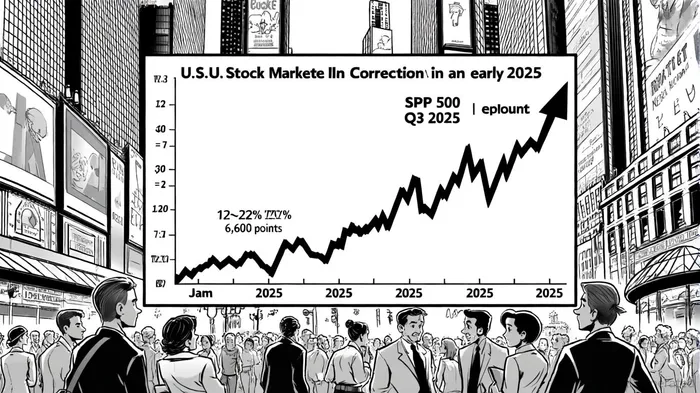
The U.S. stock market's early 2025 correction—driven by a perfect storm of geopolitical tensions, inflationary pressures, and corporate earnings misses—has created a rare inflection point for contrarian investors. While the S&P 500 and Nasdaq Composite fell 12–22% from their December 2024 highs, this volatility masks a deeper narrative of macroeconomic resilience and structural tailwinds. For those willing to look beyond short-term noise, the dip presents a strategic opportunity to capitalize on undervalued sectors and long-term growth drivers.
The Catalysts Behind the Dip
The market's selloff in early 2025 was fueled by three interlocking forces:
1. Tariff Uncertainty: The U.S. administration's expansion of tariffs to 18% on over 90 countries disrupted global supply chains, squeezing profit margins for multinational corporations in technology, manufacturing, and consumer goods [1].
2. Persistent Inflation: The Consumer Price Index (CPI) remained above 4% for three consecutive months, eroding real returns for growth stocks and forcing investors to reassess valuations [1].
3. Federal Reserve Policy Shifts: Aggressive rate hikes in early 2025 introduced uncertainty, though subsequent signals of rate stability in mid-2025 helped spark a partial rebound [1].
These factors created a “perfect storm” of volatility, particularly in sectors reliant on global trade and capital-intensive operations. However, the same forces that triggered the selloff now position the market for a recalibration—provided investors focus on fundamentals rather than fear.
Q3 2025: A Rally Driven by AI and Rate Cuts
By September 2025, the market had staged a remarkable recovery. The S&P 500 closed above 6,600 points, while the Dow Jones Industrial Average surpassed 46,000, driven by a surge in AI investments and expectations of Fed rate cuts [1]. Semiconductor and cloud computing giants like NVIDIA and Microsoft led the charge, with AI infrastructure demand growing at a 40% annualized rate [1].
This rally, however, has not been without its risks. The S&P 500's price-to-earnings ratio now sits at the 93rd historical percentile, raising concerns about overvaluation [1]. Yet, this metric overlooks the structural shift toward AI-driven productivity, which could justify elevated multiples. As Morgan Stanley notes, “The market is pricing in a future where AI transforms industries, not just a near-term earnings report” [3].
Contrarian Opportunities in a Fragmented World
For contrarian investors, the key lies in identifying sectors and assets that are undervalued relative to their long-term potential. Consider the following:
- Energy and Infrastructure: While tech stocks have dominated headlines, energy infrastructure and utilities remain attractively valued, offering defensive characteristics in a high-geopolitical-risk environment [3].
- International Equities: U.S. investors have overindexed to domestic stocks, but emerging markets and European equities present compelling opportunities, particularly in sectors insulated from U.S. tariff policies [2].
- Dividend-Paying Cyclicals: Companies in healthcare and industrials, which have historically lagged the broader market, now trade at discounts to their intrinsic value, offering both income and growth potential [3].
The contrarian playbook also demands a macroeconomic lens. Despite rising tariffs and geopolitical tensions, the U.S. economy has shown surprising resilience. Corporate earnings are expected to grow 5% year-over-year in Q3 2025 [1], and the Federal Reserve's pivot toward rate cuts has injected liquidity into risk assets. These dynamics suggest that the current volatility is a buying opportunity, not a bear market.
The Path Forward: Balancing Caution and Conviction
Investors must remain vigilant. Tariff deadlines, earnings reports, and geopolitical flare-ups could reintroduce volatility. However, history shows that markets bottom when fear dominates sentiment. The current dip in the Nasdaq and S&P 500 mirrors the 2009 and 2020 corrections, both of which were followed by multi-year bull markets.
For those with a multi-year time horizon, the combination of AI-driven growth, rate normalization, and undervalued sectors creates a compelling case to buy the dip. As Fidelity Institutional notes, “The market's ability to adapt to macroeconomic headwinds is a testament to its underlying strength” [2].







Comentarios
Aún no hay comentarios