
The Stock-Crypto Correlation Shift: Navigating New Opportunities in a Risk-On Era
The Stock-Crypto Correlation Shift: Navigating New Opportunities in a Risk-On Era
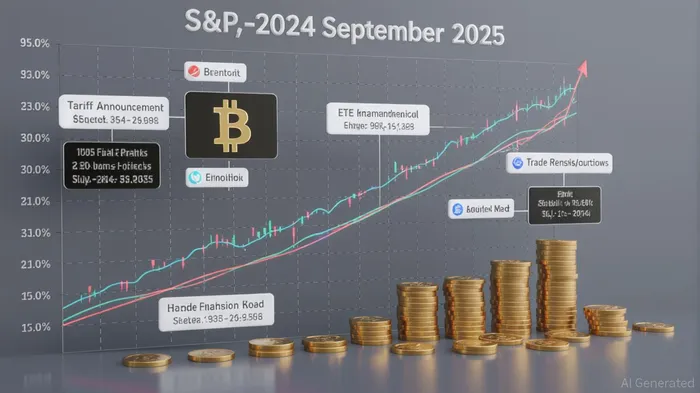
The relationship between stocks and cryptocurrencies in 2025 has become a paradox of convergence and divergence. On one hand, BitcoinBTC-- and EthereumETH-- have exhibited a high correlation with traditional equity indices like the S&P 500 and Nasdaq, particularly during periods of macroeconomic stress. On the other, Bitcoin has occasionally decoupled from equities, acting as a safe-haven asset amid trade tensions and inflationary pressures[2]. This duality reflects a maturing crypto market and shifting investor behavior, creating both challenges and opportunities for strategic portfolio reallocation.
Drivers of the Shift: Macroeconomic Sentiment and Institutional Adoption
The correlation dynamics between stocks and crypto are increasingly shaped by macroeconomic sentiment and institutional flows. For instance, in mid-2025, Bitcoin's price surged during trade war-driven equity market selloffs, mimicking gold's role as a hedge[2]. Conversely, during periods of synchronized macroeconomic stress—such as tariff announcements—Bitcoin and equities have moved in lockstep, with a correlation coefficient of 0.88 observed in late 2024[3].
Institutional adoption has further amplified these trends. Ethereum, for example, has attracted $3.8 billion in net inflows via ETFs in August 2025, contrasting with Bitcoin's $749 million outflows[1]. This divergence highlights a broader shift in capital allocation, as investors favor crypto assets with clearer utility (e.g., Ethereum's smart contract ecosystem) over those perceived as speculative stores of value[2].
Meanwhile, monetary policy remains a critical driver. Post-pandemic liquidity injections and accommodative Fed policies have pushed Bitcoin's correlation with U.S. large-cap stocks to 0.58, up from near-zero in 2017–2019[3]. As central banks navigate inflation and rate hikes, the interplay between equity and crypto markets will likely remain volatile, demanding agile portfolio strategies.
Implications for Portfolio Diversification
The growing synchronization between stocks and crypto has reduced diversification benefits. Historically, crypto assets were viewed as a hedge against equity risk, but their current behavior—mirroring high-beta tech stocks—has eroded this advantage[1]. For example, during Q3 2025, Alphabet's $3 trillion market cap milestone signaled a “risk-on” environment that simultaneously boosted equities and crypto[2]. This overlap increases contagion risk, where downturns in one asset class could spill over into the other[1].
However, opportunities persist for strategic reallocation. During periods of low volatility (e.g., VIX Index in the 14s), crypto assets often outperform equities as capital flows shift toward high-growth opportunities[3]. Investors can exploit this by dynamically adjusting exposure based on macro indicators, such as trade tensions or Fed policy signals.
Navigating the Risk-On Era: A Strategic Framework
- Sector-Specific Allocation: Prioritize crypto assets with strong institutional adoption (e.g., Ethereum) and pair them with equities in innovation-driven sectors (e.g., AI, cloud computing). This leverages synergies between tech stocks and crypto while mitigating overexposure to correlated downturns[2].
- Hedging with Diversified Crypto: Use Bitcoin's occasional safe-haven role during trade tensions to hedge equity portfolios, but monitor macro signals to time entries/exits[2].
- ETF-Driven Positioning: Allocate to crypto ETFs (e.g., Ethereum-focused funds) to capitalize on institutional inflows while maintaining liquidity and regulatory clarity[1].
- Macro Sentiment Monitoring: Track VIX levels, Fed statements, and trade policy developments to anticipate correlation shifts. For instance, a rising VIX may signal a return to Bitcoin's safe-haven narrative[3].
Conclusion
The stock-crypto correlation shift in 2025 underscores a new era of interconnectedness between traditional and digital assets. While this reduces diversification benefits, it also creates opportunities for investors who can navigate macroeconomic signals and institutional trends. As Citi notes, long-term correlation may weaken with regulatory clarity and market maturation[3], but for now, strategic reallocation demands agility and a deep understanding of the forces shaping both markets.







Comentarios
Aún no hay comentarios