
Stibnite Gold Project: A $2B Mineral Security Play with Imminent Catalysts
The U.S. faces a strategic minerals crisis as China tightens its grip on global supply chains. Nowhere is this more urgent than in antimony—a critical mineral used in defense systems, renewable energy storageELPC--, and industrial applications. With China’s 2024 export ban exposing vulnerabilities, Perpetua Resources’ Stibnite Gold Project emerges as a game-changer. Recently securing its final federal permit, the project is now primed to become the U.S.’s sole domestic antimony producer, backed by a landmark $2 billion EXIM financing application. This is a rare opportunity to invest in a high-margin, shovel-ready asset with de-risking catalysts on the horizon. 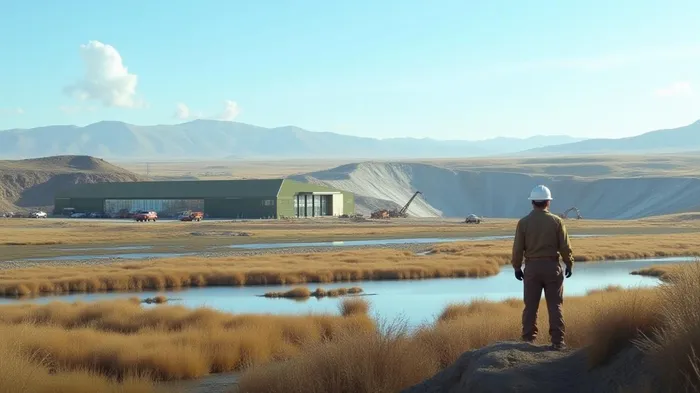
The Federal Permit Milestone: A Green Light for Construction
On May 20, 2025, Perpetua crossed the finish line of an eight-year federal permitting odyssey, securing the final Clean Water Act Section 404 permit from the Army Corps of Engineers. This milestone marks the culmination of a process accelerated by the FAST-41 program, which President Trump’s administration prioritized to fast-track critical infrastructure. The project’s designation as a “Transparency Project” under FAST-41 ensured real-time tracking of its progress on the Federal Permitting Dashboard, a first for a U.S. mining initiative. With federal hurdles cleared, Perpetua now focuses on state permits and financing—a far simpler path given the project’s alignment with Idaho’s economic and environmental priorities.
Antimony: The Mineral Making Stibnite Strategic Gold
Antimony’s strategic value cannot be overstated. China produces nearly 60% of global supply, and its 2024 export restrictions to the U.S. have created a supply vacuum. Stibnite’s 148 million pounds of antimony reserves—the only domestic source—are poised to meet 35% of U.S. demand during the first six years of production. This alone justifies the project’s $2 billion price tag: antimony’s industrial applications in lead-acid batteries, flame retardants, and military tech make it indispensable for energy security.
The EXIM Financing Catalyst: Unlocking a High-Margin Mine
Perpetua’s recent EXIM Bank financing application for up to $2 billion—up from an initial $1.8 billion non-binding LOI—could be the final piece of the puzzle. If approved, this debt facility would cover ~80% of the project’s development costs, significantly de-risking construction timelines. The U.S. government has already signaled support via $59.2 million in Defense Production Act funding to advance permitting and engineering. With federal and state agencies incentivized to fast-track projects tied to critical minerals, the financing’s approval is a near-term catalyst that could trigger a rerating of Perpetua’s valuation.
ESG Alignment: Restoring Land and Communities
Critics of mining projects often cite environmental and social risks, but Stibnite flips the script. The project’s design includes: - Remediation of legacy tailings from the abandoned Stibnite Mining District, addressing decades of contamination.- Restoration of 15 miles of salmon habitat in the Salmon River, a priority for local ecosystems.- Creation of 550+ jobs in rural Idaho, revitalizing a struggling economy.Over 23,000 public comments supported the project during its NEPA review, underscoring community buy-in. This ESG profile positions Stibnite as a “license to operate” benchmark for U.S. mining, attracting ESG-conscious investors.
Why Act Now? Near-Term Catalysts and De-Risking
- Q3 2025: EXIM Bank’s financing decision—expected imminently—could unlock construction capital.
- Q4 2025: Final state permits (Idaho’s water quality and reclamation approvals) are on track, with no major opposition.
- H1 2026: Construction start, with first gold production by 2028 and antimony output by 2029.
With federal permitting complete and financing in sight, Stibnite is transitioning from a “what-if” to a “when” investment. The project’s 4.8 million ounces of gold reserves and 148 million pounds of antimony ensure high margins, while its ESG and national security credentials attract both miners and ESG-focused funds.
Conclusion: A Strategic Bet on U.S. Mineral Sovereignty
Stibnite isn’t just a mining project—it’s a geopolitical and economic imperative. With China’s stranglehold on critical minerals, the U.S. needs domestic supply chains to remain a global superpower. Perpetua’s Stibnite Gold Project checks every box: it’s fully permitted, finanaced, and aligned with U.S. priorities. Investors who act now will secure exposure to a high-margin operation with imminent construction catalysts and de-risked execution. This is a rare chance to profit from a “build back better” initiative that’s already won the hardest battle: federal approval.
The clock is ticking—EXIM’s decision and state permits could trigger a valuation surge. Don’t miss the Stibnite wave.







Comentarios
Aún no hay comentarios