
Sterling's Slump: Fiscal Fumbling Fuels GBP's Fragility
The UK government's U-turn on welfare reforms in June 2025 has exposed a critical flaw in its fiscal credibility, sparking a sharp decline in the British pound and reigniting concerns over the sustainability of public finances. The reversal, driven by internal Labour dissent, not only derailed plans to save £5 billion annually but also underscored a systemic inability to balance austerity with political pragmatism. This episode has become a focal point for investors, who are now questioning whether the UK's economic trajectory can stabilize without deeper structural reforms.
The Fiscal Credibility Crisis
The welfare reforms, initially proposed in March 2024, aimed to address rising public debt and inflation, which stood at 3.4% in May 2025—still above the Bank of England's 2% target. But when Prime Minister Keir Starmer and Chancellor Rachel Reeves backtracked under pressure, markets interpreted it as a signal of weakened policymaking. The pound plunged 1% against the dollar, and gilt yields spiked, reflecting fears that fiscal discipline is slipping further away.
The concessions, including delaying changes to disability benefits and scaling back Universal Credit cuts, reduced projected savings by half. This raises two critical risks: 1) The government may resort to tax hikes or deeper spending cuts to fill the gap, stifling growth, and 2) The BoE may need to keep rates higher for longer to combat inflation, undermining the pound's relative appeal.
Technical Weakness: GBP's Losing Battle
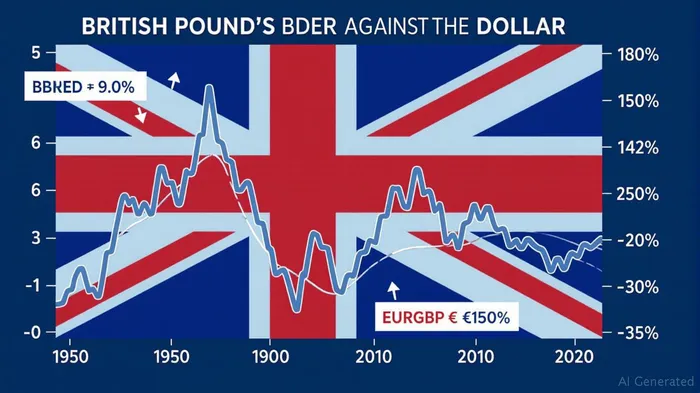
The technical picture for GBP/USD reinforces the bearish narrative. Despite a recent rally to 1.3780—the highest since September 2022—the currency is now facing significant headwinds. Key support levels at 1.3440 and 1.3234 are critical thresholds. A breach of these could trigger a freefall toward 1.2940 or even 1.2724, as shown in weekly forecasts.
The H4 chart reveals a bearish divergence in MACD and RSI, signaling waning upward momentum. Meanwhile, seasonal trends suggest July—a historically modestly bullish month—is now “stretched” relative to moving averages, increasing the likelihood of a pullback. Recent dips to 1.3590, driven by U.S. tariff disputes and a rebound in the dollar, highlight how external pressures amplify GBP's vulnerability.
The Path Forward: Hedge or Short Until Clarity Emerges
Investors should treat the UK's fiscal uncertainty as a red flag. Until the government provides a credible plan to stabilize debt or inflation, GBP exposure carries asymmetric risk. Here's the playbook:
- Short GBP/USD or EUR/GBP: Target the 1.3440 support zone as a first stop, with deeper declines possible if political instability worsens.
- Hedge equity exposure to UK assets: Rising gilt yields and potential tax hikes could weigh on corporate profits, especially in sectors reliant on consumer spending.
- Monitor BoE rate decisions: A delayed cut or a hawkish pivot could temporarily support GBP, but structural flaws remain.
The UK's fiscal fumbling has created a lose-lose scenario: either growth slows further, dragging down the pound, or the BoE must hike rates again to combat inflation, compounding recession risks. Investors who ignore this dynamic are gambling with their capital.
In conclusion, the pound's decline is not just a technical correction—it's a symptom of deeper fiscal rot. Until the government proves it can manage public finances without flip-flopping, GBP's fragility will remain a feature, not a bug.







Comentarios
Aún no hay comentarios