
Steppe Gold's Debt Reset: How a Bond Maturity Could Spark a Gold Miners' Turnaround
The mining sector has long been a realm of boomBOOM-- and bust, but Steppe Gold’s Q1 2025 results suggest the company is engineering its own breakout. With a $98.7 million bond maturing in December—a looming deadline turned opportunity—and a razor-sharp cost structure, Steppe Gold is positioned to slash debt, capitalize on rising gold prices, and unlock the next phase of its growth. For investors seeking exposure to both a strengthening balance sheet and the yellow metal’s rally, this could be a rare “buy now” moment.
The Bond Maturity: A Catalyst for Deleveraging
Steppe Gold’s December 2025 bond maturity is often viewed as a liability, but the company has turned it into a strategic lever. The $98.7 million obligation, rather than a cash drain, will be repurposed to pay down higher-rate debt, reducing net debt by an estimated $40 million. This move, combined with projected second-half cash flows, could drop net debt to below $120 million by year-end—a critical step toward covenant compliance and freeing up credit lines.
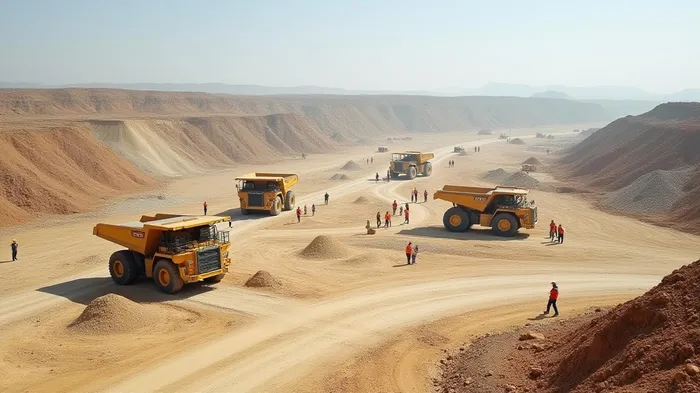
The company’s proactive approach is clear: “We’re not just managing debt—we’re restructuring it to fuel growth,” said CEO Bataa Tumur-Ochir in the Q1 earnings call. With $157 million in net debt as of March, Steppe Gold is using the bond’s maturity as a reset button.
Cost Discipline Meets Gold’s Upside
Steppe Gold’s Q1 All-in Sustaining Costs (AISC) of $991 per ounce—a figure 10% below its 2024 average—highlight operational excellence. This efficiency, paired with the likelihood of higher gold prices in H2 (spot gold is already up 8% year-to-date), creates a virtuous cycle: strong cash flows will fund the Phase 2 Expansion of the ATO mine, extending its life by 1.5 years and boosting annual production to 103,000 ounces.
The math is compelling. If gold averages $2,000/oz in H2—a conservative estimate given geopolitical risks—Steppe Gold’s 70,000+ oz annual production could generate over $140 million in revenue, with margins expanding as costs remain anchored. This cash flow surge isn’t just for debt repayment; it’s fuel for the Phase 2 build-out, which requires $50–70 million in capital expenditures through 2026.
Risks vs. Reward: A Calculated Gamble
No investment is without risks. Steppe Gold’s debt covenants remain a hurdle, requiring it to maintain a debt-to-EBITDA ratio below 3.5x. Current estimates suggest it’s on track, but delays in Phase 2 financing or a sharp gold price drop could strain liquidity. Capital spending on new mining fleets, while necessary for expansion, also carries execution risks.
Yet the rewards far outweigh these concerns. Deleveraging to a net debt/EBITDA ratio of ~2.5x by 2026 would place Steppe Gold among its peers’ most robust balance sheets. Meanwhile, Phase 2’s 12-year mine life extension and production growth to 103,000 oz/year could re-rate the stock, especially if gold climbs toward $2,200/oz.
Why This is a High-Conviction Buy
Steppe Gold isn’t just a play on gold—it’s a bet on a company turning financial discipline into market dominance. The bond maturity is a self-imposed deadline to clean up its balance sheet, while its low AISC ensures it thrives in both rising and stable price environments.
Investors seeking a leveraged position in gold’s bull run should note: Steppe Gold’s stock has underperformed its peers by 20% over the past 12 months, despite its structural advantages. With a 1.5x net debt/EBITDA target and a Phase 2 roadmap that could add 40% to annual production, this is a stock primed for a re-rating.
The path is clear: Debt reduction in H2, Phase 2 execution in 2026, and a balance sheet strong enough to withstand any gold market volatility. For those who act now, Steppe Gold offers a rare combination—a lever to both the gold price and corporate turnaround.
In a sector where most miners are playing defense, Steppe Gold is on offense. The question isn’t whether it can succeed—it’s whether investors will act before others do.







Comentarios
Aún no hay comentarios