
Stellantis' Strategic Turnaround: Leveraging U.S. Market Demand for ICE and Hybrid Vehicles
In a rapidly evolving automotive landscape, StellantisSTLA-- has emerged as a compelling near-term turnaround candidate, capitalizing on shifting consumer preferences and regulatory dynamics in the U.S. market. By strategically reintroducing high-demand internal combustion engine (ICE) and hybrid vehicles, expanding domestic manufacturing, and aligning with Trump-era policy shifts, the automaker is positioning itself to outperform industry peers. This analysis builds a high-conviction case for Stellantis as a near-term rebound story, supported by robust sales data, strategic investments, and favorable regulatory tailwinds.
Product Relaunches: Reconnecting with Core Customer Demand
Stellantis has aggressively reintroduced ICE and hybrid models to address persistent demand for traditional propulsion systems. The return of the 5.7-liter HEMI® V-8 in the 2026 Ram 1500, set to arrive at dealerships in H2 2025, underscores the company's commitment to ICE offerings according to a recent report. Similarly, the hybrid Jeep® Cherokee and the ICE Dodge Charger SIXPACK, both relaunched after production hiatuses, have generated strong consumer interest according to the same report. These moves reflect a calculated response to market signals: while electrification trends persist, ICE and hybrid vehicles still account for a significant share of U.S. sales, particularly in segments like trucks and SUVs.
Jeep's 4xe hybrid models, including the Wrangler 4xe and Grand Cherokee 4xe, have further solidified Stellantis' hybrid strategy. In Q1 2025, 4xe models accounted for 23% and 26% of total Wrangler and Grand Cherokee sales, respectively. The Wrangler 4xe, in particular, has maintained its position as the top-selling plug-in hybrid in the U.S. These figures highlight Stellantis' ability to blend electrification with traditional strengths in off-road and performance segments.
Strong Order Intake and Sales Performance
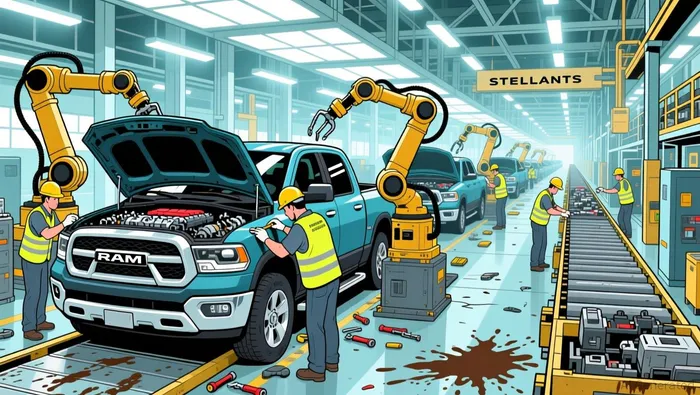 Stellantis' U.S. sales performance in 2025 has been a key driver of its turnaround narrative. In Q3 2025, the company reported a 6% year-over-year increase in total vehicle sales, with Jeep, Ram, Chrysler, and Dodge brands contributing to the growth. Jeep's Wrangler, Gladiator, and Wagoneer saw sales increases of 18%, 43%, and 122%, respectively, while Ram's 1500 model experienced such strong demand that initial units sold out in five days.
Hybrid-specific demand is equally promising. The Chrysler Pacifica Hybrid accounted for 12.8% of total Pacifica sales in Q1 2025, with a 98% quarter-over-quarter sales increase. Meanwhile, the Ram 1500's upcoming return to ICE power-featuring the iconic HEMI V-8-positions it to capture market share in a segment where consumers remain loyal to traditional engines. These metrics suggest that Stellantis is not only meeting current demand but also building a foundation for sustained growth.
$13 Billion U.S. Investment Plan: Scaling Domestic Production
A cornerstone of Stellantis' turnaround strategy is its $13 billion investment in U.S. manufacturing over the next four years, the largest in the company's 100-year history in the country. This initiative aims to increase domestic vehicle production by 50% and create over 5,000 jobs across Illinois, Ohio, Michigan, and Indiana. Key projects include the reopening of the Belvidere Assembly Plant in Illinois for Jeep Cherokee and Compass production and the expansion of the Warren Truck Assembly Plant in Michigan to build a range-extended electric vehicle and an ICE large SUV.
This investment aligns with Trump-era policies that prioritize domestic manufacturing and reduce regulatory burdens on automakers. By leveraging these policies, Stellantis is not only securing a competitive edge in production costs but also reinforcing its commitment to U.S. consumers and workers. The plan's emphasis on ICE and hybrid production-such as the midsize truck in Toledo, Ohio-further underscores the company's alignment with current market realities.
Policy Tailwinds: Trump-Era Regulations and Flexibility
The Trump administration's 2025 proposal to roll back Biden-era fuel economy standards has created a favorable environment for Stellantis' ICE and hybrid strategy. By lowering the required corporate fleet average fuel economy to 34.5 mpg by the 2031 model year-compared to the Biden-era target of 50.4 mpg-the administration has eased pressure on automakers to over-invest in electrification. Additionally, the elimination of inter-manufacturer credit trading for emissions after 2028 and the revocation of credits for fuel-saving technologies provide Stellantis with greater flexibility to balance its product portfolio.
These policy shifts directly benefit Stellantis, which has faced criticism for its earlier overemphasis on electrification. The company's recent focus on ICE and hybrid relaunches now aligns with a regulatory framework that prioritizes affordability and consumer choice. As CEO Antonio Filosa noted, this environment supports our strategy to offer a diverse range of propulsion systems to meet customer preferences.
Conclusion: A High-Conviction Turnaround Play
Stellantis' strategic pivot toward ICE and hybrid vehicles, coupled with its $13 billion U.S. investment plan and alignment with Trump-era policies, positions it as a high-conviction near-term turnaround candidate. The company's strong order intake, particularly in Jeep and Ram models, demonstrates its ability to capitalize on enduring consumer demand for traditional propulsion systems. Meanwhile, its manufacturing expansion and regulatory tailwinds provide a durable foundation for long-term growth.
For investors, Stellantis represents a unique opportunity to benefit from a sector in transition. By addressing market gaps with targeted product relaunches and leveraging favorable policy shifts, the automaker is not only mitigating risks but also accelerating its path to profitability. In a landscape where many peers are overcommitted to electrification, Stellantis' balanced approach offers a compelling edge.







Comentarios
Aún no hay comentarios