
Stellantis' Strategic Reinforcement: How Francesco Ciancia's Return Signals Manufacturing Resilience
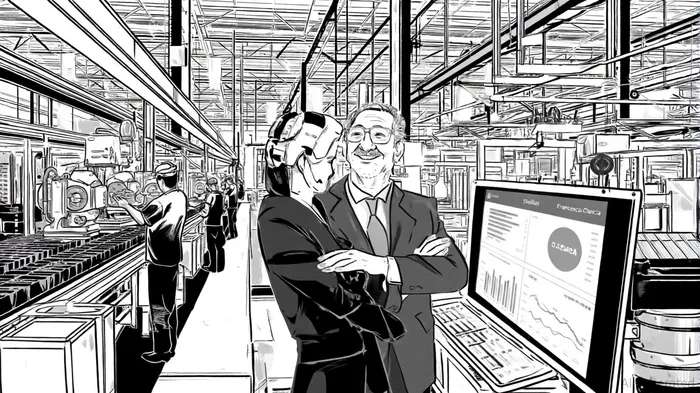
In an era where automotive manufacturing faces relentless pressure to innovate and optimize, Stellantis' recent reappointment of Francesco Ciancia as Global Head of Manufacturing signals a bold commitment to operational resilience. Effective November 1, 2025, Ciancia returns to the company he once helped transform, bringing over two decades of expertise in lean production systems, plant management, and cost-cutting strategies. His leadership trajectory-from StellantisSTLA-- to Mercedes-Benz Vans and back-offers a compelling case study in how executive experience can drive systemic efficiency gains in a global automotive giant.
A Proven Track Record in Manufacturing Transformation
Ciancia's career is defined by his ability to streamline operations while maintaining quality. During his tenure at Fiat Chrysler Automobiles (FCA) and Stellantis, he oversaw nine plants across the low-mid segment in Europe and led manufacturing for Maserati and Latin America. His work at the Kragujevac plant in Serbia, for instance, demonstrated his knack for balancing cost discipline with strategic investment. When he transitioned to Mercedes-Benz Vans in 2022, he was tasked with overhauling the division's production network-a challenge he approached with his signature focus on lean methodologies, as announced in a GlobeNewswire release.
At Mercedes-Benz Vans, Ciancia spearheaded a €1 billion investment in the Jawor plant in Poland to modernize electric van production, a cornerstone of the company's VAN.EA architecture rollout, as reported by Poland Daily 24. This initiative, announced in December 2022, not only aligned with the division's electrification goals but also underscored Ciancia's emphasis on industrial competitiveness. By 2023, Mercedes-Benz Vans reported an 18% revenue increase to €20.3 billion and a 59% surge in adjusted EBIT to €3.1 billion, attributed to cost discipline and product innovation, according to Epicos.
Stellantis' AI-Driven Efficiency Playbook
Ciancia's return to Stellantis coincides with the company's aggressive adoption of AI and digital twins to reduce manufacturing costs. According to a Stellantis press release, Stellantis has already achieved 11% lower transformation costs, 23% reduced energy consumption, and a 40% decline in quality issues since 2021 through these technologies. These metrics highlight the scalability of Ciancia's approach, which prioritizes automation and data-driven decision-making.
The CEO's broader strategy, led by Antonio Filosa, aims to consolidate engineering assets and optimize supply chains-a legacy of the 2021 Fiat Chrysler-PSA merger. By 2024, Stellantis had realized $9 billion in cost reductions, exceeding initial projections, according to CNBC. Ciancia's role in this effort is critical: his experience in consolidating operations at Mercedes-Benz Vans (e.g., shifting to direct sales channels to cut dealership overhead) provides a blueprint for similar initiatives at Stellantis, as detailed in the Mercedes-Benz strategy update.
Quantifying the Impact: Cost Optimization and Profitability
While specific metrics for Ciancia's tenure at Mercedes-Benz Vans remain opaque, the division's financial performance under his leadership is telling. In Q2 2023, Mercedes-Benz Vans' adjusted Return on Sales (RoS) jumped to 15.5% from 10.1% in the same period in 2022, driven by premium pricing and higher sales volumes, as reported by BusinessWire. This aligns with Ciancia's strategy to focus on high-margin segments and discontinue low-profit models.
At Stellantis, the ripple effects of Ciancia's cost-cutting measures are already evident. The company's 2024 cost reductions, combined with its push for electric vehicle (EV) production efficiency, position it to outperform peers in capital expenditure and R&D spending. Analysts note that Stellantis' ability to localize production-mirroring Mercedes-Benz Vans' approach in China and the U.S.-will further insulate it from geopolitical supply chain risks, according to The Car Guider.
Future Implications and Investor Takeaways
Ciancia's reappointment is not merely a personnel move; it is a strategic reinforcement of Stellantis' commitment to manufacturing excellence. His dual focus on AI-driven automation and lean production systems creates a hybrid model that balances innovation with fiscal prudence. For investors, this signals a company capable of navigating the dual challenges of electrification and inflationary pressures.
However, risks remain. The automotive sector's shift to EVs requires sustained investment, and Ciancia's success will hinge on his ability to maintain profitability while scaling new technologies. Yet, given his track record at Mercedes-Benz Vans and Stellantis' existing cost-cutting momentum, the odds favor a positive outcome.
Conclusion
Francesco Ciancia's return to Stellantis is a masterstroke in leadership-driven operational efficiency. By leveraging his experience in transforming Mercedes-Benz Vans and Stellantis' own digital innovations, he is poised to cement the company's position as a leader in cost-optimized, high-performance manufacturing. For investors, this represents a compelling case of strategic continuity and executive expertise converging to drive long-term value.





Comentarios
Aún no hay comentarios