
Steel Titans Shift: European Exports Surge in India’s Tariff-Driven Market
The Indian government’s 12% safeguard duty on steel imports, effective since April 2025, has ignited a seismic shift in global trade patterns. As Asian competitors like China and Vietnam face punitive tariffs, European steelmakers—particularly those in France and Germany—are emerging as key beneficiaries, capturing high-margin segments in India’s booming machinery and construction sectors. This strategic realignment presents a rare investment opportunity in both European steel producers and Indian firms leveraging premium foreign supplies, with the 200-day tariff window acting as a catalyst for accelerated growth.
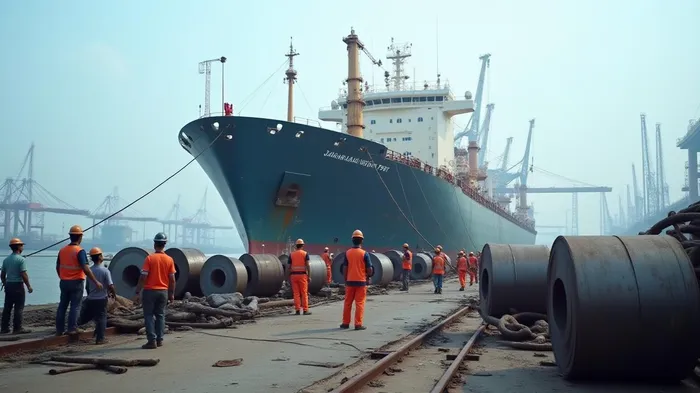
The Tariff’s Double-Edged Sword: Opportunity in Disruption
India’s safeguard duty targets flat steel products like hot-rolled coils and cold-rolled sheets, imposing tariffs on imports below specific price thresholds ($675/mt for HRC, $824/mt for CRC). While designed to shield domestic producers from low-cost Chinese imports, the policy has inadvertently created a golden window for European exporters. By offering higher-quality, non-tariff-affected steel (priced above thresholds), European firms are now dominating India’s high-value industrial and infrastructure projects.
Europe’s Strategic Edge: Quality Over Cost
French and German steelmakers are capitalizing on India’s demand for precision-engineered steel used in machinery, automotive, and construction. According to Eurostat data, EU steel exports to India surged by 135.6% since 2019, with Germany and France now supplying 18.8% of India’s total steel imports—a figure projected to climb as the tariff’s 200-day window (ending October 2025) drives further substitution of Asian supplies.
Key sectors benefiting include:
- Machinery Manufacturing: German firms like Siemens and ThyssenKrupp supply high-tensile steel for industrial equipment, which Indian manufacturers prefer over cheaper alternatives.
- Infrastructure Projects: French steelmakers (e.g., Eramet) are tapped for corrosion-resistant alloys used in bridges and railways, aligning with India’s $1.5 trillion infrastructure pipeline through 2026.
- Automotive: European steel’s superior formability is critical for India’s growing EV sector, where Tata Motors and Mahindra are expanding production.
Timing the Tariff Window: Act Before October
The 200-day tariff period creates urgency for investors to capitalize before the policy’s review. Key catalysts include:
1. Tariff Extension Risks: India’s Steel Ministry may extend the duty beyond October if domestic prices remain volatile.
2. EU-India Trade Deals: Ongoing negotiations for a comprehensive trade pact could lock in preferential access for European exporters, shielding them from future tariffs.
3. Global Supply Chain Shifts: U.S. tariffs on steel imports (effective April 2025) are redirecting trade flows toward India, boosting demand for European supplies that avoid U.S. sanctions.
Investment Plays: Where to Deploy Capital
- European Steel Producers:
- ArcelorMittal (MT): The global leader in flat steel production benefits from India’s machinery demand.
- ThyssenKrupp (TKA): A top supplier of automotive-grade steel to India’s EV manufacturers.
- Indian Infrastructure Firms:
- Larsen & Toubro (LT): Leverages European steel for high-end construction projects.
- JSW Steel (JSW.NS): Positions itself as a buyer of premium European alloys for export-oriented markets.
Long-Term Structural Shifts: Beyond the Tariff
The safeguard duty is more than a temporary fix—it marks a pivot toward quality-driven trade. European firms’ focus on sustainable steel production (e.g., ArcelorMittal’s carbon-neutral initiatives) aligns with India’s goals to reduce emissions, ensuring their dominance even after October. Meanwhile, Indian firms adopting EU steel gain a competitive edge in global supply chains, particularly for markets like the U.S., where higher quality standards apply.
Conclusion: Ride the Steel Wave
Investors ignoring this shift risk missing a multi-year opportunity. With India’s steel demand projected to grow 8-9% annually and European exporters positioned to capture premium segments, now is the time to allocate capital to European steelmakers and Indian firms integrating their products. The 200-day window is a clarion call—act swiftly before the market recalibrates.







Comentarios
Aún no hay comentarios