
Steel Titans: National Security vs. Economic Powerhouse – Why the USS-Nippon Deal Matters Now
The $14.9 billion bid by Nippon Steel to acquire U.S. Steel has become a flashpoint in the debate over national security, economic revival, and foreign investment. With President Trump's reversal of Biden's national security block and a pending CFIUS decision, this deal now represents one of the most critical crossroads for American manufacturing. Here's why investors must pay attention—and act decisively.
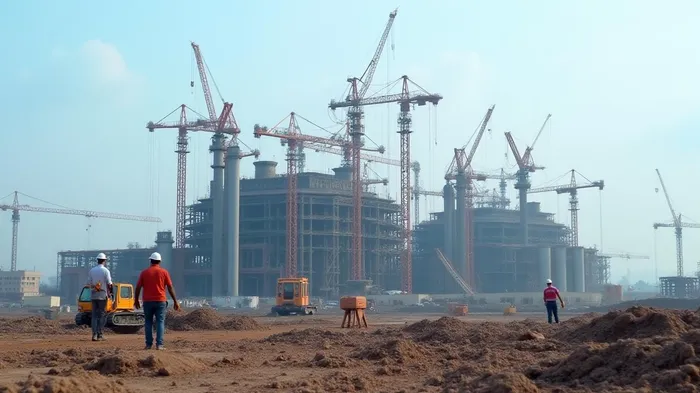
The Deal's Dual Identity: Security Threat or Economic Lifeline?
U.S. Steel's potential sale to Nippon Steel has split policymakers, labor groups, and investors. On one side: national security concerns. Critics argue that foreign ownership of a firm producing steel critical for defense, bridges, and energy infrastructure risks ceding control of vital supply chains to Japan—a U.S. allyALLY--, but still a foreign entity. Former President Biden blocked the deal in January 2025, citing these risks.
On the other: the economic allure. Nippon Steel's revised $14 billion investment pledge—up from $1.4 billion—includes a $4 billion greenfield steel mill in Pennsylvania and $2.4 billion for U.S. Steel's modernization. This infusion could revive a company drowning in debt ($5.3 billion) and a net loss of $116 million. The deal promises to boost domestic steel capacity, reduce reliance on Chinese imports, and create thousands of jobs.
The market is already pricing in optimism. USS shares surged 8.4% on May 23, 2025, as CFIUS concluded its 45-day review. But will this optimism hold?
CFIUS's Delicate Balancing Act
The Committee on Foreign Investment's May 21 recommendation to Trump revealed a divided panel. While a majority believed risks could be mitigated through Nippon's investments, the lack of consensus leaves the door open for rejection. Key factors include:
- Mitigation Measures: Nippon's $14 billion plan includes ESG-compliant upgrades to U.S. Steel's aging infrastructure, such as the iconic Gary Works plant.
- Tariff Advantages: U.S. Steel would avoid 25% import tariffs, making its steel more competitive.
- Job Creation: Nippon has pledged 3,000+ new jobs in Pennsylvania alone, countering union claims that foreign ownership will outsource labor.
The decision hinges on whether Trump prioritizes industrial revival over security concerns. With Japan as a key ally in countering China's steel dominance, approval seems plausible—but not guaranteed.
The Union's Warning—and Why It Might Not Matter
The United Steelworkers (USW) union, representing 12,000 USS employees, opposes the deal, citing “trade cheating” by Nippon and fears of lost jobs. Yet their influence may be overstated. The deal's tariff advantages and modernization plans directly counter union claims: outdated U.S. Steel facilities are already losing market share to global rivals. Without Nippon's investment, U.S. Steel's debt could force layoffs anyway.
The numbers tell a stark story: high margins but unsustainable losses. The Nippon deal is USS's best shot at survival—and a key pillar of Trump's “America First” agenda.
Investment Case: Go Long on USS—But Beware the Risks
The Bull Case:
- Valuation Upside: If approved, USS's valuation could skyrocket. Analysts project a 15–20x EV/EBITDA multiple, implying stock gains of 30–50%.
- Strategic Value: A modernized USS could dominate U.S. infrastructure projects, from pipelines to wind turbines, leveraging its 25% tariff shield.
- Geopolitical Win: A U.S.-Japan alliance in steel production would counter China's dominance, aligning with broader U.S. trade strategies.
The Bear Case:
- Rejection Risk: A Trump veto would trigger a $565 million breakup fee, cushioning USS's balance sheet but leaving its long-term viability in doubt.
- Labor Disruptions: USW strikes or legal challenges could delay operations even after approval.
- Debt Drag: USS's $5.3 billion debt load remains a vulnerability without Nippon's cash.
Act Now—But Stay Informed
The June 5 deadline for Trump's decision is approaching fast. Investors should:
1. Buy USS stock ahead of the ruling, targeting entry points below $12 (May 23 closing price).
2. Monitor CFIUS's stance: A “mitigation required” recommendation signals approval is likely.
3. Watch for tariff developments: U.S.-Japan trade talks could influence Trump's calculus.
The stakes are too high to ignore. This deal isn't just about steel—it's about whether the U.S. will modernize its industrial backbone or cede it to foreign rivals. With Nippon's $14 billion on the table, the choice is clear: invest now, or risk missing the steel revival.
The race for infrastructure dominance starts here. The time to act is now.







Comentarios
Aún no hay comentarios