
Steel Tariffs and Fed Rate Cuts: Navigating the New Sector Rotation Playbook
The Trump administration's abrupt 50% steel tariff hike—effective June 4, 2025—has ignited a seismic shift in market dynamics, creating stark divergences between sectors. While domestic steel producers revel in elevated profit margins, industries reliant on metal inputs, from autos to appliances, face a cost crisis. Meanwhile, the Federal Reserve's hinted rate cuts add another layer of complexity. This is a defining moment for sector rotation strategies, where asymmetric opportunities abound.
The Steel Sector: A Bull Run Backed by Policy Winds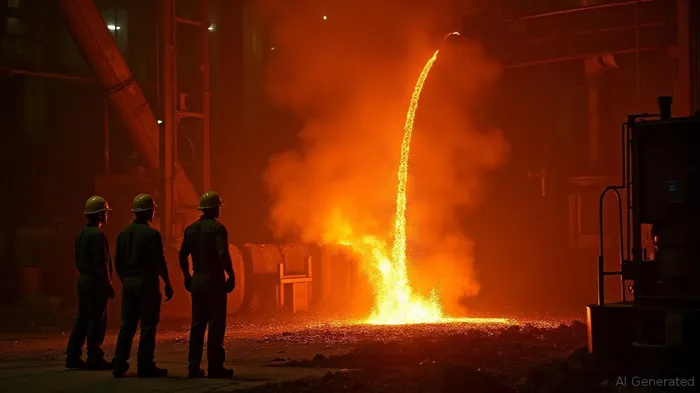
Steel producers like Cleveland-Cliffs (CLF) and Nucor (NUE) are the immediate beneficiaries of the tariff surge. The 50% levy on imports has created a protective barrier for domestic manufacturers, enabling them to capitalize on rising global steel prices. The partnership between U.S. Steel and Nippon Steel, promising $14 billion in U.S. investment and 70,000 jobs, further solidifies this sector's tailwinds.
Investors should note that these stocks have already surged, but the legal battles over tariffs' enforceability could create periodic dips—opportunities to buy dips in high-quality names.
Tariff-Sensitive Sectors: A Looming Storm
The auto industry, already grappling with supply chain disruptions, now faces a fresh blow. Automakers like Ford (F) and General Motors (GM) are bracing for higher steel costs, which could eat into margins unless passed on to consumers—a move that risks hurting demand in a slowing economy.
The RV industry, heavily dependent on steel for chassis and components, has seen its stocks like Forest River (FORR) and Thor Industries (THO) plummet as manufacturers scramble to secure domestic supplies. Meanwhile, consumer discretionary sectors (e.g., appliances, furniture) face similar headwinds.
The Fed's Dilemma: Rate Cuts vs. Inflationary Pressures
The Federal Reserve's path forward is fraught with contradictions. While GDP growth has slowed to 1.5% in Q2 (per Fed forecasts), inflation risks are rising due to tariff-driven input costs. The Fed's May meeting minutes highlighted a “wait-and-see” stance, but market pricing now reflects a 70% probability of at least one rate cut by September.
Rate cuts could cushion sectors like autos and manufacturing, but they won't negate the structural cost increases. Investors must balance the potential for short-term relief against long-term inflationary risks.
The Data Crossroads: Timing the Rotation
Two key metrics will dictate sector performance in the coming months:
1. Inflation Data: If June's CPI report shows headline inflation exceeding 3.2%, it could force the Fed's hand to delay cuts—favoring steel stocks while penalizing rate-sensitive sectors.
2. Employment Trends: A rise in the unemployment rate above 4.5% would likely accelerate rate cuts, benefiting defensive sectors but undermining cyclicals like autos.
Actionable Strategy: Exploit the Divergence
1. Buy Steel Producers on Dip: Use tariff-related volatility to accumulate positions in CLF and NUE, with a stop-loss below 2024 lows.
2. Short Auto ETFs: Consider inverse automotive ETFs (e.g., SKF) to profit from margin pressures, especially if Q2 earnings disappoint.
3. Hedge with Rate-Resistant Sectors: Allocate to utilities (XLU) or consumer staples (XLP) as a buffer against Fed uncertainty.
Conclusion: The Clock is Ticking
The intersection of trade policy, inflation, and Fed action has never been more volatile. While steel producers ride the tariff wave, industries like autos are in a race against time to adapt. With the Fed's credibility at stake and economic data set to redefine expectations, now is the moment to rotate aggressively—before the market's next pivot.
Act now. The sector divide won't last forever.





Comentarios
Aún no hay comentarios