
Steel Dynamics and the Reshaping of U.S. Steel Markets Amid Tariff Uncertainty
The U.S. steel industry is undergoing a seismic transformation in 2025, driven by aggressive tariff policies, global supply chain shifts, and a push for domestic industrial resilience. At the center of this evolution is Steel Dynamics Inc.STLD-- (SDI), a leading domestic steel producer that has demonstrated both financial agility and strategic foresight in navigating a volatile market. As tariffs on steel and aluminum imports escalate under President 's administration, SDI's ability to leverage protectionist policies while addressing long-term sustainability and innovation challenges positions it as a compelling case study for investors assessing the sector's future.
Financial Resilience and Market Position
Steel Dynamics has emerged as a standout performer in a sector marked by uncertainty. In Q3 2025, , , . These figures outpace industry peers, with SDI . The company's market share in the U.S. , though it faced a slight contraction in revenue and shipments amid broader industry headwinds.
 SDI's financial strength is further underscored by its as of September 30, 2025, enabling it to fund strategic initiatives while returning capital to shareholders . This balance of growth and shareholder returns highlights its disciplined approach to capital allocation, a critical factor in a sector prone to cyclical volatility.
Tariff-Driven Tailwinds and Strategic Adaptation
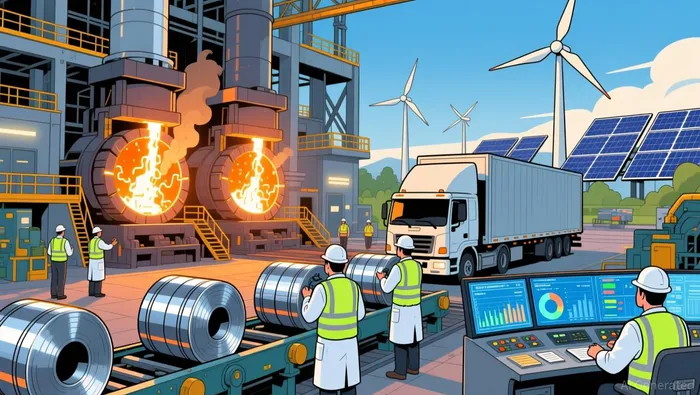
The Trump administration's escalation of Section 232 tariffs to 50% on steel and aluminum imports in June 2025 has created a dual-edged sword for the industry. While these tariffs have reduced foreign competition and allowed domestic producers to raise prices, they have also increased costs for downstream sectors like construction and automotive. For SDI, however, the policy shift has been a strategic advantage. The company's efficient minimill operations and reliance on electric arc furnace (EAF) technology- than the global average-have enabled it to maintain low production costs and capitalize on higher pricing power.
SDI has also diversified its product portfolio to mitigate commodity price risks. The successful launch of aluminum flat-rolled products and the use of biocarbon material in its Columbus Flat Roll Steel Division demonstrate its pivot toward value-added offerings with higher margins. These initiatives align with broader industry trends, as companies like U.S. Steel and Nippon Steel in domestic capacity expansion to meet demand for low-emission steel.
Sustainability and Long-Term Vision
Sustainability is a cornerstone of SDI's long-term strategy. The company has set science-based emissions targets certified by the , . Its renewable energy goals, . These efforts not only align with global decarbonization trends but also position SDI to benefit from emerging markets for green steel, particularly in construction and automotive sectors.
Risks and Market Realities
Despite its strengths, SDI faces significant challenges. The U.S. , driven by economic uncertainties, slowing infrastructure spending, and retaliatory tariffs from trade partners like the EU and Canada. Additionally, the government shutdown in 2025 disrupted data access and trade enforcement, creating regulatory ambiguity. For SDI, these factors could temper its growth trajectory, particularly if downstream industries continue to delay or scale back projects due to rising material costs.
Investment Implications
The interplay of protectionist policies and structural industry shifts presents a nuanced investment landscape. SDI's ability to navigate tariff volatility through innovation, diversification, and operational efficiency suggests a resilient long-term outlook. However, investors must weigh these strengths against macroeconomic risks, including potential retaliatory measures and the sector's reliance on cyclical demand. Analysts remain cautiously optimistic, .
In conclusion, Steel DynamicsSTLD-- exemplifies the duality of the U.S. steel sector: a protected market offering near-term tailwinds, yet one fraught with volatility and structural challenges. For investors, the key lies in assessing SDI's capacity to sustain its innovation momentum while navigating the uncertainties of a reshaped global trade environment.







Comentarios
Aún no hay comentarios