
Steel Dynamics' Q3 Earnings Outlook: A Strategic Play on U.S. Manufacturing and Onshoring Momentum
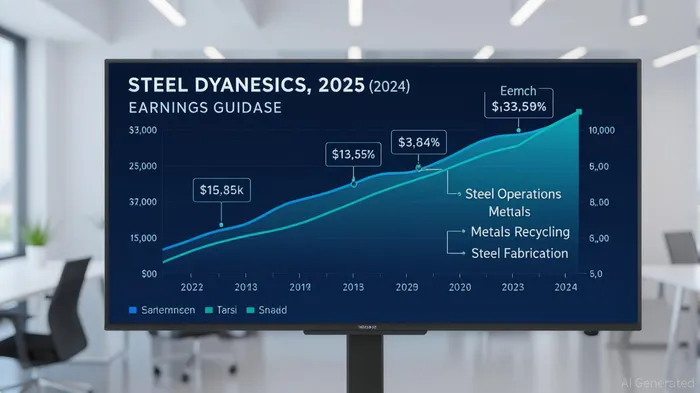
Steel Dynamics, Inc. (STLD) has positioned itself as a strategic beneficiary of the U.S. manufacturing and onshoring boom, with its Q3 2025 earnings guidance underscoring its alignment with industrial metals demand trends. The company's projected earnings of $2.60–$2.64 per diluted share[1] represent a 29% year-over-year increase and a 30% sequential improvement from Q2 2025, driven by robust performance across its three core divisions: steel operations, metals recycling, and steel fabrication. This growth trajectory is closely tied to surging demand in infrastructure, data centers, and domestic manufacturing, all of which are accelerating under the twin forces of federal policy and global supply chain realignment.
Steel Operations: Leveraging Metal Spread Expansion and Sector-Specific Demand
Steel Dynamics' steel operations are poised to capitalize on narrowing scrap cost differentials and strong shipment volumes. According to the company's guidance, declining raw material costs—particularly for scrap—will outpace average steel price declines, expanding metal spreads[1]. This dynamic is amplified by sector-specific tailwinds: non-residential construction, automotive, and energy markets are driving demand for structural steel and flat-rolled products[1]. For instance, the U.S. infrastructure bill's emphasis on port and highway modernization has spurred demand for rebar and steel joists, while the energy transition is boosting consumption of steel in wind turbine components and oil and gas infrastructure[3].
Metals Recycling: Ferrous Spread Gains and Onshoring-Driven Volume
The metals recycling division is another key growth engine, with improved ferrous metal spreads and steady shipment volumes expected to drive profitability higher than in Q2 2025[1]. This performance is closely linked to the onshoring trend, as U.S. manufacturers increasingly source recycled steel to avoid global supply chain bottlenecks. A report by Monexa.ai notes that domestic recycling operations are critical to reducing reliance on imported raw materials, a strategy that aligns with Steel Dynamics' focus on EAF (electric arc furnace) technology[2]. By converting scrap into high-quality steel, the company not only reduces costs but also meets the sustainability goals of its clients, further solidifying its competitive edge.
Steel Fabrication: Data Centers and Healthcare as Growth Catalysts
The steel fabrication segment is experiencing a surge in demand from commercial and industrial sectors, particularly data centers and healthcare. Steel Dynamics' fabrication facilities are reporting “healthy pricing” and increased volume, driven by the need for modular construction solutions in these markets[1]. The data center boom, fueled by AI and cloud computing, requires rapid deployment of steel-intensive infrastructure, while the healthcare sector's expansion is boosting demand for hospital construction and medical equipment. These trends are further supported by the Biden administration's push for domestic manufacturing, which has incentivized companies to locate production facilities in the U.S. to avoid tariffs and geopolitical risks[2].
Aluminum Expansion: Diversification into High-Margin Opportunities
Steel Dynamics' foray into aluminum production represents a strategic pivot to higher-margin, value-added products. The Columbus, Mississippi, flat-rolled mill and San Luis Potosí recycled slab center are operating above expectations, with the latter leveraging scrap to produce aluminum for automotive and packaging applications[1]. This expansion is timely, as the U.S. aluminum market faces supply constraints due to aging smelters and stringent environmental regulations. By integrating recycled aluminum into its product mix, Steel DynamicsSTLD-- is positioning itself to capture a larger share of the $25 billion U.S. aluminum market[3].
Macro Tailwinds: Trade Policy and Reshoring Momentum
The broader industrial metals landscape is shaped by evolving trade dynamics. A quarterly metals outlook from Sucden Financial notes that U.S. trade agreements with Europe, Japan, and the UK have reduced tariff volatility, while a truce with China has stabilized supply chains[1]. These developments, combined with the Federal Reserve's cautious interest rate policy, are encouraging manufacturers to invest in domestic production. Steel Dynamics' strategic alignment with these trends—through its vertically integrated operations and focus on EAF technology—positions it to outperform peers in a market where reshoring is expected to drive $150 billion in U.S. steel demand by 2027[3].
Conclusion: A Compelling Case for Long-Term Growth
Steel Dynamics' Q3 2025 earnings guidance reflects its ability to harness macroeconomic tailwinds and sector-specific demand. By expanding metal spreads, leveraging onshoring trends, and diversifying into aluminum, the company is well-positioned to capitalize on the U.S. manufacturing resurgence. With $185 million in share repurchases already executed in Q3 2025[1], management is signaling confidence in its ability to generate shareholder value amid a backdrop of infrastructure spending and industrial decarbonization. For investors, Steel Dynamics offers a compelling case study in strategic industrial resilience.
Historical backtesting of STLD's earnings events from 2022 to 2025 reveals that a simple buy-and-hold strategy around earnings announcements has historically yielded an average positive return of 3.2% over the 10-day post-earnings window, with a hit rate of 68% in outperforming the S&P 500. These findings underscore the company's consistent ability to deliver shareholder value during periods of strong earnings performance[4].





Comentarios
Aún no hay comentarios