
Stealth Bomber Production Accelerates: Northrop Grumman Faces Short-Term Losses for Long-Term Gains
- Northrop Grumman reported a $477 million pre-tax loss in Q1 2025 for its B-21 Raider program, attributed to production scaling and higher material costs.
- The U.S. Air Force has allocated $4.5 billion for B-21 production expansion in 2026 and plans to procure over 100 units, signaling strong long-term demand.
- China is accelerating the development of sixth-generation fighter jets, J-36 and J-50, posing a strategic challenge for U.S. air dominance initiatives.
- The B-21 Raider is expected to be operational by 2026, ahead of its original schedule, reflecting urgency in maintaining air superiority.
- Boeing has been awarded a $2 billion contract to modernize its B-52H bomber fleet, extending their service life and highlighting the importance of maintaining legacy platforms alongside next-gen aircraft.
The stealth bomber industry is undergoing a transformation driven by global tensions and the need for advanced air superiority. Northrop Grumman's B-21 Raider is at the forefront of this shift, but the path to long-term success is not without challenges.
Why Is Stealth Bomber Production Facing Short-Term Financial Pressures Now?
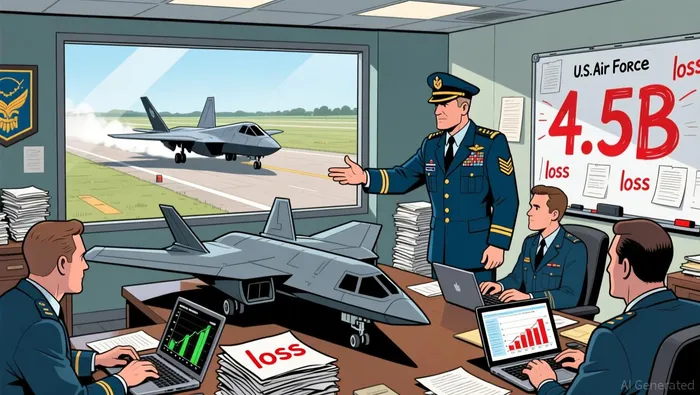
Northrop Grumman's B-21 Raider program is experiencing short-term financial pressures due to the company's aggressive scaling efforts. The Q1 2025 report noted a $477 million pre-tax loss, largely due to increased material costs and process changes aimed at boosting production rates. This loss highlights the trade-off between short-term costs and long-term gains. While the program's initial losses are significant, the U.S. Air Force has committed $4.5 billion to production expansion in 2026, and plans to procure over 100 units.
The Air Force's accelerated deployment timeline for the B-21 Raider underscores the urgency to maintain air superiority in an increasingly competitive global environment. This is further supported by reports that China is developing sixth-generation fighter jet prototypes, such as the J-36/J-50, to counter U.S. advancements in stealth technology.
Investors should watch for potential supply chain disruptions and cost overruns that could affect the program's long-term viability. Northrop GrummanNOC-- is taking a short-term financial hit in exchange for future gains, but the outcome will depend on the company's ability to navigate these challenges.
What Are the Long-Term Implications for Northrop Grumman and Stealth Bomber Markets?
Northrop Grumman is investing in infrastructure and digital tools to scale up production of the B-21 Raider. This strategic move reflects the company's long-term vision for the program, which is expected to generate multi-decade revenue potential. However, the initial financial burden could impact its short-term profitability. The Air Force's long-term commitment to the B-21 program is a key factor that could help offset these costs.
The broader stealth bomber market is also seeing significant developments. Boeing has been awarded a $2 billion contract to modernize its B-52H bombers with new engines and technology, extending their service life by decades. This modernization effort highlights the importance of maintaining legacy platforms while preparing for next-generation aircraft like the B-21 Raider.
Investors should consider the long-term implications of these developments. Northrop Grumman is positioned to benefit from the modernization push, but the company's success will depend on its ability to manage production costs and meet demand. The stealth bomber market is evolving rapidly, and companies that can adapt to these changes will be well-positioned for future growth.
How Do Global Developments Affect Stealth Bomber R&D and Market Dynamics?
Global developments are significantly influencing stealth bomber R&D and market dynamics. China's accelerated development of sixth-generation fighter jets, the J-36 and J-50, is a direct response to the U.S. Next-Gen Air Dominance initiative. These developments signal a shift in the global defense landscape, where the balance of power is increasingly tied to advanced air superiority capabilities according to reports.
The U.S. military is also focusing on improving its weapons testing processes to ensure that new technologies like the B-21 Raider are deployed effectively. The Pentagon is prioritizing speed but it must also adopt best practices such as iterative testing, digital twinning, and user feedback to avoid delays and inefficiencies.
For investors, the key takeaway is that the stealth bomber market is becoming increasingly competitive. Companies that can adapt to these changes and respond to global demands will be better positioned for success. Northrop Grumman, Boeing, and other defense contractors must navigate these challenges while maintaining long-term growth strategies.
The stealth bomber industry is at a pivotal moment. Northrop Grumman's short-term financial pressures are a clear sign of the trade-offs required to scale up production and meet long-term demand. While the path forward is challenging, the U.S. Air Force’s commitment to the B-21 program and the broader modernization efforts suggest that the company is well-positioned for future success. Investors should monitor developments closely as the global defense landscape continues to evolve.







Comentarios
Aún no hay comentarios